Arcata reconsiders cannabis tax as city pushes electrification
Arcata’s old high-use power tax now reaches about 17 meters and $40,000 a year, even as the city pushes homes and buildings toward electrification.
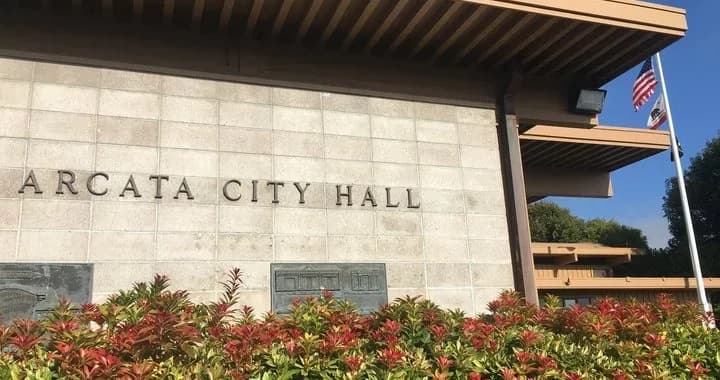
At 736 F Street, Arcata is weighing whether a tax built for the indoor cannabis boom still fits a city now urging residents toward heat pumps, electric appliances and cleaner construction. The Arcata Energy Committee was scheduled to take up the question at a special meeting set for June 15 at 5:30 p.m. in the Council Chamber, with staff also planning a presentation on California building energy standards.
The policy at the center of the review is the city’s Utility Users Tax, or Measure F, first approved by voters in 1996 and later renewed in 2000, 2004, 2008 and 2016, according to a city resolution. Arcata voters again backed continuation on November 8, 2022, by a 68% to 32% margin, preserving a 3% utility tax and a 45% charge on residential electricity use above 600% of baseline allowance. City materials say the tax generates about $900,000 for the general fund and remains a major source of public safety funding.
The more targeted penalty, the Excessive Electricity Use Tax, now applies only to residential household meters that cross that 600% threshold. A 2025 report said the city’s high-user tax revenue had fallen from hundreds of accounts to about two dozen, and another report in 2026 put the number at roughly 17 meters, bringing in about $40,000 a year. What once looked like a blunt tool aimed at energy-hungry indoor grows has become a narrow charge collected from a small slice of households.

That shift matters because Arcata is now pushing in the opposite direction. The city says it is committed to reducing greenhouse-gas emissions and points to a communitywide greenhouse gas inventory, a Community Greenhouse Gas Reduction Plan and an All Electric Initiative focused on decarbonizing construction and equipment replacement. Humboldt County’s Regional Climate Action Plan, approved by the Board of Supervisors on Dec. 16, 2025, also addresses electricity consumption, natural gas use and other greenhouse-gas sources, and Arcata has adopted it as its local climate plan.
That leaves the city with a hard choice. Keeping the tax preserves a familiar revenue stream and the general-fund dollars tied to Measure F, but it also leaves Arcata taxing the very kind of electricity use it now wants to expand in cleaner form. Repeal would align the city’s code with its electrification goals and ease bills for households investing in electric heat and appliances, but it would also force officials to find another way to replace the money that Measure F still sends to city services.
This article was produced by Prism’s automated news system from verified source data, official records, and press releases, then run through automated quality and moderation checks before publishing. The system is built and supervised by the people who set the standards it runs under. Read our full AI policy.
Did this article answer your question?