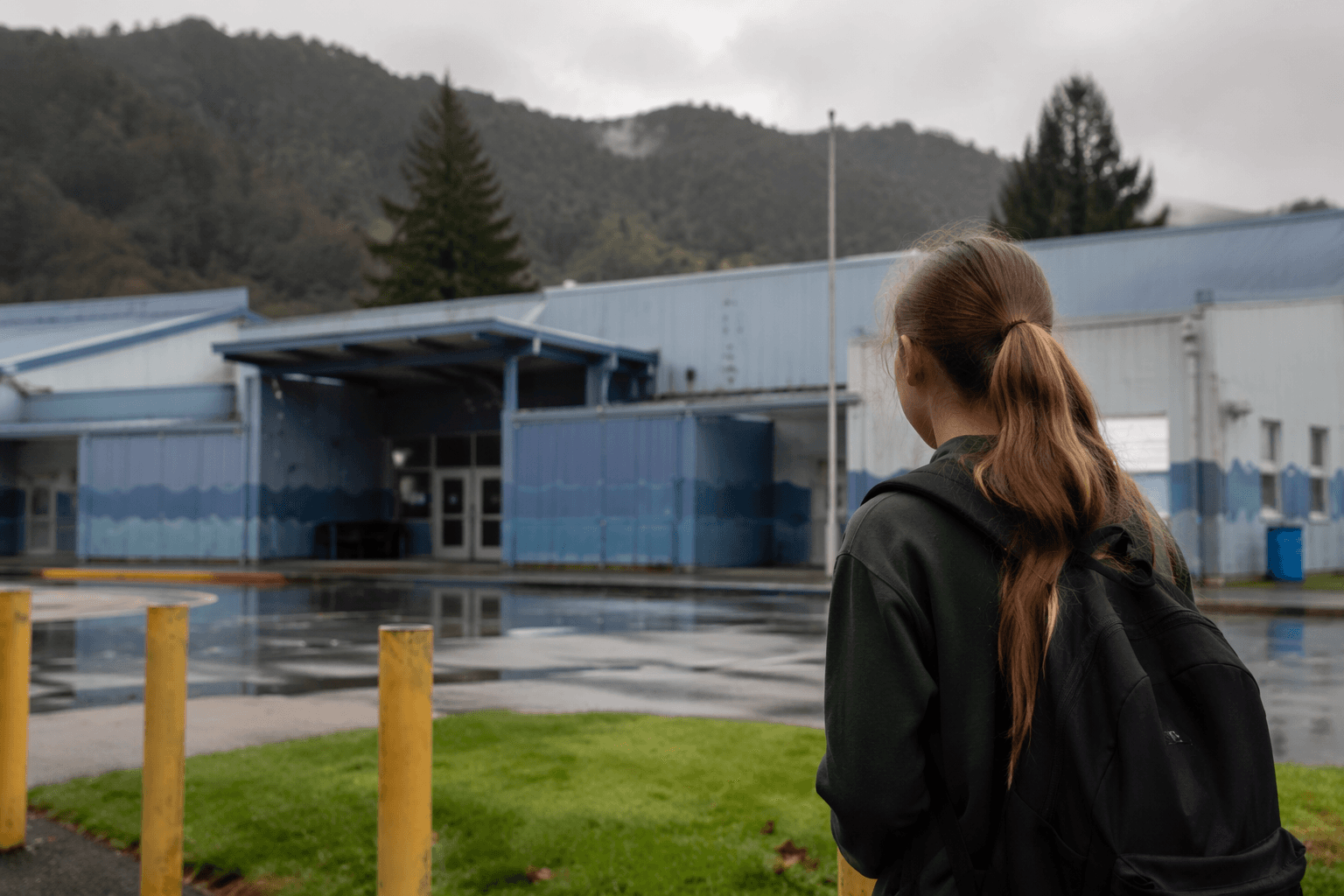
Cal Poly Humboldt Study Finds Power Line Risks Could Spark Wildfires, Outages
Cal Poly Humboldt researchers found large piles of felled branches and stressed oak trees beneath North Coast power lines, a combination that could spark wildfires and outages affecting hundreds of thousands.

Cal Poly Humboldt researchers found that tree-felling and pruning left large quantities of coarse woody debris beneath power line corridors in Humboldt County and other North Coast sites, a fuel buildup that the team says could increase both wildfire ignitions and large-scale outages. The study, published in the Journal of Environmental Management and reported locally on Feb. 17, 2026, links on-the-ground vegetation conditions to community risk across rural, heavily timbered parts of Northern California.
The team was led by forest physiology professor Lucy Kerhoulas (spelled “Kerhoulis” in one transcript) and included Rosemary Sherriff, Geography, Environment & Spatial Analysis professor; Kerry Byrne, Environmental Science & Management professor; and forestry graduate student Zoe Ziegler. Researchers worked directly with a utility company during field work and wrote that the collaboration allowed them to connect field observations with "real-world risks to communities" and to focus management where it matters most.
Field methods combined comparative sampling near power lines with sites farther from lines, core samples of tree growth and condition, and pilot remote sensing. Over a three-year period the team sampled 60 locations across Northern California, including sites in Humboldt, Trinity, Mendocino and Shasta counties. On the coring work, researchers reported: "They cored a bunch of the trees taking out like a little piece of wood from each tree so that we could look at growth patterns, trying to better understand how tree vigor and productivity might affect their likelihood for failure."
Major findings center on leftover fuels and species vulnerability. The researchers documented higher levels of coarse woody debris adjacent to power lines and traced much of that material to utility vegetation crews' pruning and felling operations. That debris, the paper says, increases fuel loads beneath transmission corridors; Kerhoulas urged a change in post-treatment practice: "Part of the protocol," she said, "should be that as much debris as possible is removed from the site rather than left on site where it can act as a fuel."
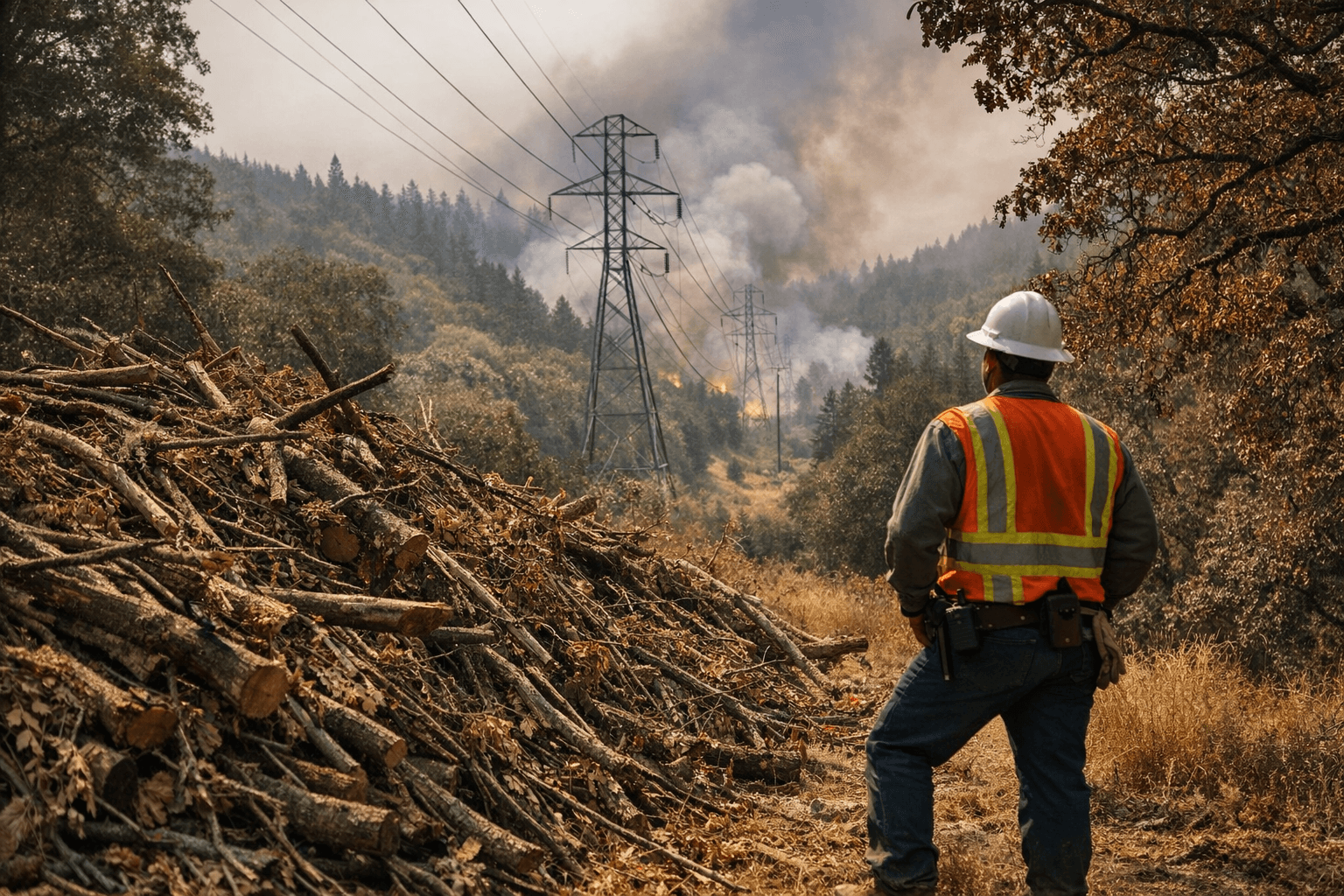
The study also singled out deciduous oaks as particularly likely to topple. Redwoodnews quoted Kerhoulas saying oak trees "appeared more stressed and damaged than nearby conifers" and called the discovery "a big kind of like eye opener" about the need to remove leftover branches to minimize fire risk. The researchers underscored the human stakes, noting that "tree failures can cause fire ignitions and/or power outages, which can create a lot of issues for residents," and that outages from falling trees or branches "are among the most common reasons for power outages" and can affect "hundreds of thousands of people at a time."
The team is also "experimenting with remote sensing tools to help spot unhealthy trees across large areas," a step toward earlier detection of at-risk trees before they fail. Sources differ on funding details: multiple outlets report a utility partnership, while Redwoodnews explicitly states the study was funded by PG&E; that specific funding claim is attributed to Redwoodnews. Local reaction included a Facebook comment on the Redwoodnews post: Tim La Londe wrote, "Wow. That took a study? Nothing hidden there."
Cal Poly Humboldt researchers say the work is intended to guide practical vegetation-management changes along North Coast power corridors so utilities and land managers can prioritize debris removal and monitor species such as oaks to reduce the twin risks of ignitions and prolonged outages.
This article was produced by Prism’s automated news system from verified source data, official records, and press releases, then run through automated quality and moderation checks before publishing. The system is built and supervised by the people who set the standards it runs under. Read our full AI policy.
Did this article answer your question?