Coastal Flood Watch Remained in Effect as King Tides Raised Flood Risk
A Coastal Flood Watch issued Dec. 31 by the National Weather Service remained in effect through Saturday afternoon, warning that high tides combined with an incoming storm could produce moderate to localized major flooding along Humboldt County shorelines. The advisory highlighted up to 1.5 feet of saltwater inundation in low-lying areas, a public health and safety concern for residents who live, work, or travel near Humboldt Bay.
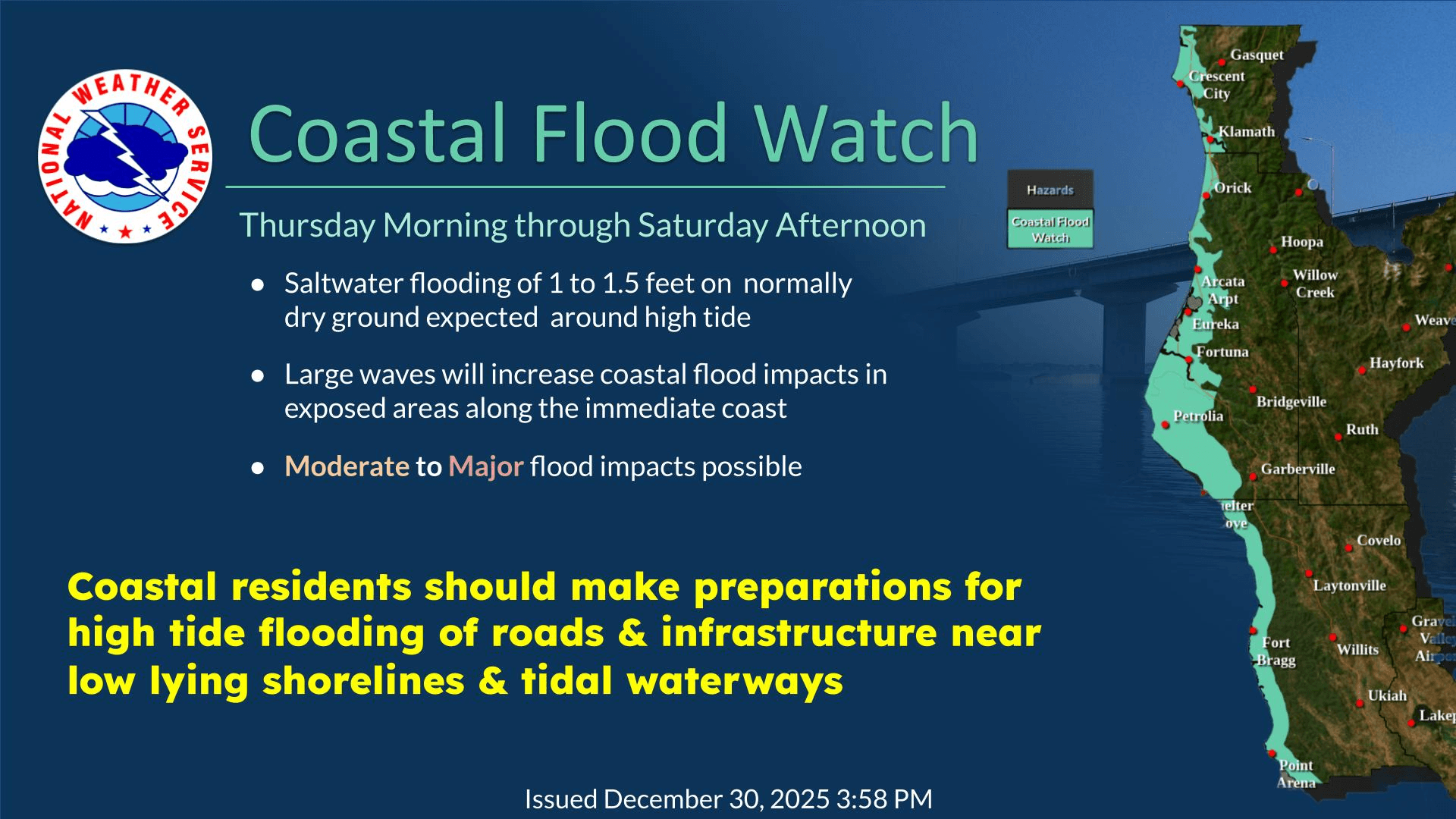
The National Weather Service issued a Coastal Flood Watch on Dec. 31 that covered Thursday morning through Saturday afternoon, citing the combination of high astronomical tides and an incoming storm front. The advisory said the situation could send seawater into low-lying shorelines and tidal waterways around Humboldt Bay and the Redwood Coast, increasing the risk to homes, roads, and essential infrastructure.
“A Coastal Flood Watch means that flooding is possible but not imminent,” the advisory stated. “High astronomical tides and large surf may cause moderate to localized major flooding in low-lying areas along the Redwood Coast. Up to 1.5 [feet] of saltwater inundation above ground level is possible in low-lying areas near shorelines and tidal waterways.” The advisory also warned that rain could begin Dec. 31 with stormier conditions developing on Friday.
For Humboldt County residents, the convergence of king tides and storm surge raises both immediate safety and longer-term public health concerns. Saltwater inundation can flood roadways and ground-floor living spaces, damage septic systems and potable water supplies, and leave standing water that promotes mold growth and bacterial contamination. Power outages driven by coastal storm damage complicate heating and water treatment, and can disproportionately affect older adults, people with disabilities, and households with low incomes that may lack resources to relocate or repair damage quickly.
Local emergency responders and public health officials advised residents in flood-prone and low-lying neighborhoods to take precautions to protect people and property. Residents were urged to avoid driving through flooded streets, move vehicles and valuables to higher ground when possible, secure loose objects that can be swept away by tides and runoff, and check on family members and neighbors who may need assistance. After flooding, residents should be cautious about contact with floodwater and follow public health guidance about cleaning, disinfection, and food and water safety.
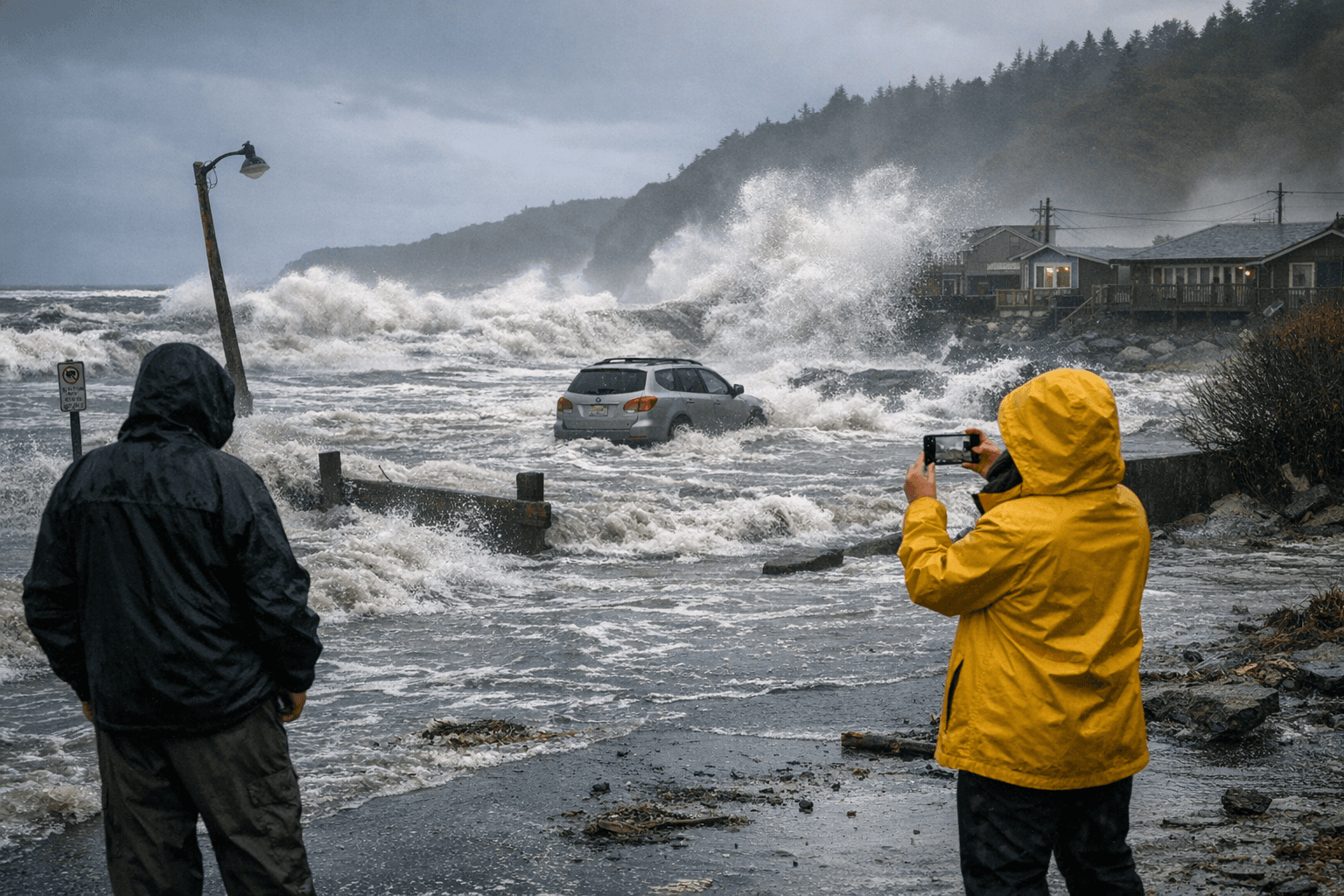
Infrastructure impacts such as road closures, interruptions to transit routes around the bay, and delays to deliveries and essential services are possible during and after peak tides. These disruptions can magnify existing inequities by limiting access to healthcare, food, and employment for people who rely on public transportation or who cannot afford alternative arrangements.
As the watch period progressed, residents were advised to monitor the National Weather Service and county emergency alerts for updates on tidal forecasts and local advisories. Preparing for short-term displacement and ensuring a plan for safe drinking water, medications, and communications can reduce harm and speed recovery for the most vulnerable households.
This article was produced by Prism’s automated news system from verified source data, official records, and press releases, then run through automated quality and moderation checks before publishing. The system is built and supervised by the people who set the standards it runs under. Read our full AI policy.
Did this article answer your question?