Elk River restoration aims to heal habitat, cut flooding, revive salmon
Elk River’s cleanup is no symbolic gesture: it’s a 14-mile, decade-long repair plan meant to cut sediment, ease flooding, and give salmon a real chance to return.
A river that still carries the cost of old land-use decisions
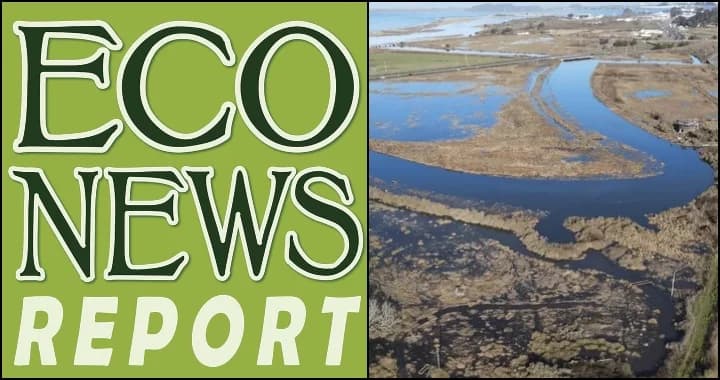
Elk River is not being restored because it makes for a good conservation story. It is being restored because sediment, flooding, and habitat loss have become a daily burden for the people living and working in the watershed. The river was listed in 1998 as a sediment-impaired waterbody under Clean Water Act Section 303(d), and the North Coast Regional Water Quality Control Board says that sedimentation has contributed to nuisance flooding, property loss, loss of access, and risks to human health and welfare.
That is the real measure of this project: not just whether salmon return, but whether nearby landowners see fewer soggy fields, whether roads and driveways wash out less often, and whether the watershed becomes less expensive to live with. The Elk River watershed has carried the effects of colonization, drainage, cattle, logging roads, landslides, and industrial timber management for generations. Restoration is the attempt to make that damage visible in policy terms and fixable in practical terms.
What the restoration is actually trying to do
The work now underway is ecosystem-wide, not a one-off cleanup. California Trout’s recovery program treats the Elk River as a basin that needs its basic functions repaired from the headwaters to the mouth: sediment movement, water quality, flood resilience, aquatic habitat, and riparian conditions all have to improve together if the river is going to recover.
CalTrout says the watershed covers 58.3 square miles, and 82% of it is privately owned and actively managed for industrial timber production. That matters because it shows why this is not a simple public-lands restoration project. The watershed also includes cattle grazing, dairies, cannabis production, and rural residences, while public lands include the Headwaters Forest Preserve and the CDFW Elk River Wildlife Area. Any plan that ignores that mix of ownership and land use would miss the real battlefield.
The first phase of the NOAA-funded work covers about 14 miles of river channel, stretching from Highway 101 to portions of the North and South Forks. The stated goals are concrete: improve hydrologic and sediment processes, improve water quality, improve aquatic and riparian habitat, and reduce nuisance flooding on rural residential properties and agricultural land in an economically disadvantaged community. That is what “restoration” looks like on the ground here: less mud where homes and fields are, more stable banks where water can move without wrecking everything around it.
Why the river matters beyond fish
Elk River is the largest freshwater tributary to Humboldt Bay, which makes it more than a local drainage problem. What happens upstream affects the estuary, and what happens in the estuary affects the broader bay ecosystem. CalTrout says the river historically provided miles of habitat for salmon and steelhead, but today it offers only limited critical habitat for federally listed salmonids including coho, Chinook, steelhead, and coastal cutthroat trout.
That decline is not just ecological trivia. When a river loses its ability to carry sediment and water in a healthier way, the costs spill outward: more flooding, more damaged access, more pressure on farms and homes, and fewer places for fish to survive. The river’s condition also reflects a wider Humboldt County pattern, where earlier development choices can leave a watershed impaired long after the original logging road or drainage ditch was built.
The state’s Upper Elk Sediment TMDL Action Plan, adopted in 2016, approved by the State Water Resources Control Board in 2017, and then approved by the Office of Administrative Law and EPA in 2018, is the policy backbone behind that cleanup. The plan is now incorporated into the North Coast Basin Plan, which means the restoration effort is not just aspiration. It is part of a regulatory framework that recognizes sediment as a long-term source of harm.
Who is paying, and what residents should expect to wait for
The money so far comes from public and philanthropic sources, not from a single local assessment that residents can point to and blame or praise. NOAA provided a $6 million grant in 2024 for the restoration effort, and that funding is tied to a decade-long planning and implementation effort. In April 2025, CalTrout and the State Coastal Conservancy announced the acquisition of 175 acres of former ranch land along the Elk River for $1.8 million, funded through a State Coastal Conservancy grant with support from The Conservation Alliance.
That tells residents two important things. First, the work is being paid for in layered pieces, with federal, state, and private-support dollars. Second, the benefits will not arrive overnight. CalTrout’s recovery program carries an estimated completion date of 2030, which means the county is looking at years of incremental work before anyone can fairly judge whether sediment is down, flood risk has eased, or habitat has meaningfully improved.
For nearby property owners, that timeline matters. It means less of a quick fix and more of a long campaign: engineering, land management, restoration planting, monitoring, and repeated adjustments. For water users and taxpayers, it means paying attention to which agencies are funding which phase, because the public is already underwriting much of the effort through grants and state programs. The accountability question is not whether the county should restore Elk River, but whether the promised gains show up where they are supposed to: on the flood-prone ground, in the channel, and in the estuary.
Land acquisition is part of the repair, not a side story
One of the most consequential recent moves was the 2025 acquisition of four former ranch parcels totaling 175 acres. Three of the parcels are slated for transfer to the California Department of Fish and Wildlife’s Elk River Wildlife Area, while the fourth was returned to the Wiyot Tribe. That is a major shift in how the river corridor is being managed.
The Wiyot Tribe identifies the site as Chwanuchguk, a traditional fishing village where salmon were harvested and dried. Tribal Chair Brian Mead has said access to the Hikshari’, or Elk, River and fish restoration are vital to continuing cultural practices. That turns land acquisition into something more than habitat math. It is also a question of cultural repair and stewardship, with restoration tied directly to tribal access and continuity.
This part of the project matters because it shows what restoration can mean when it is not just technical, but also relational. If the county is serious about healing the watershed, then returning land and restoring access are part of the work, not a separate gesture.
The estuary shows what success could look like
The estuary provides the clearest glimpse of what recovery can produce. The City of Eureka completed a 78-acre tidal wetland restoration in the Elk River Estuary, and post-project monitoring found 21 fish species and three crustacean species in the project area, including Tidewater Goby, Longfin Smelt, and Coho Salmon. That kind of result does not solve every problem in the watershed, but it shows why estuary restoration matters for Humboldt Bay as a whole.
For residents, the lesson is practical: when wetlands function better, they can help buffer water, support fish, and improve the health of the river mouth that links the watershed to the bay. For a county that has spent generations living with the consequences of altered waterways, that is not a small gain. It is the kind of improvement that can slowly change how a river behaves, how land holds up, and how much damage winter storms leave behind.
Elk River restoration is still a work in progress, but the terms are now plain. The basin has been impaired for decades, the repair plan is public, the funding is real, and the timeline reaches to 2030. What happens next will determine whether Elk River becomes a model of long-delayed repair or another promise that never quite reaches the people living with the water.
This article was produced by Prism’s automated news system from verified source data, official records, and press releases, then run through automated quality and moderation checks before publishing. The system is built and supervised by the people who set the standards it runs under. Read our full AI policy.
Did this article answer your question?