Eureka Challenges Its Regional Low-Income Housing Allocation Before HCAOG
Eureka is the only Humboldt County city to challenge its state housing allocation, arguing a short average commute unfairly loaded it with 967 low-income units.
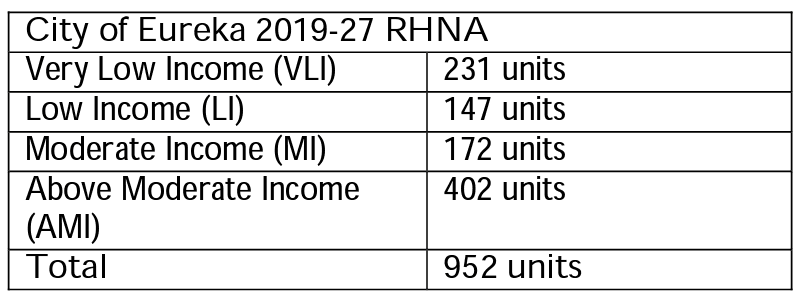
Eureka stood alone among Humboldt County jurisdictions when it formally challenged its regional housing allocation before the Humboldt County Association of Governments, arguing that a methodology weighting short commute distances had skewed the income mix of housing the city is required to plan for through 2035.
The Eureka City Council agreed in January that the allocation would burden the county seat with a disproportionate share of the region's low-income housing units. The council then voted to appeal, and HCAOG scheduled a public hearing on the matter for the week of March 18.
At the center of the dispute is how HCAOG divided Humboldt County's share of state-mandated housing construction by income category. Every eight years, California determines how many housing units each region needs based on factors including homeless counts, vacancy rates, and the share of residents spending more than 30% of their income on housing. For the 2027-2035 cycle, the state assigned Humboldt County nearly 6,000 units total. HCAOG then distributed that figure among local jurisdictions, breaking each city's share into income tiers ranging from acutely low to above moderate. HCD signed off on the methodology after the HCAOG board adopted its final draft in December.

Eureka received an assignment of 1,740 new housing units, including 967 designated for low-income residents. No other jurisdiction filed an appeal.
The city's objection is not to the total unit count but to how HCAOG sorted those units by income level. To calculate income-category distribution, HCAOG used two metrics: an opportunity score, which rewards higher education levels, higher incomes, and higher property values; and vehicle miles traveled, which measures average commute distance and was weighted more heavily than the opportunity score. Eureka ranked low on both. Its relatively short average work commute, which would typically suggest transit-accessible, employment-close conditions, instead translated into a higher assignment of below-moderate-income housing under the formula.
The gap is quantifiable but contested in significance. Almost 34% of Eureka's households are very low-income, yet the allocation assigned the city responsibility for almost 37% of the region's very low-income housing units. HCAOG's own framing puts the net shift at 48 units moving to the low-income category rather than the moderate-income category out of more than 1,700 total.
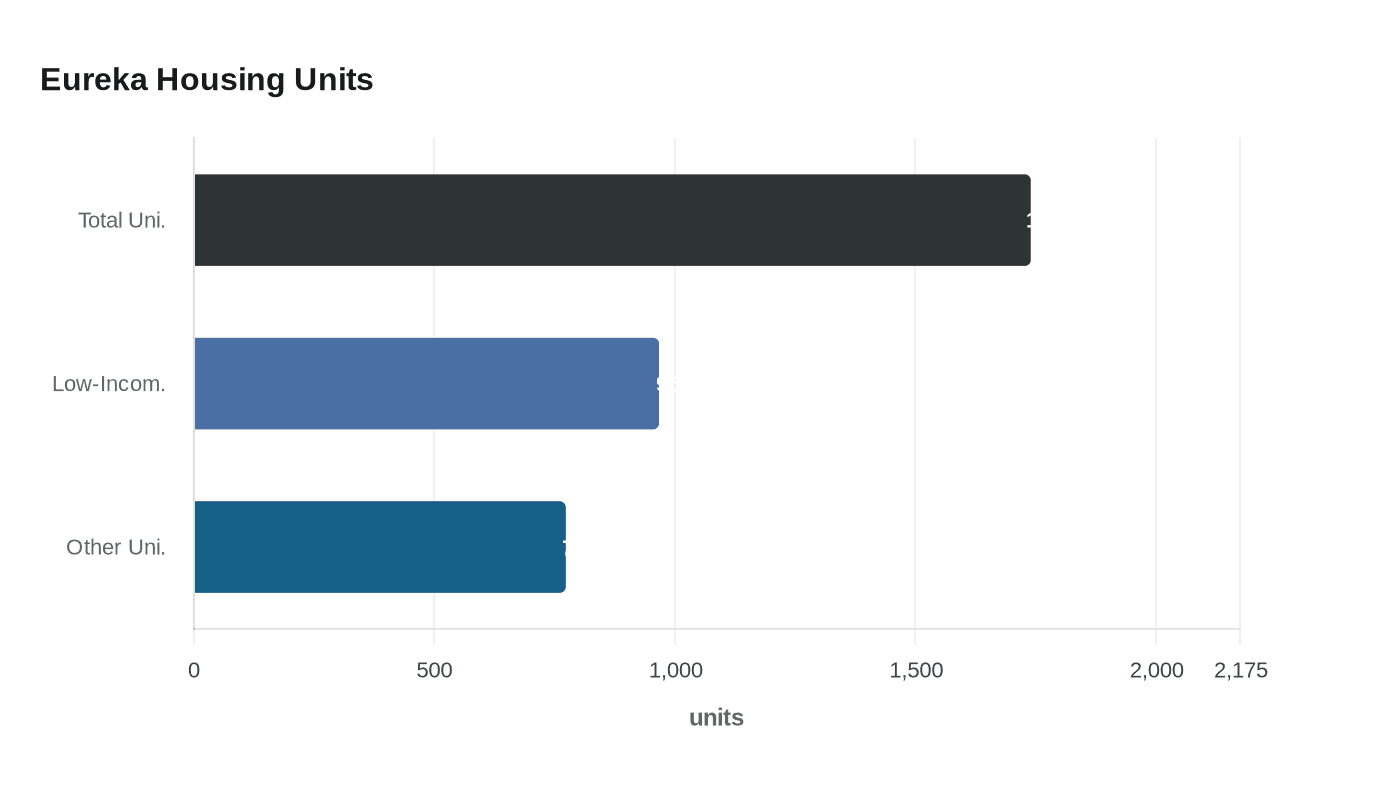
City officials characterized the outcome differently. Eureka's appeal letter argues that over-weighting the commute metric produced a result that concentrates affordable housing obligations in a city already carrying a high poverty load. "In this context, further reducing the proportion of Moderate and Above-Moderate housing assigned to Eureka risks reinforcing income imbalance rather than promoting a more integrated and economically diverse housing stock," the letter states.
The appeal does not specify a revised unit breakdown; it asks the HCAOG board for a "rebalancing." Whether that request results in a revised allocation, and whether HCD would need to re-approve any changes, will be among the questions before the board as it takes up the appeal.
This article was produced by Prism’s automated news system from verified source data, official records, and press releases, then run through automated quality and moderation checks before publishing. The system is built and supervised by the people who set the standards it runs under. Read our full AI policy.
Did this article answer your question?