Eureka Festival Celebrates Palestinian Culture, Food, Music, and Dance
Stuffed grape leaves, live music, and Palestinian embroidery filled the Humboldt UU Fellowship Saturday for "Festival Worthy of Life," a three-hour celebration of culture and resilience.
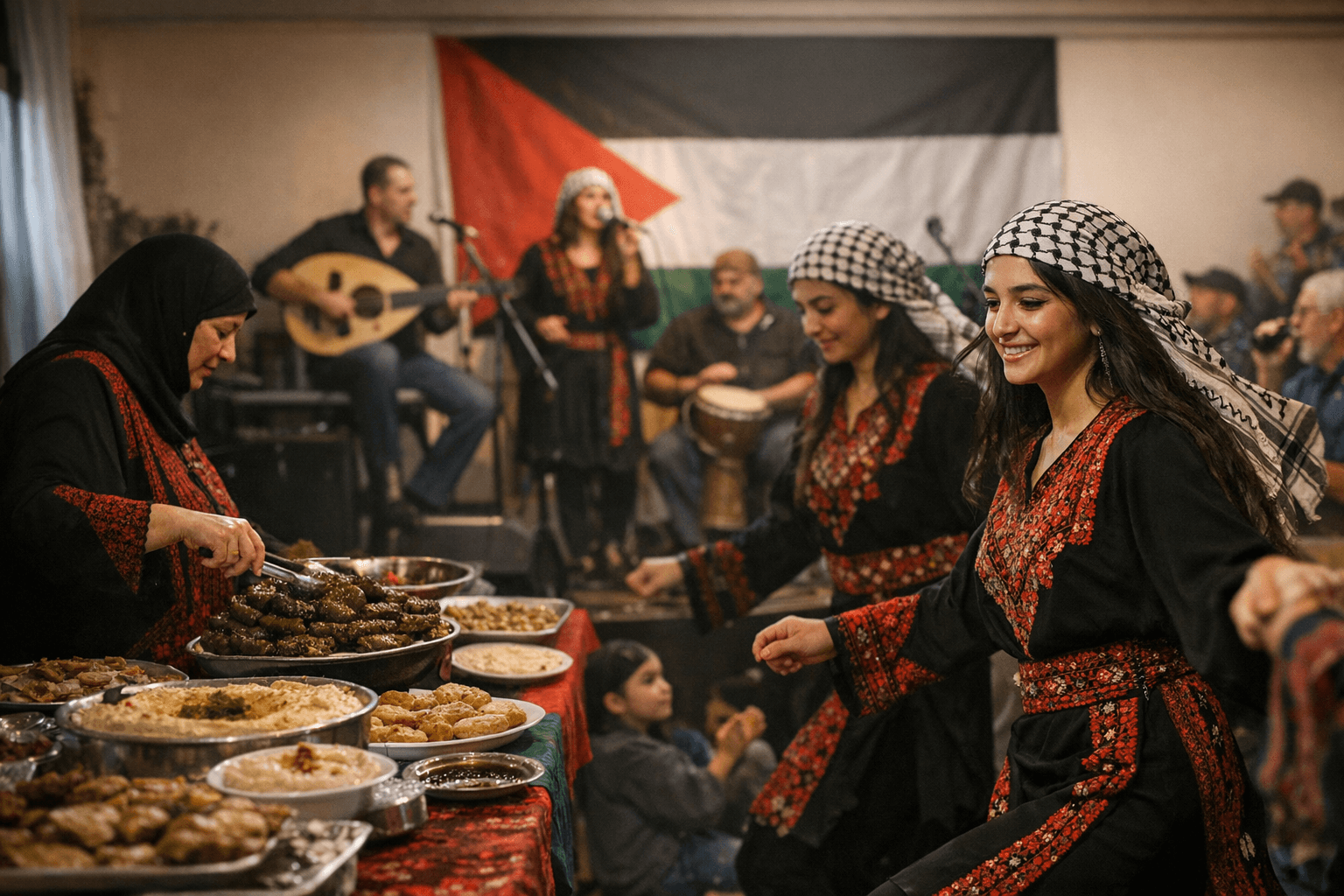
Warak dawali, the stuffed grape leaves central to Palestinian home cooking, were rolled by hand Saturday afternoon inside the Humboldt Unitarian Universalist Fellowship as part of "Festival Worthy of Life," a community festival drawing families, students, and elders to a three-hour celebration of Palestinian culture in Eureka.
The festival ran from 2:00 p.m. to 5:00 p.m. on March 28 and was organized by local community groups intent on showcasing Palestinian traditions through participatory, intergenerational programming rather than passive observation. Attendees moved between stations offering children's art-making, live music and dance performances, and hands-on demonstrations of Palestinian embroidery, a centuries-old craft tradition typically passed between generations of women. The warak dawali station invited participants to learn the preparation firsthand, folding seasoned rice and herbs into grape leaves alongside experienced cooks.
The Humboldt Unitarian Universalist Fellowship, a longstanding venue for civic and cultural gatherings in Eureka, provided the setting. Organizers promoted the event through KHSU's community calendar, a widely used public listing that reaches university students, faith communities, and activist groups across the county.
The festival's name, translated from Arabic, carries weight: "worthy of life" reflects a phrase tied to Palestinian literary and cultural expression, and organizers framed the event explicitly around both cultural celebration and resilience. That framing positioned the afternoon not just as a cultural showcase but as a statement of presence, offered through food, craft, and song rather than protest or proclamation.
Humboldt County's cultural calendar has grown increasingly diverse in recent years, with events organized by newly arrived communities alongside those with deep regional roots. Festivals that combine hands-on craft, regional food, and live performance consistently draw cross-demographic crowds, and Saturday's event followed that model, designing its programming to be accessible to children and elders alike.
For the small vendors and artists who participated, events like this represent one of the few local forums where Palestinian cultural work reaches a broad public audience outside of academic or activist contexts. The KHSU listing gave the festival a wider footprint than social media alone could provide, extending its reach to listeners and community members who might not otherwise encounter this programming.
This article was produced by Prism’s automated news system from verified source data, official records, and press releases, then run through automated quality and moderation checks before publishing. The system is built and supervised by the people who set the standards it runs under. Read our full AI policy.
Did this article answer your question?