Ferndale balances tourism and small-town life in historic downtown
Ferndale's Main Street draws visitors, but design review, housing policy and parking rules keep the Victorian village working for year-round life.
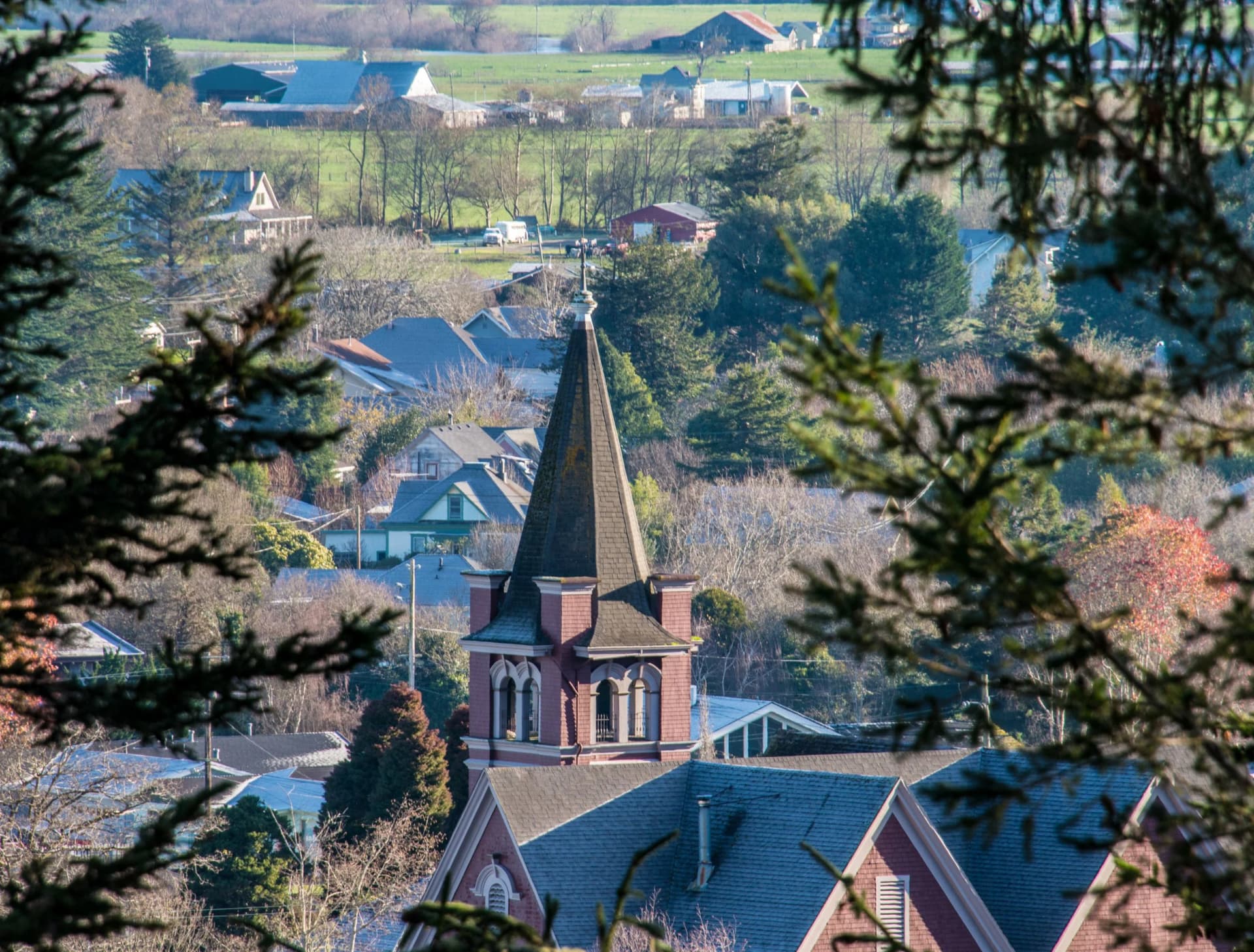
Ferndale’s downtown works because it never stopped being a place where people live and do business. City Hall sits at 834 Main Street, the city protects historic and design-controlled blocks with permit review, and visitors still come for restored Victorian storefronts, lodging, dining and seasonal events that make the Victorian Village distinctive.
A historic core that is regulated, not frozen
The city has drawn a clear line around what makes Ferndale recognizable. Its Main Street Historic District and Design Control Zone are mapped separately, and property owners in those areas must get a Design Review Permit before making outside changes such as painting, fences, decks or windows. Ferndale was designated a State Historic Landmark in 1975, and the city’s General Plan says its long-term land-use policy is meant to guide growth, public services, circulation and preservation of the historic character residents value.
That matters because the town is trying to keep its buildings usable, not turn them into scenery. The city also requires a business license for anyone doing business in Ferndale, and businesses outside commercial zones may need a home-occupation permit, which helps keep commercial activity from spilling too easily into residential streets.
Why visitors keep coming
The draw is larger than architecture alone. Ferndale’s official visitor guide pitches the town as a place to stay, eat, shop and attend events, while the shopping page highlights lamppost-lined blocks of lovingly restored Victorian buildings filled with independently owned boutiques, specialty shops, artisan galleries and an old-fashioned general store.
The route into town is part of the experience. Travelers coming from Highway 101 cross historic Fernbridge, the 1,320-foot concrete arch bridge built in 1911, then follow five miles of pastoral views into Ferndale’s historic Main Street. The visitor guide also points to the Ferndale Cemetery, two blocks from Main Street, as well as the broader pull of the Lost Coast and Redwood country that frames the town’s tourism identity.
That geography helps explain why Ferndale can attract day-trippers, heritage travelers and longer-stay guests without depending on big-box development. The sequence is compact and legible: bridge, valley, Main Street, lodging, dinner, then back out through the Eel River corridor.
Where the tradeoffs show up
Tourism supports restaurants, shops, lodging and event venues, but the limits of a small downtown are easy to see on the curb. On Main Street between Ocean Avenue and Shaw Avenue, parking is limited to two consecutive hours from 6 a.m. to 6 p.m., Sunday excepted, a plain sign that curb space is managed as a scarce resource in the commercial core.
The city’s planning documents show why those limits matter. Ferndale’s General Plan treats circulation, public services and facilities, environmental quality, open space preservation and safety as core issues, and the city’s noise and air-quality element specifically points to sensitive uses such as schools and residential neighborhoods. In a one-square-mile city in the Eel River Valley, even modest visitor surges land on the same streets, sidewalks and parking spaces that residents use every day.
The tension becomes most visible during events that turn Main Street into both an attraction and a working corridor. Hospitality Night keeps merchants open late on the first Friday in December, and the holiday tree at the end of Main Street is maintained and lit with volunteer firefighter help, drawing people into the same blocks that still serve as the town’s everyday center.
The policies that keep Ferndale livable
Ferndale’s housing element is one of the clearest answers to the question of how a destination town stays a town. It says the city will guide the preservation, improvement and development of housing for all economic levels and encourage quality, varied, affordable housing by both public and private sectors. That is the unglamorous side of keeping the Victorian draw sustainable, because a town that attracts visitors still needs year-round households to support schools, local services and the workforce behind the storefronts.
The permit system reinforces that balance. Ferndale’s regulations cover everything from building work and zoning changes to use permits, bed-and-breakfast approvals and design review, so the town can welcome lodging and small business activity without letting the historic district drift out of scale. The effect is not accidental preservation, but active control over how the downtown changes block by block.
The Chamber of Commerce sits inside that same bargain. Its role is to promote travel tourism and a strong business community in historic downtown Ferndale, which means the local economy depends on steady visitor interest while the city keeps the final say on land use, design and permits. That is the mechanism that lets tourism support the town without swallowing it.
How Ferndale stays itself
The strongest version of Ferndale is not a theme park version of the past. It is a compact city where Main Street still carries city government, small businesses, housing policy, event traffic and daily errands in the same few blocks, while Fernbridge, the cemetery and the broader Lost Coast approach keep the visitor economy tied to place rather than spectacle.
That mix is what gives the downtown staying power. Ferndale’s preserved storefronts, scenic approach, housing rules and parking limits all point in the same direction: tourism lasts here only if the town remains usable after the visitors leave.
This article was produced by Prism’s automated news system from verified source data, official records, and press releases, then run through automated quality and moderation checks before publishing. The system is built and supervised by the people who set the standards it runs under. Read our full AI policy.
Did this article answer your question?