Ferndale's Victorian Village Offers History, Culture, and Small-Town Charm
Ferndale's 1,372 residents share a Victorian village that has hosted the county fair since 1896 and lights the nation's tallest living Christmas tree every winter.
With a population of just 1,372, Ferndale punches far above its weight. "Tucked away on California's remote Redwood Coast, historic Ferndale is a hidden oasis of small-town charm, enchanting scenery, and spirited North Coast culture," as the town's visitor materials put it. What that description understates is the sheer density of history compressed into this Eel River Valley settlement: an 1852 founding story, continuously operating Victorian landmarks, a museum with a working seismograph, and a Christmas tree tradition that outlasted World War II blackouts.
How Ferndale Was Founded
The Gold Rush set the chain of events in motion. When fortune seekers poured into Humboldt County in 1849 and 1850, most never struck gold, but some pivoted to the region's timber and rich river-bottom farmland. In 1852, three men, William Allen and brothers Seth and Steven Shaw, borrowed a canoe from resident Wiyots and paddled up the Eel and Salt rivers to a small creek. They claimed the land, began clearing dense fern thickets, and built a cabin that housed ten men that first winter.
Two years later, Seth Shaw replaced that cabin with a Victorian residence he named Fern Dale. The house served the growing community as hotel, saloon, store, and post office simultaneously, and it remains a Ferndale landmark today. The town grew quickly enough that by 1855 it counted 22 registered voters, a meaningful civic foothold for a settlement still measured in acres of cleared fern.
From that frontier start, Ferndale's timeline accumulated milestones at a steady pace: Fern Cottage constructed in 1866, the Historic Cemetery founded in 1868, the Humboldt County Fair making its home here in 1896, and the Christmas tree lighting tradition beginning in 1934.
What to See: Landmarks and Museums
For a town of this size, the density of worthwhile stops is remarkable. The Humboldt County Historical Society has called Ferndale "one of the must-see spots for visitors to and residents of Humboldt County," and the case is easy to make once you start walking.
*Main Street* is the natural anchor. Independent boutiques, galleries, restaurants, and shops line the historic storefronts, and it functions as both the practical and aesthetic center of a visit. Plan to return here for lunch after morning explorations.
*The Ferndale Museum*, just a block off Main Street, is more interactive than the word "museum" might suggest. Its mission is bringing "an appreciation and understanding of the culture and heritage of Ferndale, the Eel River and Mattole Valleys" to the community and its visitors. The collection includes a working Bosch-Omori seismograph, functioning crank phones, an operating telephone switchboard, an active blacksmith shop, a barber shop exhibit, a player piano, and a vast display of artifacts used by early Humboldt County residents. Beyond the permanent collection, the museum publishes a magazine, produces original documentary videos, conducts tours of historic houses and businesses, stages photography exhibits, and publishes original biographies and historic cookbooks. It also assists visitors with genealogical research. Reach the museum at 707-786-9857.
*Fern Cottage Historic District*, also just a block from Main Street, offers something genuinely rare: a Victorian-era farmhouse still tended by descendants of the family that built it. Joseph and Zipporah Russ constructed the picturesque farmhouse in 1866, and the Russ family has maintained it ever since. The collection inside, Victorian-era and early 20th-century furniture, clothing, and appliances, consists almost entirely of pieces the family actually purchased and used. It is less a recreated period interior than an undisturbed household, which gives the place an intimacy that formal house museums rarely achieve.
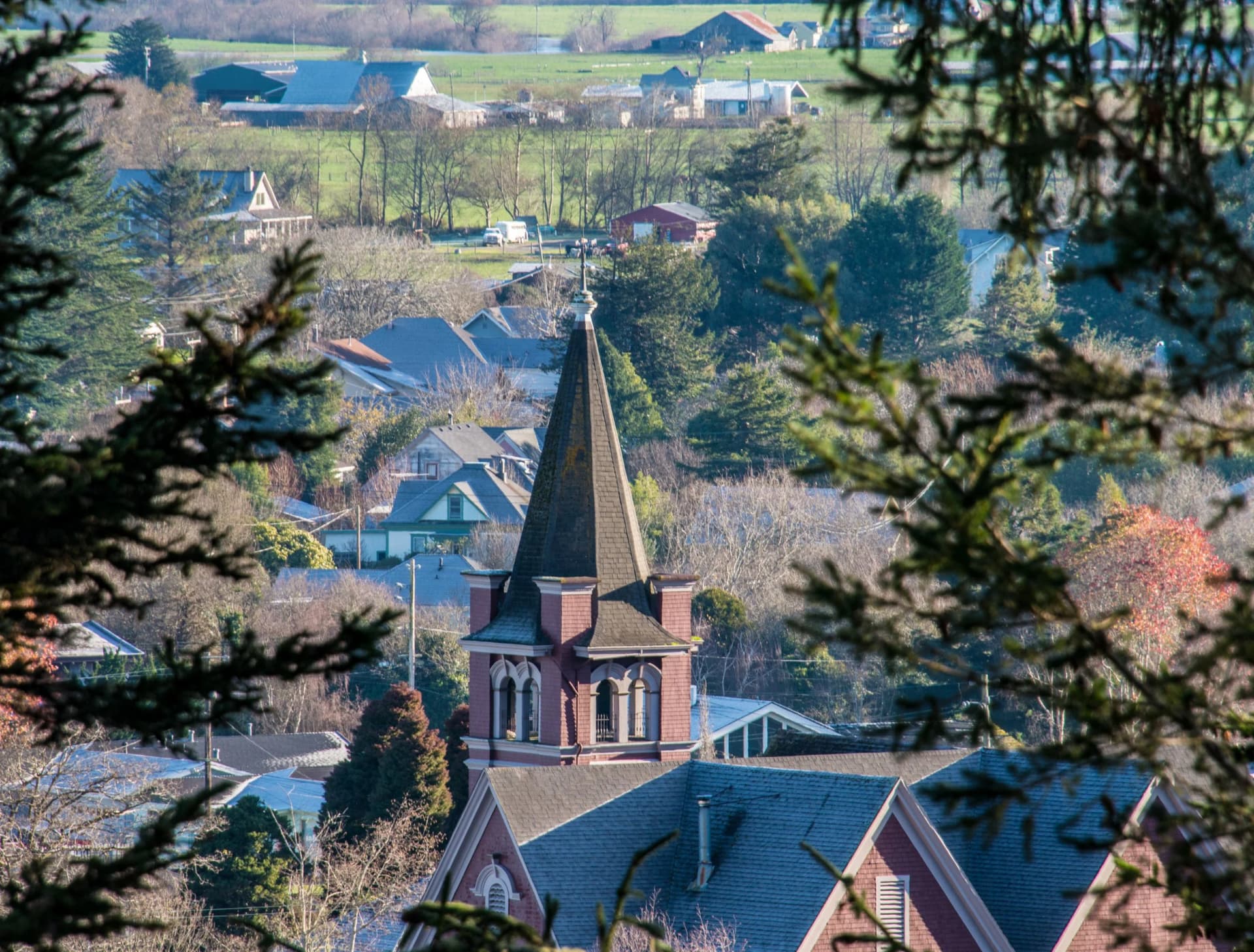
*Ferndale Historic Cemetery* sits two blocks from Main Street, sprawling up a redwood-capped hill behind the Old Steeple, a Victorian church that now operates as a beloved music venue. Founded in 1868, the cemetery contains several mausoleums alongside rows of unique headstones, obelisks, and memorial statuary. A walk to the top rewards visitors with panoramic views of Ferndale and the Eel River Valley below. The cemetery is open daily from 9 a.m. to 6 p.m.
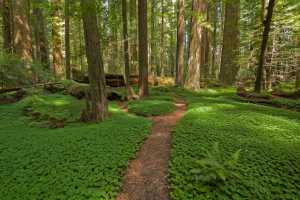
*Russ Park* contains the southernmost stand of Sitka spruce in California, a fact that gives the forest walk a quietly consequential edge: these trees mark the geographic limit of a species more commonly found hundreds of miles north. A loop trail circles a pond named for Ferndale pioneer Zipporah Russ, providing a gentler walk that connects naturally to the historic district bearing her name.
*Centerville Beach*, described as secluded and identified as the northernmost point on the Lost Coast, offers coastal scenery at the far end of a short drive from town. The combination of old-growth forest in Russ Park and windswept Lost Coast beach within a few miles of a Victorian main street is an unusual concentration of northern California landscapes.
Annual Events and Living Traditions
Ferndale's calendar is anchored by events that have run long enough to become inseparable from the town's identity.
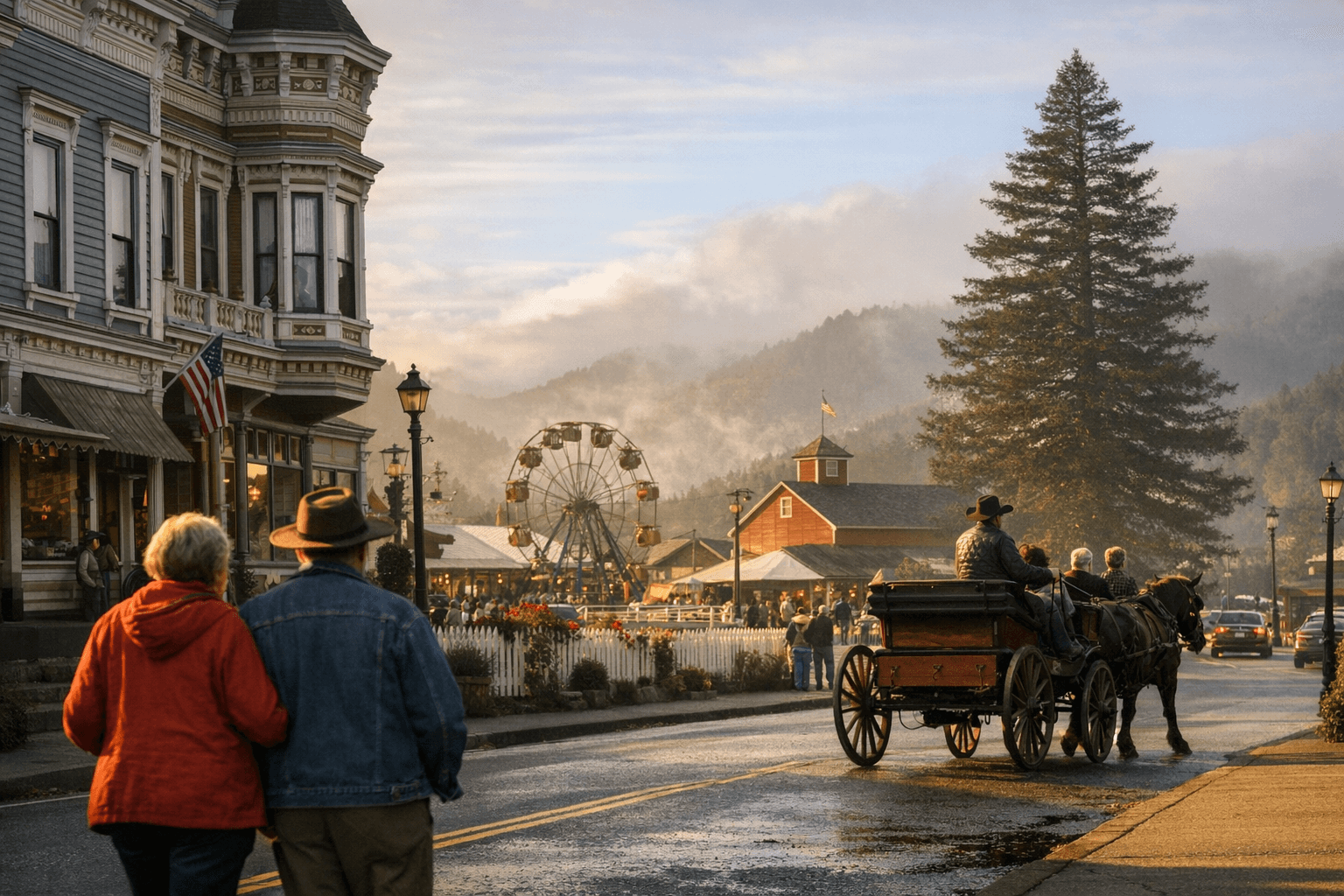
The Humboldt County Fair has called Ferndale home since 1896, making it one of the longer-running county fairs on the North Coast. The town also hosts Fourth of July parades, ethnic festivals, and other community celebrations throughout the year.
The Christmas tree tradition deserves special mention. "The nation's tallest living Christmas tree has lit Ferndale's holidays every year since 1934 (excluding World War II blackouts)," according to the Humboldt County Historical Society. That parenthetical is significant: the tradition persisted through the war years in spirit even when the blackouts made the lighting impossible.
The Kinetic Sculpture Race is perhaps Ferndale's most distinctive export. Ferndale sculptor Hobart Brown started the race in 1969, and Ferndale serves as its terminus, the finish line for a multi-day, human-powered sculpture race that has become one of Humboldt County's signature spectacles.
Film History
Ferndale's preserved architecture has made it a recurring film location since the 1940s. Productions have temporarily redone certain facades for period-specific shoots, giving locals the chance to mingle with film crews and work as extras. Outbreak (1995) and The Majestic (2001) are among the most prominent titles to use Ferndale as their backdrop. The Humboldt County Historical Society holds more than 2,000 photographs by Lloyd Stine, whose work documented Humboldt County from at least the late 1940s and 1950s and provides a visual record of how Ferndale looked during that early film era.
Day-Trip Planning
A practical sequence for a full day: start with a morning hike through Russ Park to see the Sitka spruce stand and walk the loop around the Zipporah Russ pond. Return to Main Street for lunch at one of the independent restaurants, then spend the afternoon working through the Ferndale Museum's interactive exhibits before a late-afternoon walk through the Historic Cemetery and its valley views.
For visitors extending into a longer trip, the Victorian seaport of Eureka, the largest coastal city between San Francisco and Portland, lies north along the Redwood Coast and offers another concentration of Victorian architecture, including the revitalized waterfront of Old Town Eureka.
For visitor information, contact VisitFerndale at 707.786.4477 or visit visitferndale.com. Call the Ferndale Museum directly at 707-786-9857. Hours and admission fees are not listed in current materials and are worth confirming before arrival, particularly for Fern Cottage tours and museum access.
Ferndale's staying power as a destination comes down to something the photographic archive in the Historical Society collection makes visible: the town has looked more or less like itself for well over a century, and the families and institutions that shaped it are, in many cases, still here.
This article was produced by Prism’s automated news system from verified source data, official records, and press releases, then run through automated quality and moderation checks before publishing. The system is built and supervised by the people who set the standards it runs under. Read our full AI policy.
Did this article answer your question?