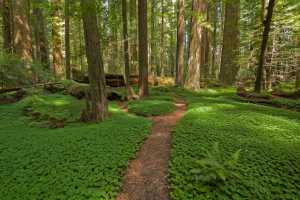
Humboldt Bay National Wildlife Refuge: Units, Trails and Peak Bird Seasons
Shorebird Loop is partly closed for emergency tide gate and levee repairs through October 2025, affecting access during the November–April peak bird season and local viewing plans.
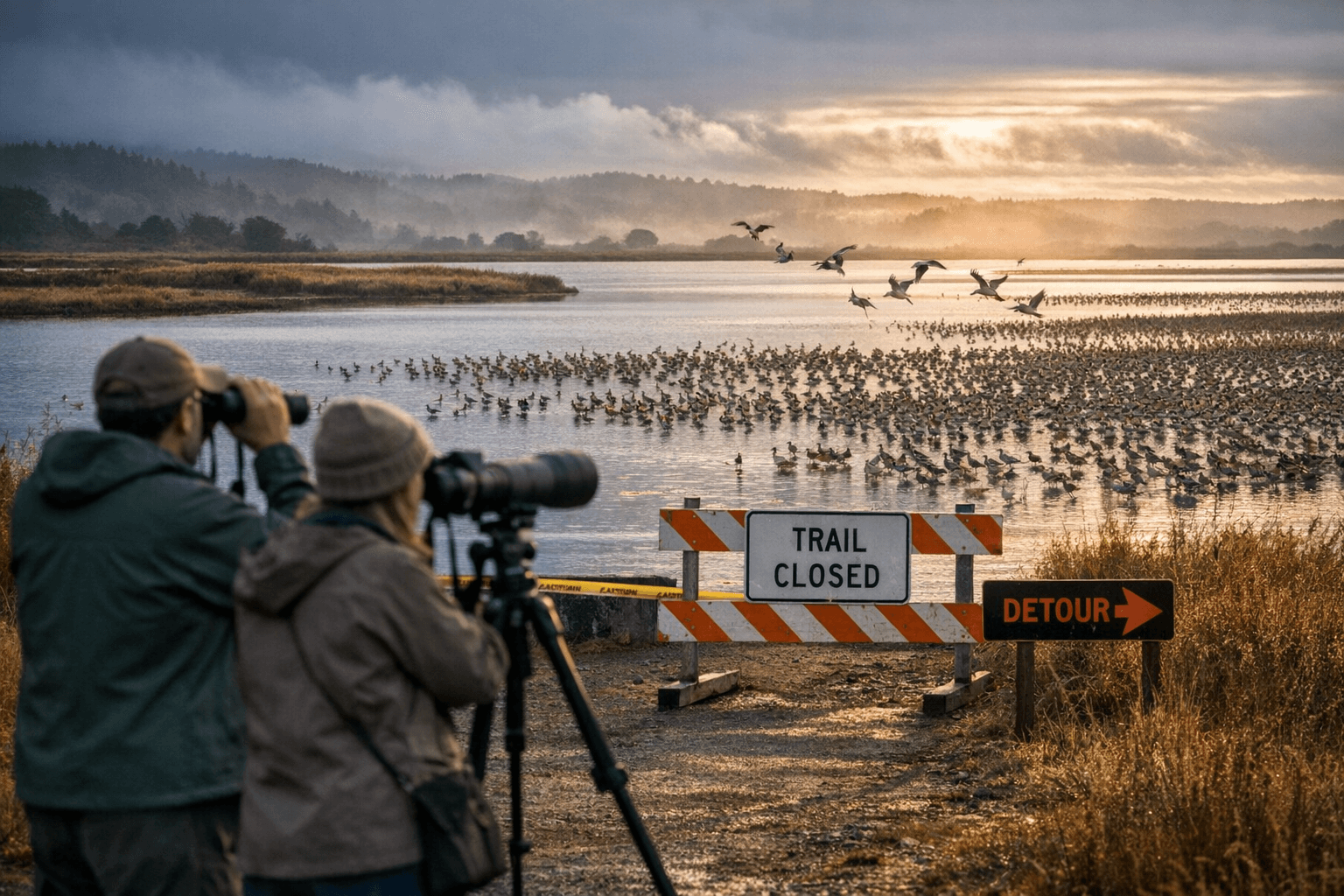
A portion of the Shorebird Loop Trail at Humboldt Bay National Wildlife Refuge is closed for emergency tide gate and levee repairs, a change that will alter public access through October 2025 and overlap with the refuge’s peak November–April birding season. The U.S. Fish and Wildlife Service alerts visitors that “Beginning June 15 and continuing through October 2025, a portion of the Shorebird Loop Trail will be temporarily closed for emergency tide gate and levee repairs.” FWS adds that “The Shorebird Loop is not a loop due to trail repair for safe public access. Visitors can walk from the Visitor Center out 1 mile to the observation deck and back for a total of 2 miles.” The agency warns, “It is imperative that the partial trail closure is respected. Failure to comply with the partial trail closure will result in full trail closure.”
The refuge conserves wetlands, dunes and estuarine habitat around Humboldt Bay and is a vital stopover and wintering area on the Pacific Flyway. The Humboldt National Wildlife Refuge Complex includes the Salmon Creek Unit - home to the Richard J. Guadagno Visitor Center and the Shorebird Loop - Hookton Slough Unit, Ma-le’l Dunes, Lanphere Dunes and Castle Rock National Wildlife Refuge. Sources list the refuge at roughly 4,000 acres in one account and about 5,000 acres in another; the Fish and Wildlife Service should be consulted for the most current acreage.
Local visitors planning field trips or outdoor breaks should note trail specifics. The Shorebird Loop is typically reported as about 1.7–1.75 miles and is level with gravel and packed-dirt surfaces, interpretive panels and a side trail to the refuge’s largest permanent freshwater pond. With repairs in place, the visitor center route to the observation deck is about 1 mile one-way and 2 miles roundtrip. Hookton Slough Trail is a flat, compacted gravel route along the south edge of Humboldt Bay - roughly 1.5 miles one-way and 3 miles roundtrip - with a parking-area dock for small non-motorized boats; access from Highway 101 is reported as about 1.0–1.2 miles via Hookton Road.
The Richard J. Guadagno Visitor Center is located at 1020 Ranch Road in Loleta (Exit 696 off Highway 101). Visitor services include dioramas, an observation room with telescopes, a “universally accessible deck and short boardwalk” that serve visitors with severe mobility challenges, and binoculars and a “Discover Pack” available for checkout. Official hours conflict across sources; FWS lists weekend hours with weekdays “intermittent,” while other outlets report 8am–5pm daily. Call the refuge at 707-733-5406 to confirm current hours and program schedules. Humboldt 101things reports free two-hour guided walks leave the visitor center at 9am on the first Wednesday and the second Sunday of every month; confirm before attending.
Wildlife highlights remain a major community draw. Peak viewing runs November through April, and “The climax is from mid-March through mid-April when upwards of 60,000 Aleutian cackling geese … stage their annual ‘fly-off,’” a dramatic event that underscores the refuge’s role in species recovery. More than 200 bird species use the bay area across seasons, including Pacific brant, migratory shorebirds, terns, cormorants, pelicans, herons and numerous songbirds.
For local public health and equity, the refuge’s accessible facilities matter: safe, nearby nature supports mental and physical well-being, especially for residents with mobility limitations. Repairs that restrict access underscore the need for sustained investment in infrastructure that preserves both habitat and equitable community access. Practical rules are in place to protect wildlife and visitors: dogs are not permitted, and visitors should follow posted closures and safety guidance.
What comes next for readers: expect altered routes and viewing plans through October 2025, call 707-733-5406 for up-to-date hours and programs, respect trail closures and plan visits outside high-tide or high-wind conditions if boating. Remember the refuge message that guides management decisions: “WILDLIFE COMES FIRST!”
This article was produced by Prism’s automated news system from verified source data, official records, and press releases, then run through automated quality and moderation checks before publishing. The system is built and supervised by the people who set the standards it runs under. Read our full AI policy.
Did this article answer your question?