Humboldt Bay Water District Completes Emergency Repairs at Ruth Lake Dam
A hydraulic failure at Ruth Lake's R.W. Matthews Dam triggered a three-week emergency response for the water district serving 90,000 Humboldt County residents.
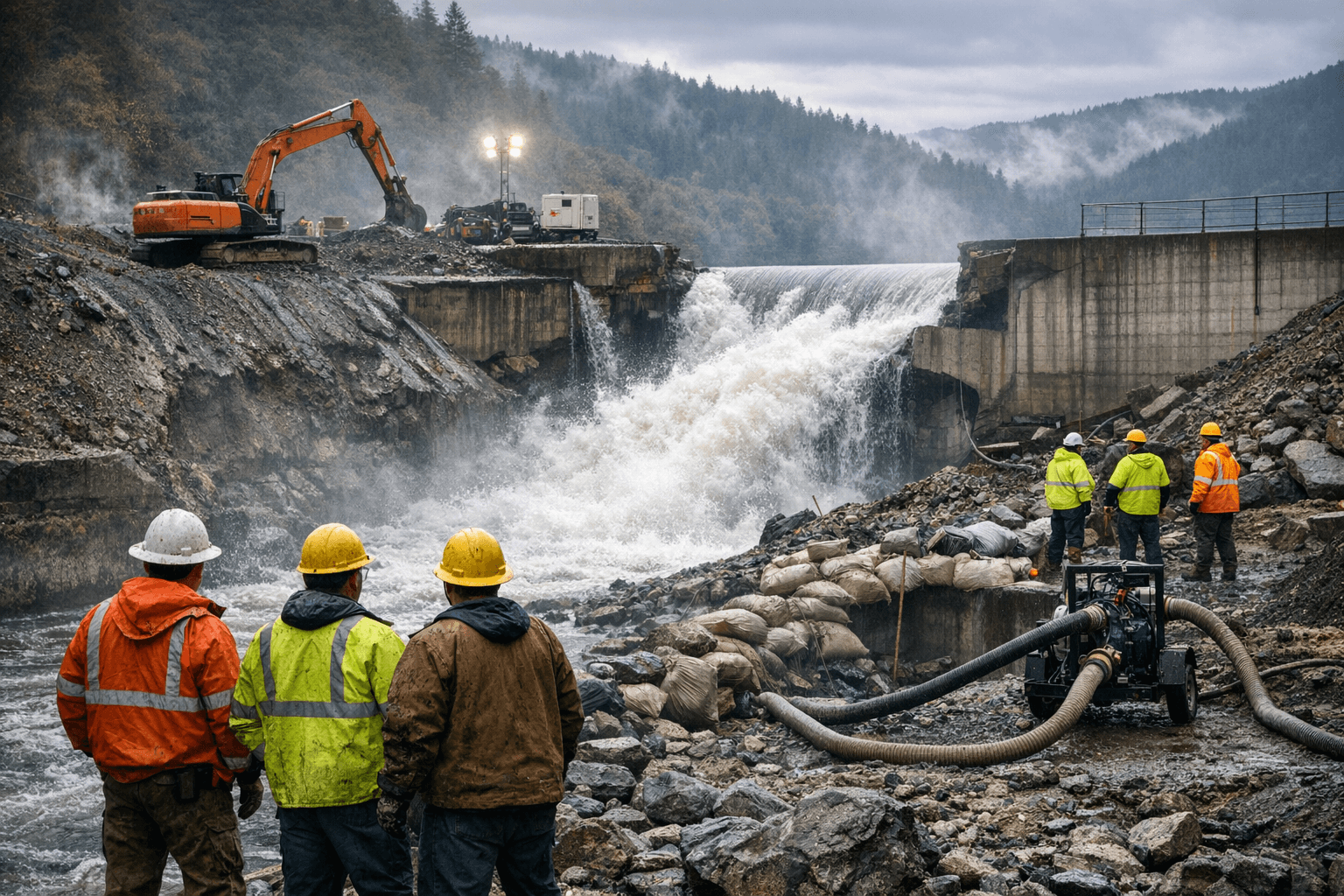
When Division of Safety of Dams inspectors arrived at the R.W. Matthews Dam intake on March 3, they found a malfunction in the hydraulic operating system controlling the slide gate at Ruth Lake. By March 25, the Humboldt Bay Municipal Water District had completed emergency repairs, wrapped up environmental cleanup and confirmed that the county's drinking water was never compromised.
The slide gate at the Trinity County reservoir governs releases from Ruth Lake, the primary source of drinking water for Eureka, Arcata, McKinleyville and several other communities, serving roughly 90,000 Humboldt County residents. Eight days after the malfunction was detected, a sheen of hydraulic fluid appeared near the intake structure on March 11.
The district activated its Emergency Action Plan, notified state and federal dam safety regulators and environmental agencies, and mobilized dive crews to the remote reservoir. Workers deployed environmental containment booms and absorbent materials at the lake while repairs proceeded.
"This was an all-hands emergency that demanded immediate action to protect our community's water supply," said General Manager Michiko Mares. She said her team and partners worked around the clock from the moment of the March 3 failure, diagnosing the problem, mobilizing dive crews and executing repairs while protecting the lake environment.
The district noted that the fluid involved was a plant-based, biodegradable hydraulic product, not a conventional petroleum compound. No oil was observed in the Mad River at any point during the incident or repair operations, and the slide gate has been fully restored to operational status. The dam itself is structurally sound; the emergency was confined to the hydraulic operating system for the intake gate.
Mares said she is grateful that local residents and agencies come together to solve hard problems. Follow-up monitoring of the intake area, the Mad River and downstream facilities is expected to continue as state and federal regulators remain engaged, and the incident may prompt broader discussions about preventive maintenance budgets and the condition of other critical components of the region's water infrastructure.
This article was produced by Prism’s automated news system from verified source data, official records, and press releases, then run through automated quality and moderation checks before publishing. The system is built and supervised by the people who set the standards it runs under. Read our full AI policy.
Did this article answer your question?