Humboldt libraries bring reading outdoors with family storywalks
Humboldt libraries are turning picture books into outdoor walks, giving families a free, screen-free way to spend time together while building early literacy.
What a storywalk looks like in Humboldt
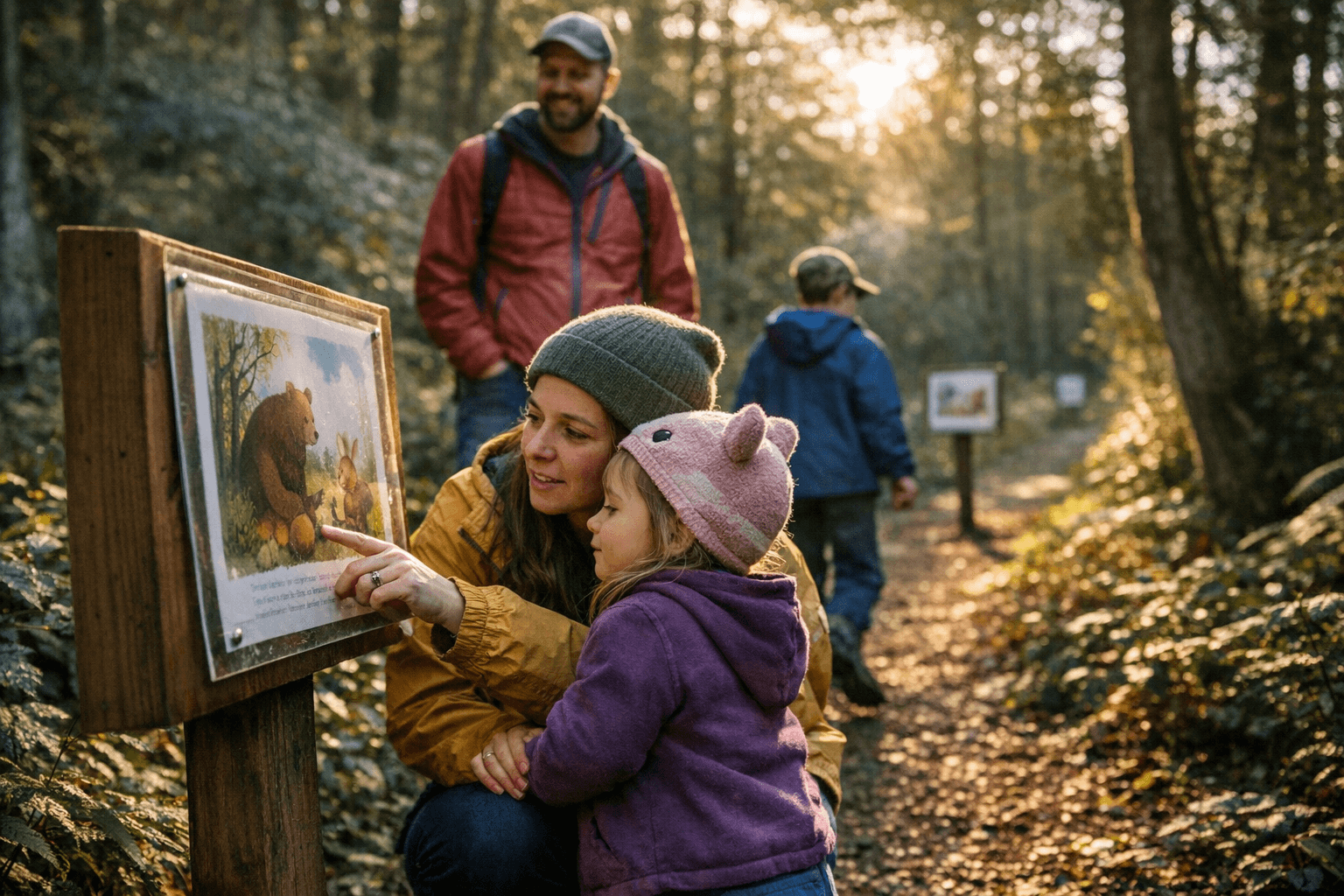
Humboldt County libraries are taking reading out of the story room and into the open air, turning picture books into a walk-through experience that families can enjoy together at parks and community spaces. The format is simple but effective: pages from a picture book are mounted on yard signs or similar displays along a path, so children read while moving instead of sitting still indoors.
That shift matters in a county as spread out as Humboldt. With a main library in Eureka, ten branch libraries and a bookmobile serving a largely rural stretch of the Northern California coast and mountains, the library system has to meet families where they already are. Storywalks do exactly that, offering a free, screen-free outing that feels more like play than programming.
Where families can look first
Arcata Library is one of the clearest places to start. The branch is at 500 7th St., behind and below City Hall, and it already runs regular preschool story time, showing that children’s programming is not an add-on there but part of the library’s core work. The county calendar has listed story time at Arcata Library at 11 a.m., including sessions on October 8, 2025, and February 11, 2026, a sign that young-family service is steady rather than occasional.
The storywalk model fits naturally into that setting. Families who may feel more comfortable at a park, in a courtyard, or at another open community site can still get the same basic literacy benefit: shared reading, conversation, and a gentle routine that does not require a formal indoor setting. In a county where transportation, schedules and child-care gaps can complicate library visits, that flexibility is a practical advantage.
Why librarians are leaning into the format
Shoshanna Anthony, a senior assistant at Arcata Library, describes the idea as a playful way for families to enjoy a picture book outside together in a more active setting. That emphasis on movement is not just a nice touch. It is one reason storywalks can reach children who pay more attention when they are allowed to walk, point, talk and keep their bodies engaged while reading.
The American Library Association has supported that approach in broader children’s-library practice. When many libraries shut down in spring 2020, librarians used outdoor activities like storywalks to keep children connected to books. ALA storytime guidance also emphasizes movement and purposeful early-literacy principles, which helps explain why the format works especially well for preschoolers and early elementary children who learn through motion as much as through listening.
Why the program fits Humboldt County
This is not a one-off novelty. The storywalk effort has grown to about 16 books available through community library branches, along with multiple playgroups and broader community use. That scale matters because it shows a countywide literacy effort taking shape, not just a single event photo opportunity.
Humboldt County Library says its mission is to provide free access to books, media, internet access, classes and events, while supporting lifelong learning, local heritage and the cultural, recreational and information needs of the community. Storywalks connect all of those goals in one low-cost format. They bring books into public space, encourage family learning and give libraries a visible role in everyday life outside the building.

For a rural county, that approach also makes geographic sense. A bookmobile and branch system can do a lot, but the county still stretches across miles of coast, hills and mountain roads. Outdoor reading sites help extend the library’s reach without requiring every family to make a special trip inside a traditional reading room.
How outdoor reading helps some kids learn better
Traditional story time is still important, but outdoor formats can lower the barrier for children who struggle to sit still or who feel overwhelmed in a quiet room. When reading is paired with walking, visual cues and social interaction, it becomes more accessible for young children who learn best through movement and immediate engagement.
That is one reason public librarians and educators keep returning to storywalks. They give families a chance to read in a setting that feels relaxed rather than formal, which can be especially useful for children who are just beginning to associate books with fun. The payoff is not only a single outing. It is the habit of returning to stories again and again.
Where the county is already set up for this kind of programming
Humboldt County already uses parks and community sites as child-friendly programming spaces. The county’s Youth Activity Guide includes public spaces and community partners as places for books, youth programs and family activities, which reinforces the idea that storywalks are part of a larger local pattern rather than a standalone experiment.
California’s State Library has also encouraged libraries to think beyond their walls, including by working with nearby state parks to create a StoryWalk in a park. That statewide guidance gives Humboldt’s outdoor reading effort an added layer of credibility and suggests the county is following a broader library trend that values access, mobility and family-centered learning.
A free outing that works for real life
The appeal of storywalks is that they solve more than one problem at once. They offer a no-cost family activity, make reading feel social and active, and give libraries a way to reach parents and children who may already be spending time outdoors in parks or civic spaces. In a region where everyday routines are shaped by distance, weather and work schedules, that combination is unusually practical.
For Humboldt families looking for something easy, educational and screen-free, the storywalk model turns a picture book into a walk, a walk into a lesson and a library visit into a habit that can last.
This article was produced by Prism’s automated news system from verified source data, official records, and press releases, then run through automated quality and moderation checks before publishing. The system is built and supervised by the people who set the standards it runs under. Read our full AI policy.
Did this article answer your question?