Humboldt urges efforts to attract young workers, strengthen local economy
Humboldt's biggest retention problem is economics: rents outrun wages, young adults are slipping away, and the county's student pipeline is still leaking.

Why the retention fight matters
Humboldt County cannot recruit its way out of a housing market that asks renters to earn $23.25 an hour to afford the average asking rent of $1,209. A 2024 housing report found 6,215 low-income renter households still lacked an affordable home, and 93% of extremely low-income renters were spending more than half their income on housing.
That is the core problem behind every talk of attracting young workers. A county can market its redwoods, coastline and small-town quality of life, but if a recent graduate, nurse, welder, planner or office worker cannot afford to live here, the pitch falls apart fast. Humboldt’s real challenge is retention, not just recruitment.
A shrinking working-age base
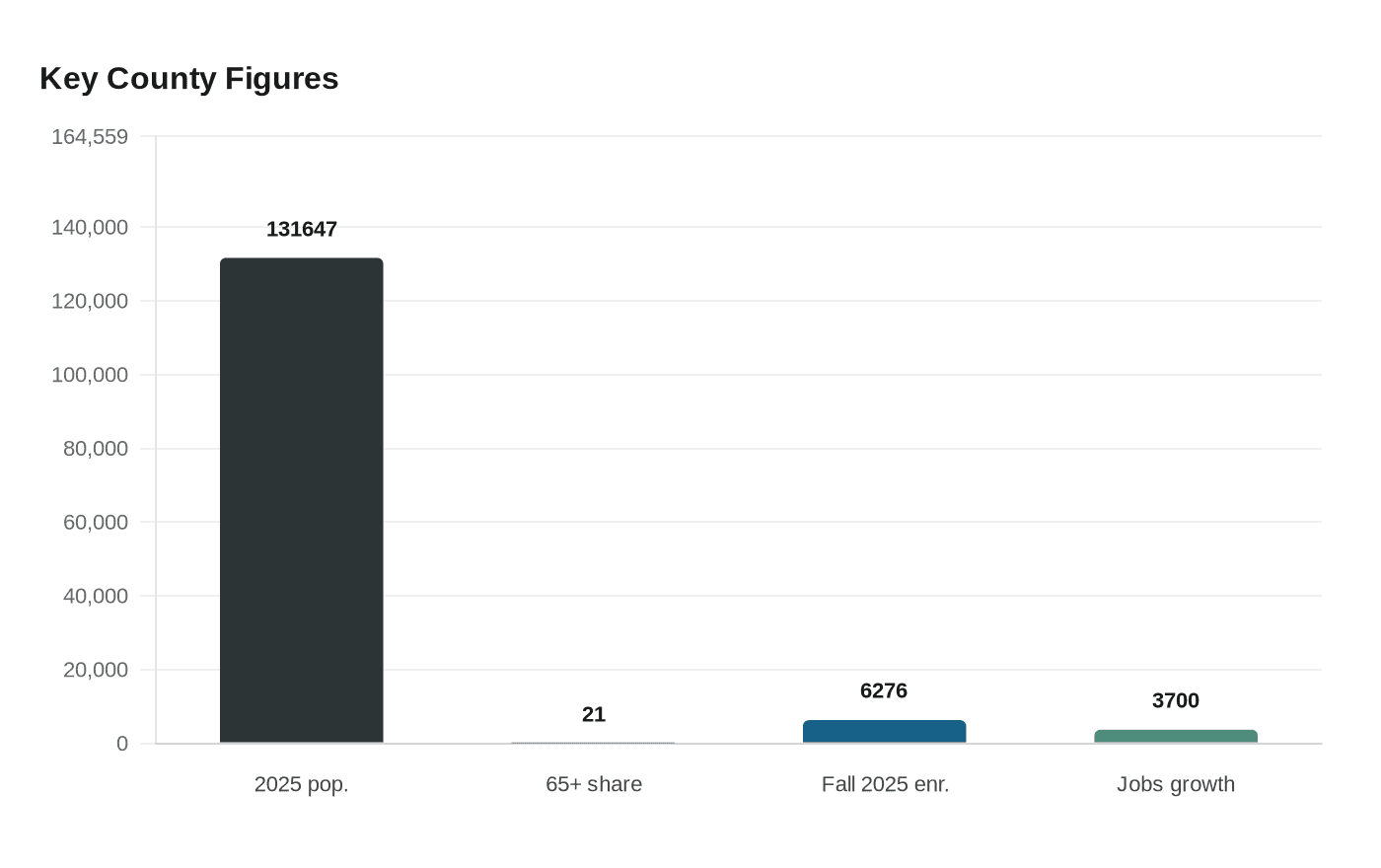
The county’s population picture explains why this debate is no longer optional. U.S. Census Bureau estimates put Humboldt County’s 2025 population at 131,647, down 3.5% from the April 2020 base. The county’s population is also aging, with 21.0% of residents age 65 and over. Live Well Humboldt’s demographic dashboard shows total population has been sliding slightly since about 2019, while the 25-44 age group appears to be declining and the 65-85-plus population is projected to rise by 2030.
That matters for the local economy because the 25-44 group is where counties typically find new homeowners, parents, supervisors, small-business founders and mid-career professionals. If that slice of the population keeps thinning while the older population grows, Humboldt will face more pressure on healthcare, public services and tax revenues, even if the county continues to add jobs.
The student pipeline is valuable, but not enough on its own
Cal Poly Humboldt remains one of the county’s most important sources of young adults, with fall 2025 enrollment at 6,276 students. In a place with Humboldt’s geography and labor market, that is a major asset. Arcata, in particular, benefits from a steady supply of students, interns and early-career workers who already know the region.
But the pipeline is leaking. Caltrans said Humboldt has experienced significant net out-migration over the last three years, along with reduced enrollment at the CSU and community college level and years of declining K-12 enrollment. That is the warning sign local leaders cannot ignore: fewer students entering the system, and too many leaving after they arrive.
The county’s retention problem is not that young people never come. It is that too many do not stay long enough to build a life here.
Jobs are growing, but not all jobs create a durable career path
Caltrans projects total employment in Humboldt County will rise by 3,700 jobs from 2022 to 2027. Most of that growth is expected in government, leisure services, healthcare and retail. Those sectors matter, and they keep the county running. They also tend to present a harder retention test than higher-wage professional industries, because the ladder from entry-level job to middle-class stability is often shorter or less visible.
That is where the economics of retention get sharp. If the county’s largest job gains are in sectors that are essential but not always high paying, then wages, scheduling, training and advancement matter as much as headcount. Young workers are not only asking whether a job exists. They are asking whether a job can lead somewhere, and whether it can support rent, transportation, childcare and savings.
What local employers and officials can actually fix
The best news for Humboldt is that some of the biggest barriers are fixable. Others are not. The county cannot change its geography, but it can change the economics that decide whether a young worker stays after school or after the first lease renewal.
The most direct levers are clear:
- Housing supply and affordability. The county’s 2024 housing report and the homelessness housing count both point to a severe shortage. Humboldt had only 1,203 beds available in interim and permanent housing for people experiencing homelessness in 2023, which underscores how tight the housing system is across income levels.
- Career pathways. The Humboldt County Workforce Development Board, the Humboldt Workforce Coalition and the America’s Job Center of California network are designed to align education and training with local employer needs. Those systems matter most when they help employers spell out a ladder, not just a job opening.
- Wages and advancement. In government, healthcare, retail and leisure, employers can do more than hire. They can build step increases, tuition help, apprenticeships, paid internships and supervisor tracks that make a first job into a long-term career.
- Worker support beyond pay. Childcare, reliable scheduling and remote-work infrastructure all shape whether a household can function here. For many young adults, those supports are not luxuries. They are what make a modest wage workable in a county where the median gross rent is $1,287.
The county, cities and local institutions do not need a miracle solution. They need a tighter fit between the housing market, the wage structure and the career ladder.
What keeping young workers would change
If Humboldt can keep more of the students who pass through Cal Poly Humboldt, and if employers can convert that talent into durable careers, the payoff reaches far beyond payrolls. More young adults mean more renters who become homeowners, more parents who enroll children locally, more workers who fill openings in healthcare and public services, and more customers for shops and restaurants that depend on a steady year-round base.
That is why the retention question is really an economic development question. A county with a 21% 65-and-over population, a shrinking 25-44 cohort and 6,215 renters already priced out of affordable housing cannot rely on scenery alone. Humboldt’s future depends on whether young workers can find three things at once: a place to live, a career that advances, and a reason to believe the next five years will be better than the last.
This article was produced by Prism’s automated news system from verified source data, official records, and press releases, then run through automated quality and moderation checks before publishing. The system is built and supervised by the people who set the standards it runs under. Read our full AI policy.
Did this article answer your question?