Lost Coast Outpost spotlights Humboldt County power broker John Jefferson DeHaven
John Jefferson DeHaven rose from Humboldt County district attorney to Sacramento lawmaker, and his career still explains local power. The pattern still matters in Humboldt.
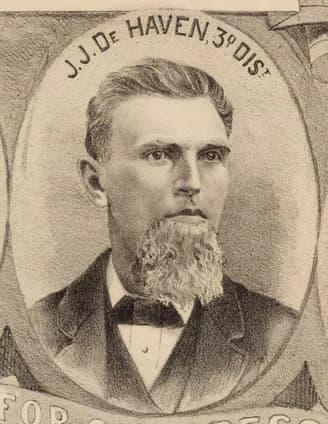
John Jefferson DeHaven climbed from Humboldt County district attorney to the California Legislature in the same era the county itself was still being built. That trajectory made him a bridge between local courtroom power and Sacramento politics, and it helps explain why his name still matters in Humboldt's civic memory. A county created on May 12, 1853, did not develop its political habits by accident; men like DeHaven helped set the terms.
A political career built across county and state lines
DeHaven's public life followed a clear rise. He served as Humboldt County district attorney from 1867 to 1869, then moved to the California State Assembly from 1869 to 1871, and then to the California State Senate from 1871 to 1875. That sequence matters because it shows a Humboldt politician moving from county enforcement into state lawmaking at a time when local power still depended on personal networks and the ability to carry county interests south to Sacramento.
The offices also tell you what kind of influence Humboldt was producing in its early years. A district attorney sits at the center of local order. A state representative and a state senator work where county needs become statewide policy, or get ignored if no one with enough stature makes the case. DeHaven's path suggests that Humboldt's political class was already learning how to turn a local base into wider institutional power.

Why the records matter
Different institutions preserve his name in slightly different ways. The U.S. House of Representatives History, Art & Archives files him as John Jefferson De Haven, while local references use DeHaven. Find a Grave lists his lifespan as 1845 to 1913. Together, those records show how a figure from Humboldt's early political life still appears in federal archival systems, local historical memory and cemetery records more than a century later.
That matters in a county where political history can easily be reduced to a few family names, old institutions and the coast versus inland divide. The archival trail keeps the person attached to the offices, and the offices attached to the era in which Humboldt's power structure was still taking shape.
Humboldt was still forming when DeHaven rose
Humboldt County's creation on May 12, 1853, is not just a date in a ledger. It marks a young county entering a period when institutions were still being defined and when the relationship between Eureka and Sacramento was still being negotiated through individual officeholders.
That is the setting in which DeHaven became important. When local government is new, one person can matter more than an abstract system because the system itself is unfinished. Early district attorneys, legislators and senators helped determine how power would be organized, who would speak for the county, and how much leverage smaller communities would have when county and state interests collided.
Why his legacy still reaches present-day Humboldt
The questions that dominate Humboldt politics now are not the same ones DeHaven faced, but the pattern is familiar. Land use, transportation, public services and local control still hinge on how authority moves between Eureka, other county communities and Sacramento. That older structure was built by generations of political actors who learned how to use county office as a platform for state influence.
DeHaven's career is a useful lens because it shows how one person could shape more than a single term in office. He represents a political habit that still defines Humboldt County: local leaders try to defend county priorities, push them into state channels and make sure Eureka is not the only voice in the room. The county's present-day civic culture still lives inside that tension between local autonomy and outside power.
For readers trying to understand why Humboldt politics can feel so rooted in place, DeHaven is part of the answer. He stands at the point where county institutions, voter confidence and state ambitions began to overlap. That overlap still shapes how power is exercised, challenged and remembered across Humboldt County today.
This article was produced by Prism’s automated news system from verified source data, official records, and press releases, then run through automated quality and moderation checks before publishing. The system is built and supervised by the people who set the standards it runs under. Read our full AI policy.
Did this article answer your question?