Native youth find confidence, culture at free running camp in Humboldt County
Free coaching, Native mentorship, and college-track encouragement turned CR's third annual running camp into a confidence boost for Humboldt County youth.
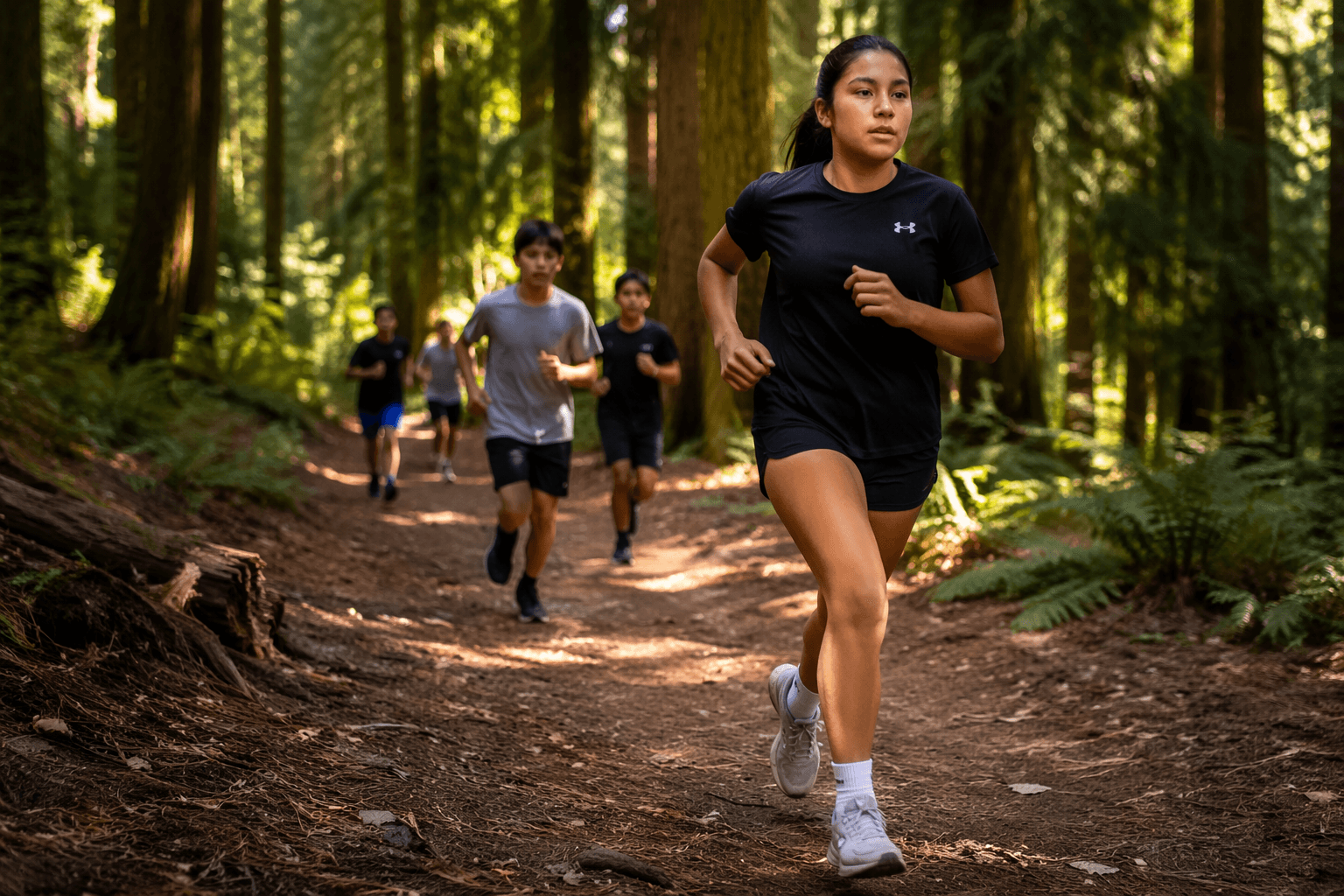
Native runners spent the weekend on the College of the Redwoods campus getting more than workout drills. The third annual Native Running Camp, organized by Reed Elmore and CR’s track, field and cross country coaching staff, gave Native youth a free place to train, listen, and see themselves reflected in local sports. Held Friday through Sunday, the camp blended running instruction with cultural encouragement from a keynote speaker from the Bear River Band of the Rohnerville Rancheria.
A free weekend built for Native youth
The camp’s free admission lowered a barrier that can keep families from signing up for specialty training. Campers worked through drills and exercises on the CR campus, and Redwood News reported that the next morning session began at 8 a.m. on the CR track. That schedule made the weekend feel less like a one-off clinic and more like a sustained training experience built around consistency, discipline, and belonging.
For families in Humboldt County, that matters. Youth sports can be expensive, and programs that require registration fees, travel, or gear often leave out the students who could benefit most from extra coaching. By opening the camp at no cost, College of the Redwoods and its coaches created a rare space where participation was based on interest and commitment, not household budget.
Representation on the track matters
What set the camp apart was not only the coaching, but the message built into the weekend. A keynote speaker from the Bear River Band of the Rohnerville Rancheria added a cultural dimension that framed running as part of Native identity, not something reserved for outsiders. For Native youth, that kind of visibility can be as important as any interval workout or form drill because it tells them they belong in local sports spaces as athletes and as community members.
The camp’s value reaches beyond competition results. It gives young runners a place to build confidence, hear from Native leaders, and take part in an environment that respects their background rather than flattening it. In a county where youth opportunities are often unevenly accessible, that cultural grounding becomes a public good, helping kids feel seen in settings that have not always reflected them.
A pathway beyond the weekend
The camp also fit into a larger training pipeline at College of the Redwoods. CR says its mission emphasizes accessible and relevant educational programs and student success, and Elmore’s athletics profile reflects a coaching approach centered on development and athlete success beyond competition. Local reporting has noted that his teams have sent athletes on to four-year programs, which gives the camp a practical edge: it is not just about getting through summer practice, but about introducing young athletes to what the next level can look like.
College of the Redwoods Athletics has also described Elmore’s program as one that has built momentum through recruiting and competitive results, a reminder that the camp is tied to a broader system of athlete development at the college. That makes the weekend useful in two directions at once. It helps younger runners gain foundational skills, and it shows them that college athletics can be both demanding and supportive.
Eric Wright, now serving as the throws and strength coach for CR’s track and cross country teams, has described the program environment as one that balances fun and hard work. That kind of culture helps explain why a free camp can matter so much. It offers structured coaching, but it also shows youth that athletics can be a place for growth, not just pressure.
Why the Bear River Band’s presence carries weight
The Bear River Band of the Rohnerville Rancheria, headquartered near Loleta and federally recognized, brings historical and community meaning to the camp’s Native focus. The tribe says its reservation and tribal community includes more than 600 Tribal Members, and many members trace ties to the Mattole and Wiyot tribes. That background turns the keynote speaker’s visit into more than a ceremonial appearance; it links the camp to a living Native community on the North Coast and reinforces that local youth sports can reflect local Native presence.
That connection matters in a place like Humboldt County, where representation in athletics still shapes who feels welcome to try out, train, and stay in the sport. A camp like this does more than teach running mechanics. It creates a model of leadership that is Native, local, and visible.
Part of a broader Humboldt running network
The Native Running Camp does not stand alone. Youth running opportunities in Humboldt County have also been organized with College of the Redwoods, Reed Elmore, the Six Rivers Running Club, and Humboldt Redwoods Running Association for Youth, better known as HRRAY. Those partnerships suggest a countywide effort to make the running community more welcoming and more durable for young athletes, especially those who may not see themselves represented in traditional sports spaces.
For participants, the payoff is immediate: coaching access, a structured weekend of movement, and a chance to be around role models who understand both the discipline of running and the importance of identity. For the wider community, the camp shows how a local college can support youth development in ways that go beyond the classroom and beyond the scoreboard.
By the end of the weekend, the camp had done what strong youth programs do best: it gave young people a place to work, a reason to return, and a version of local athletics that looks a little more like them. In Humboldt County, that kind of visibility is not an extra. It is part of the training.
This article was produced by Prism’s automated news system from verified source data, official records, and press releases, then run through automated quality and moderation checks before publishing. The system is built and supervised by the people who set the standards it runs under. Read our full AI policy.
Know something we missed? Have a correction or additional information?
Submit a Tip