Orick school’s tiny enrollment spotlights crisis facing rural districts
Orick School serves just eight to nine students, yet costs about $118,000 each. In a town of 328, closing it could mean longer commutes and one less lifeline.
Orick’s enrollment crisis, in one number
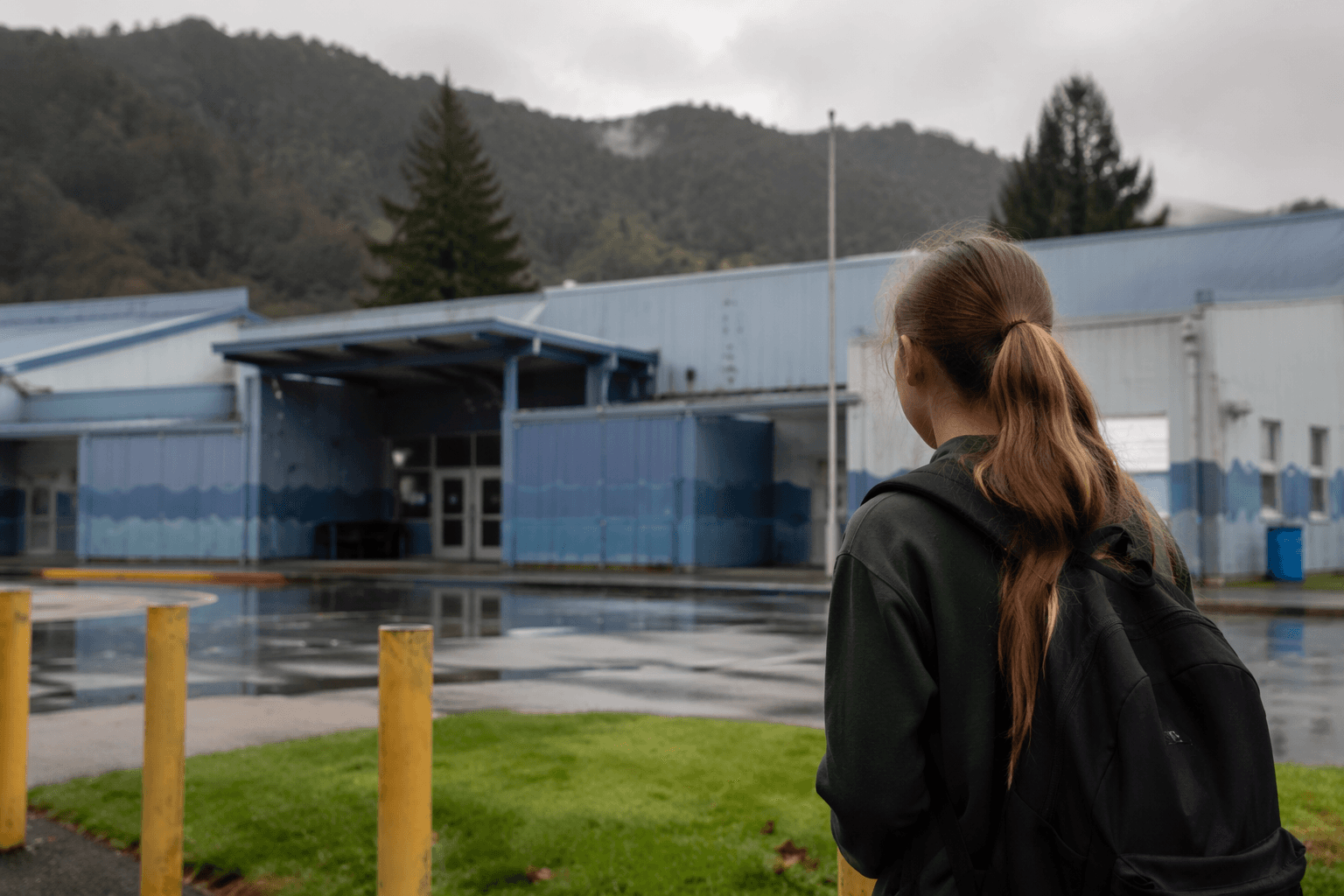
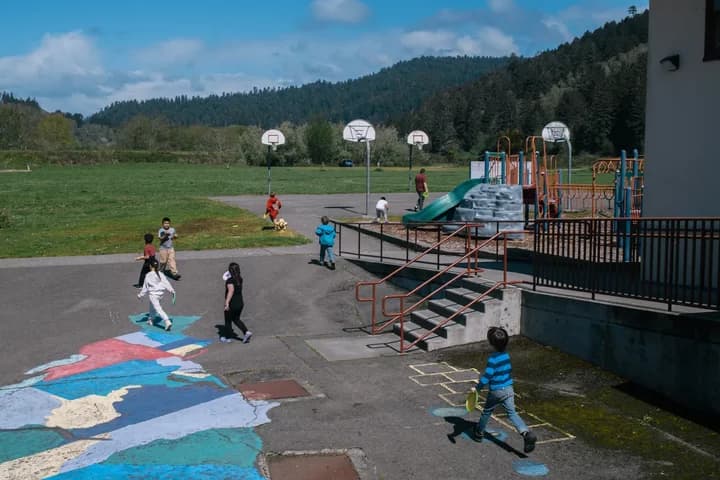
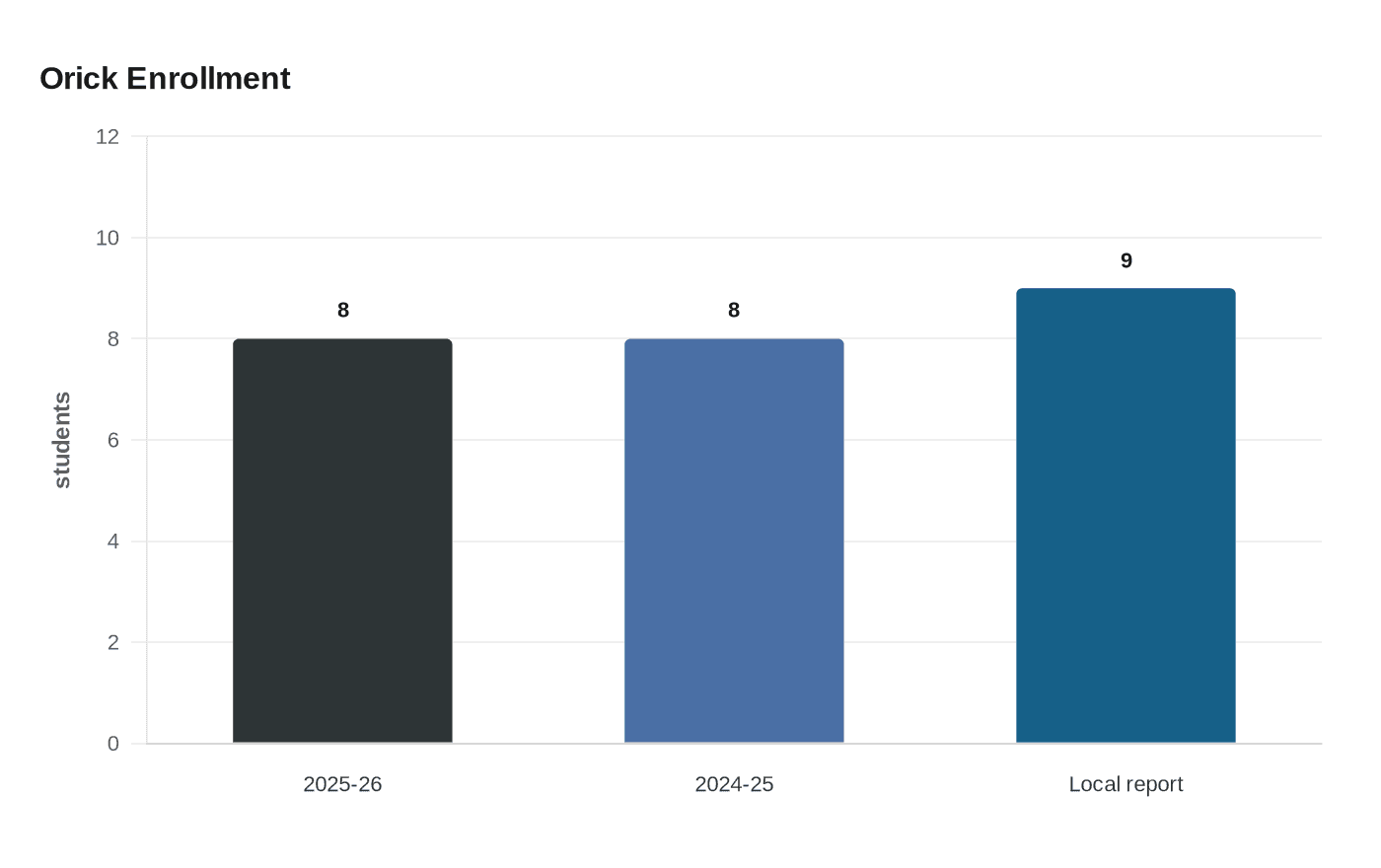
Orick Elementary looks like a school built for a community far larger than the one it serves. The campus has five classrooms, a gym, a vegetable garden and a large play field, but state data shows only 8 students for the 2025-26 school year, with Ed-Data listing 8 students in 2024-25 and local reporting describing nine children from kindergarten through eighth grade.
That tiny enrollment is why the cost lands so hard. Orick Elementary School District spends about $118,000 per student each year, more than five times the state average, and its projected 2024-25 total revenue was $733,931, including $416,392 in Local Control Funding Formula money. In a bigger district, those costs would be spread across hundreds or thousands of students. In Orick, the numbers sit on top of one another and force a harder question about what public education is supposed to do in a remote town.
What that money is actually buying
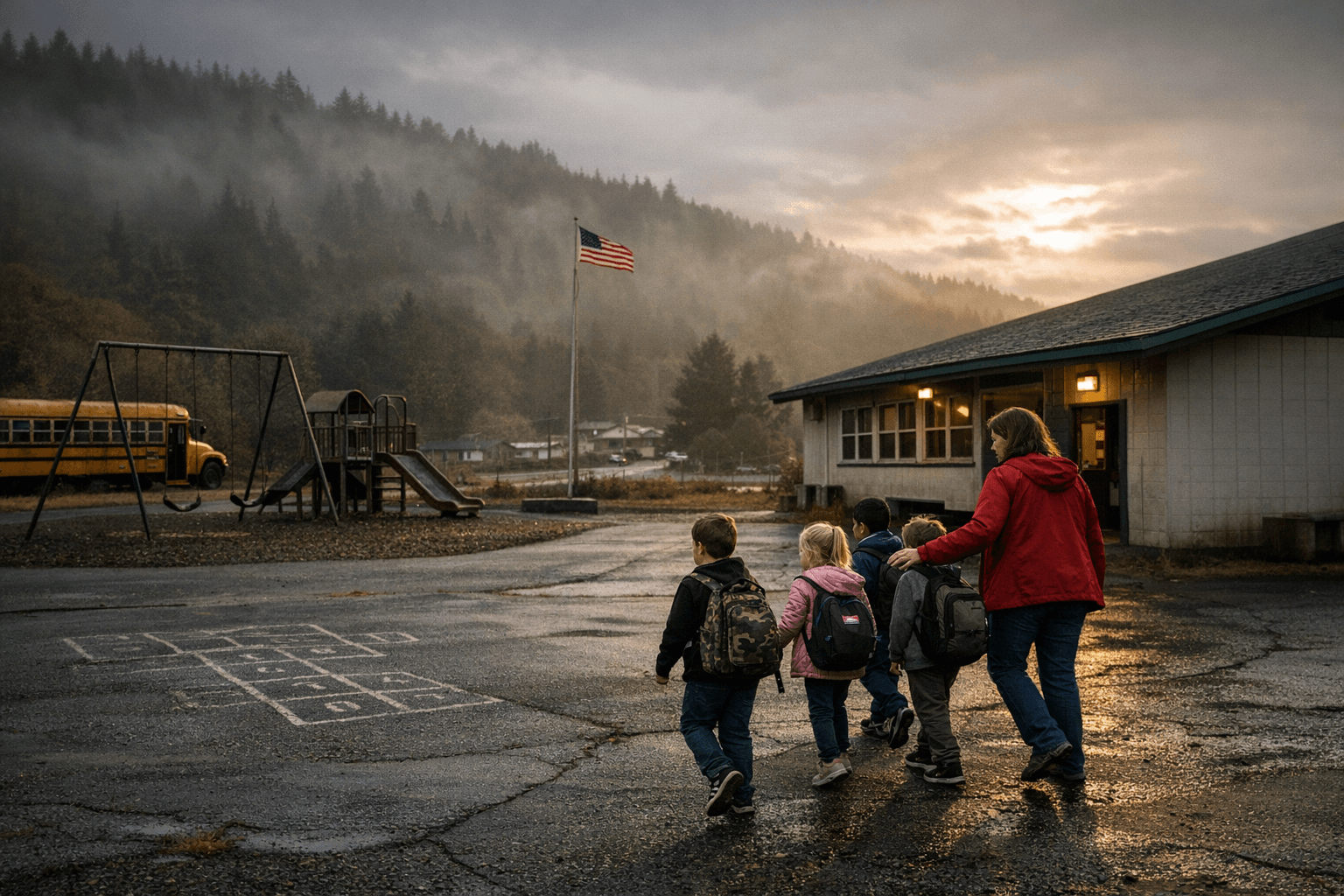
The district’s staffing shows how lean the operation already is. Recent reporting says Orick Elementary has four full-time staff members: two teachers, an administrative assistant and Superintendent Justin Wallace, whose duties also include principal, literacy coach and special education. There is no excess layer of administration to trim here; the district has already been compressed into a bare-bones structure that tries to cover academics, operations and student support at the same time.
That is why the high per-pupil cost cannot be read as waste in any simple sense. For a school as small as Orick, much of the spending is tied to fixed costs that do not shrink just because enrollment does. The district still has to keep the lights on, staff the building, maintain the campus and provide services for children who live in one of Humboldt County’s most isolated places. The math is severe, but so is the geography.
Why closing the school would hit families first
Wallace has said the idea of closing the school comes up repeatedly, but the deeper issue is equity. Families in Orick may not be able to afford sending children elsewhere, and a longer commute can reshape daily life in ways that are easy to miss from a budget spreadsheet. A child who has to travel miles to another campus loses time, stability and often access to the most basic supports that a small local school can provide.
Those supports matter. The school is not only an academic site but also a place where children can eat, adults can find a familiar point of contact and the town can gather around something that still belongs to it. Recent coverage says the school also serves as a food pantry, a clothing giveaway site, a Narcotics Anonymous meeting place and a toddler playgroup space, which turns the campus into a broader community hub. If Orick loses that institution, it loses more than a classroom building. It loses a daily point of contact that helps keep the town stitched together.
A town that has already shrunk once
Orick’s school tells the story of a place that has already been remade by economic change. The town once had about 3,000 residents and nearly 300 students in the 1960s, supported by lumber mills, stores, restaurants, churches and even a movie theater. That world has largely disappeared. As mills closed and the surrounding landscape shifted into conservation, the population and the school system shrank with it.
Today, Orick is a census-designated place in northern Humboldt County with 328 residents in the 2020 Census. Humboldt County itself had 136,463 residents in 2020 and an estimated 131,647 in 2025, which underscores how rural communities can lose people and services even as the county remains geographically large. Orick’s school is one of the last major anchors of daily life in a town that has already absorbed decades of economic loss.
The land around town carries the same lesson
The old mill site on the edge of Orick adds another layer to the story. It operated for more than 50 years as a lumber mill before Save the Redwoods League purchased and conserved it in 2013. In 2024, an agreement set the stage for the site to be transferred to the Yurok Tribe in 2026 as part of the O'Rew Redwoods Gateway project, with the site also tied to the work of Redwood National and State Parks, the National Park Service and California State Parks.
That history matters because it shows how the town’s identity has been changing around its school. The landscape is being restored, transferred and reimagined, but the social infrastructure that remains in Orick is thin. When timber jobs faded and conservation became the new economic and cultural framework, the school stayed behind as one of the few places where everyday life still happens locally. It serves not just children, but the larger idea that a small rural place can still function as a community.
The policy question Humboldt cannot avoid
Orick’s per-student cost should be read with care. In a remote district, high spending can signal inefficiency, but it can also signal the true price of keeping a community viable. If the school closes, the county does not simply save money. It may push families into longer drives, weaken a town center, and reduce access to meals, support services and the social ties that make rural life workable.
That is why Orick has become such a vivid test case for Humboldt County and for California more broadly. The school’s eight students are not an accounting anomaly to be brushed aside. They are evidence that public education in rural places is often carrying a burden that urban districts never face in the same way. In Orick, the question is not whether the school is expensive. It is whether the county is willing to accept the cost of keeping a remote community alive.
This article was produced by Prism’s automated news system from verified source data, official records, and press releases, then run through automated quality and moderation checks before publishing. The system is built and supervised by the people who set the standards it runs under. Read our full AI policy.
Did this article answer your question?