State Allows Limited Dungeness Crab Fishing Along North Coast
The California Department of Fish and Wildlife announced on December 12 that recreational Dungeness crab fishing may open in Del Norte and Mendocino counties and in parts of Humboldt County under a California Department of Public Health advisory. The advisory warns consumers to avoid eating crab viscera, known as the "butter", and to clean crab prior to cooking because of elevated domoic acid levels in some areas, while other portions of Humboldt remain closed as testing continues.

The California Department of Fish and Wildlife announced on December 12 that parts of the north coast Dungeness crab recreational fishery may open following testing and consultation with state health agencies. The opening covers Del Norte and Mendocino counties and parts of Humboldt County, but portions of Humboldt remain closed while officials continue sampling and analysis. The department said the openings carry a California Department of Public Health advisory aimed at limiting consumer exposure to elevated domoic acid detected in some crab samples.
The CDPH advisory instructs consumers to avoid eating crab viscera, known locally as the "butter", and to thoroughly clean crab prior to cooking. Domoic acid is a toxin produced by certain marine algal blooms and can accumulate in shellfish and crab. Exposure can cause gastrointestinal and neurological symptoms in people, and public health agencies use advisories to reduce risk while allowing some harvesting to resume.
State officials also tied trap restrictions to recent risk assessments for marine mammals and sea turtles. In the northernmost areas where fishing may resume, only hoop nets or crab snares are allowed in order to reduce the risk of entanglement. These gear restrictions reflect ongoing coordination between wildlife managers and fisheries scientists to balance harvest opportunities with protections for whales and other ocean species.
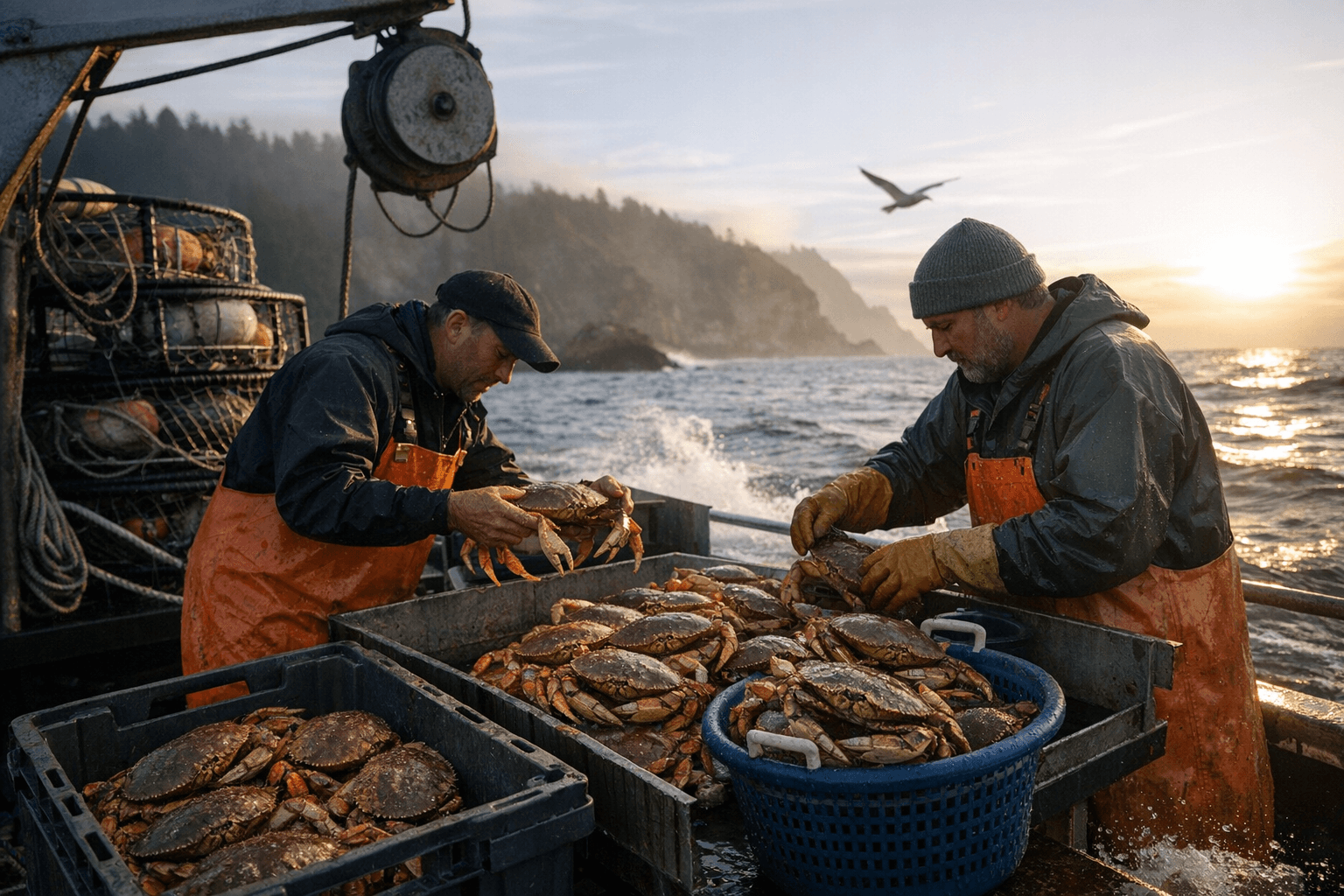
For Humboldt County residents the announcement means limited access to a popular local fishery during the crucial winter season, but continued closures remain likely in areas where domoic acid levels have not yet fallen or where monitoring is incomplete. Recreational fishers and household harvesters should verify current closures and permit conditions with state authorities before heading out, and should follow the CDPH guidance to remove viscera and clean crab thoroughly.
Monitoring and additional testing will determine whether further openings or closures are needed. State agencies said they will continue sampling along the north coast and update advisories and access rules as new data become available.
This article was produced by Prism’s automated news system from verified source data, official records, and press releases, then run through automated quality and moderation checks before publishing. The system is built and supervised by the people who set the standards it runs under. Read our full AI policy.
Did this article answer your question?