Thousands of Immigrant Truck Drivers Left in Limbo as California DMV Stalls on CDLs
California cancelled 13,000 truck driver licenses in March. Up to 61,000 more may follow, and Humboldt's supply chain hangs in the balance.
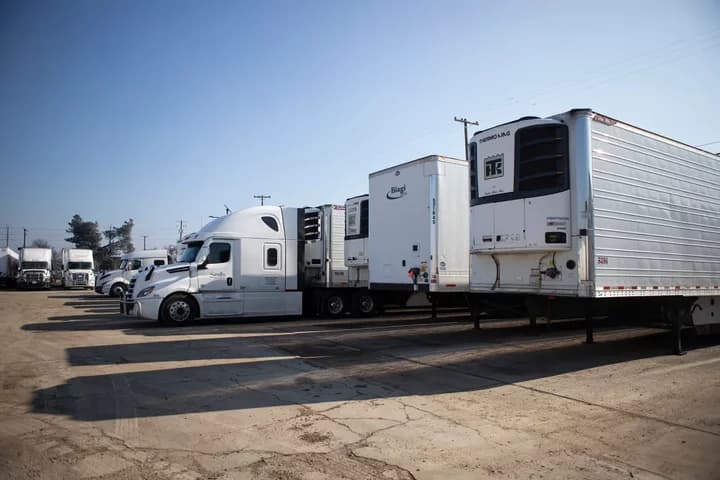
Amarjit Singh, a Sikh trucker from Livermore, had his commercial driver's license removed from California's records on March 6. He was one of roughly 13,000 drivers who lost their non-domiciled CDLs that day, not for failing a road test or accumulating violations, but because the California DMV, caught between a federal regulatory ultimatum and unresolved litigation, cancelled credentials it had been ordered to revoke. Up to 61,000 more California drivers could follow.
The federal pressure campaign began September 29, 2025, when the Federal Motor Carrier Safety Administration issued an emergency interim rule barring California from issuing or renewing non-domiciled CDLs, those held by workers with temporary legal status including asylum seekers, DACA recipients, and Employment Authorization Document holders. FMCSA Administrator Derek Barrs amplified the pressure in January 2026 with a $158.3 million funding withholding, representing 4 percent of California's FY2027 federal highway funds. Combined with a $40.7 million penalty California had already absorbed in October 2025 over English Language Proficiency testing failures, the total enforcement action of roughly $200 million is the largest FMCSA has ever taken against a single state.
California agreed in November 2025 to revoke all 17,000 improperly issued licenses by January 5, 2026, then unilaterally pushed that deadline to March 6. The cancellations proceeded as rescheduled. On March 16, FMCSA's Final Rule, "Restoring Integrity to the Issuance of Non-Domiciled CDLs," took national effect, immediately pausing every state's ability to issue new non-domiciled CDLs. The agency's own rulemaking acknowledges the rule could strip up to 5 percent of all U.S. commercial drivers, an estimated 194,000 people nationwide.
Courts have offered uneven relief. A class-action filed December 23-24 by the Asian Law Caucus, the Sikh Coalition, and Weil, Gotshal & Manges on behalf of the Jakara Movement and five individual drivers temporarily preserved licenses for tens of thousands pending legal review. But Judge Bernal denied the Chinese American Truckers Association's bid to lift the freeze on CDL renewals on January 26. The case brought by refugee truck driver Jaswinder Pal Singh Sandhu in the Eastern District of California was dismissed without prejudice February 24. The Asian Law Caucus has warned that some cancellations were issued "in error" and that the DMV is "not helping" drivers correct them. A new petition challenging the Final Rule is now before the D.C. Circuit Court of Appeals.
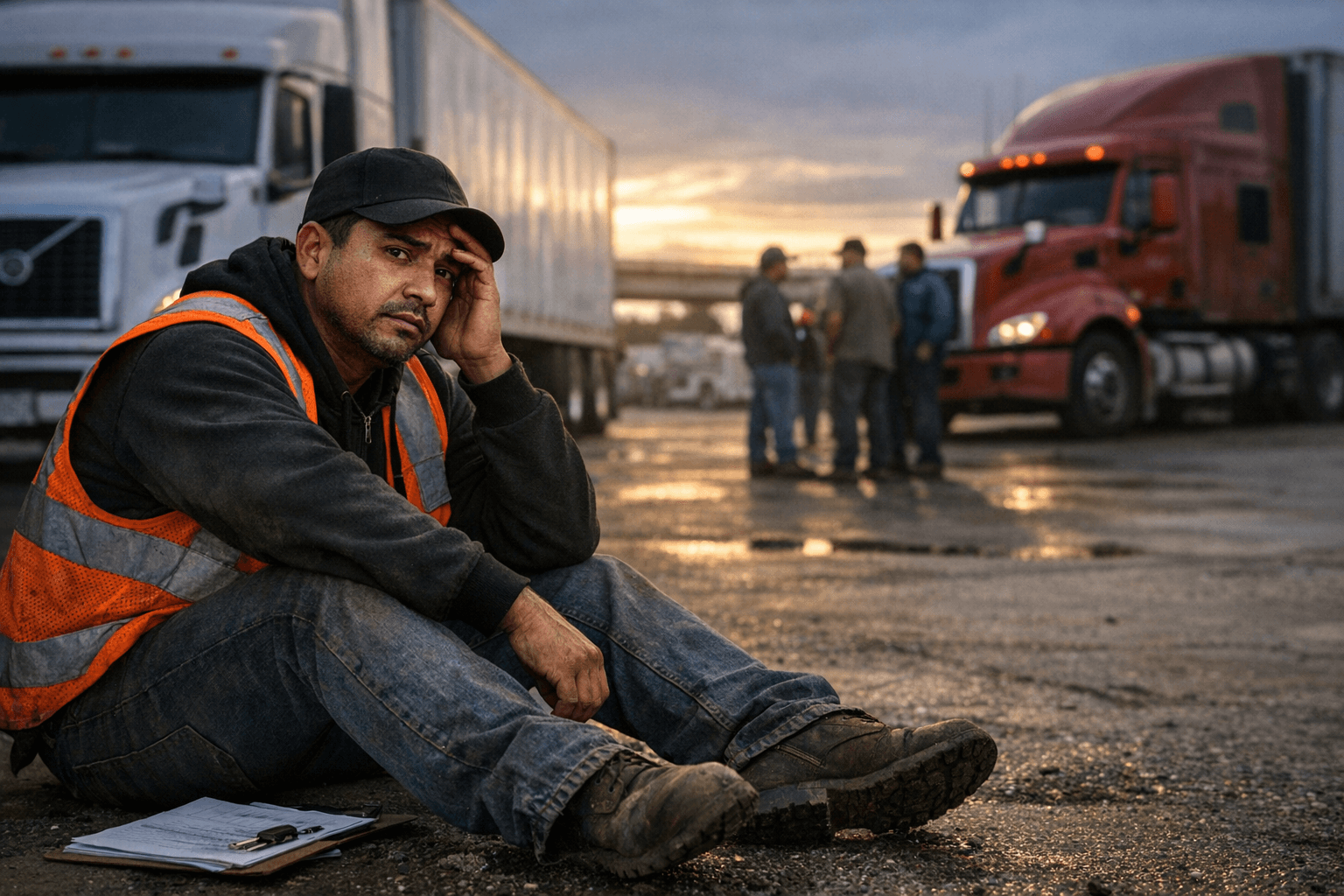
The Owner-Operator Independent Drivers Association has sided with FMCSA, arguing the old system was "allowing too many unqualified drivers on the road," a split that underscores how contested the policy landscape remains. Many of the affected drivers are Sikh owner-operators with roots in Punjab, India, and Chinese-American truckers, two communities central to California's long-haul freight industry.
For Humboldt County, where timber production accounts for 14.1 percent of land use in the Unincorporated Coastal Zone and every load of groceries, fuel, and building material arrives by truck on Highway 101 or Highway 299, the systemic tightening arrives at a difficult moment. The U.S. freight market is entering its third consecutive year of recession, with driver supply already flagged as a key industry pressure for 2026. A 5 percent reduction in the national driver pool translates directly into reduced freight capacity and higher costs for shippers, and those costs travel downstream to the distributors stocking Humboldt grocery shelves, the fuel terminals supplying the county's stations, and the lumber yards and building materials suppliers whose margins already run thin.
California's DMV website now acknowledges the bind plainly: a recent court ruling allows affected drivers to submit new CDL applications, but the federal government is blocking the DMV from processing them. That circular deadlock, with no durable resolution in sight, is the supply-chain condition Humboldt businesses are navigating today.
This article was produced by Prism’s automated news system from verified source data, official records, and press releases, then run through automated quality and moderation checks before publishing. The system is built and supervised by the people who set the standards it runs under. Read our full AI policy.
Did this article answer your question?