Tiny earthquake swarms map hidden faults near Mendocino Triple Junction
A study used swarms of tiny earthquakes to reveal previously hidden rock bodies and fault links near the Mendocino Triple Junction, refining seismic hazard estimates for Humboldt County.
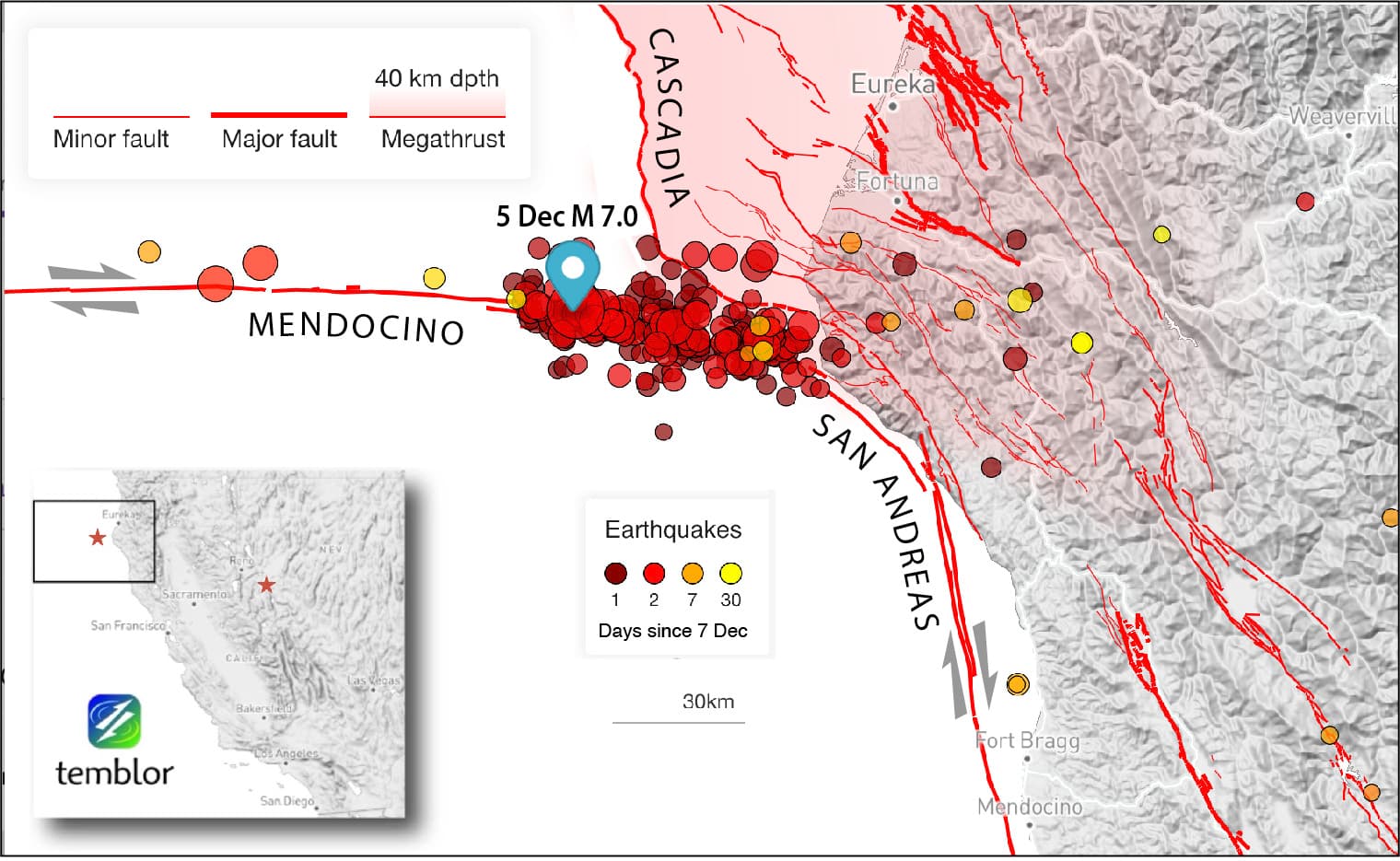
Researchers published in Science on January 15, 2026, reported that swarms of very small earthquakes exposed previously unseen structure beneath the seafloor near the Mendocino Triple Junction, the complex meeting point of the Pacific, North American and Gorda plates off the North Coast. The analysis identified a previously unnoticed rock body labeled the Pioneer fragment and a network of small-scale features that alter how geologists view fault connections in the region.
The study used dense small-event seismicity to illuminate fine-scale geometry that standard catalogs and larger earthquakes do not reveal. According to the report, interactions among the three tectonic plates are more intricate than earlier models suggested, with the Pioneer fragment and other heterogeneities potentially changing how stress transfers between faults. Those changes can affect assessments of how ruptures may start, stop or jump between neighboring structures.
For Humboldt County, which fronts the Mendocino Triple Junction offshore, the findings carry direct relevance. Seismic-hazard models that underpin building codes, land-use planning and emergency response rely on assumptions about fault geometry and connectivity. Refinements to that geometry can shift probabilistic estimates of shaking intensity or the likelihood of multi-fault ruptures that reach the coast. Coastal communities from smaller ports to larger population centers depend on updated scientific inputs when county planners and regional agencies review local risk and mitigation priorities.
The new mapping approach also offers practical tools for local planning. By leveraging swarms of tiny earthquakes, scientists can track active deformation in previously opaque zones, improving short- and long-term hazard characterization. That can feed into future iterations of seismic-hazard maps, retrofit prioritization and the technical basis for infrastructure resilience projects along Highway 101, coastal utilities and critical facilities.

Residents and institutions in Humboldt County should expect state and federal seismic and emergency-management bodies to evaluate these results and consider them alongside existing data. In the near term, this study sharpens the scientific picture of what lies beneath the North Coast and underscores the need for up-to-date preparedness measures, targeted retrofits and continued investment in local seismic monitoring.
What this means for readers is practical: the ground beneath the coast is more complex than maps once showed, and those refinements will help officials better estimate risk and prioritize protective actions. Expect technical follow-ups from the scientific community and incremental adjustments to hazard assessments that inform planning and preparedness across the county.
This article was produced by Prism’s automated news system from verified source data, official records, and press releases, then run through automated quality and moderation checks before publishing. The system is built and supervised by the people who set the standards it runs under. Read our full AI policy.
Did this article answer your question?