Transient Killer Whale Pod Identified Visiting Humboldt Bay, First California Sighting
A pod of Bigg’s, transient killer whales identified as T035A visited Humboldt Bay on December 15, 2025, marking the first documented California water sighting for this family group. Local naturalist reports and confirmation from the California Killer Whale Project identified the 27 year old matriarch Lester and four offspring, a discovery that informs local monitoring, public safety and marine conservation efforts.
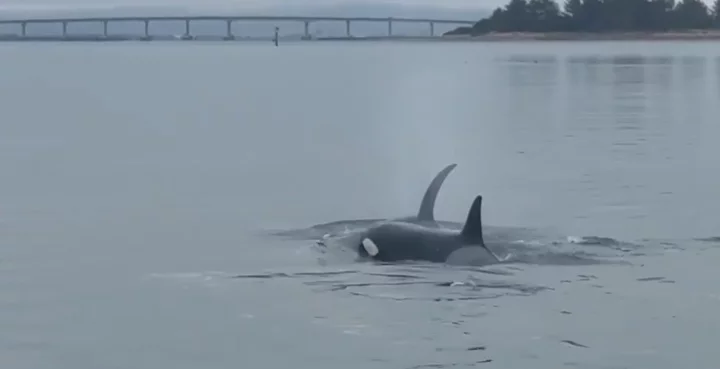
Hunters Point and other waterfront observers reported an unusual sighting on December 15, when a small group of Bigg’s killer whales entered Humboldt Bay. Photographs and follow up correspondence with the California Killer Whale Project confirmed the pod as T035A. The cataloged family is led by a 27 year old female known in records as Lester and includes four offspring cataloged as Opal, Topaz, Garnet and Agate with ages of roughly 15, 12, 7 and 3 years respectively.
This is the first time this particular family group has been documented in California waters, though records show Lester’s mother was observed off the North Coast in 2020. That connection underscores the value of long term cataloging for understanding regional movements and family lineages among transient killer whales that forage along the West Coast.
For Humboldt County the sighting carries several practical implications. Local whale watching, commercial fishing and recreational boating communities may see increased interest in coastal wildlife, and managers will use the new data point to refine monitoring priorities and public outreach. Citizen reports and photo documentation, in this case provided by local naturalists and community observers, supplied the evidence needed for identification. That civic engagement is central to building the datasets that researchers and managers rely on to assess population trends and human wildlife interactions.

The California Killer Whale Project maintains identification cataloging that tracks pedigrees and movements, and local residents are encouraged to continue reporting sightings through established channels. Consistent reporting improves scientific understanding, supports enforcement of vessel approach and disturbance rules under state and federal protections, and helps prioritize where resources are directed for monitoring and outreach.
Humboldt County agencies and the research community will continue to monitor the area for follow up sightings and any signs of disturbance or unusual behavior. The appearance of T035A in Humboldt Bay offers a snapshot of dynamic nearshore ecology, and it highlights how local observation and institutional science together shape management decisions and public awareness.
This article was produced by Prism’s automated news system from verified source data, official records, and press releases, then run through automated quality and moderation checks before publishing. The system is built and supervised by the people who set the standards it runs under. Read our full AI policy.
Did this article answer your question?