Water board rejects logging rule changes for Upper Elk River sediment controls
Water regulators voted 4-2 to keep Humboldt Redwood Company’s Upper Elk River permit tight, saying sediment levels still are not improving.
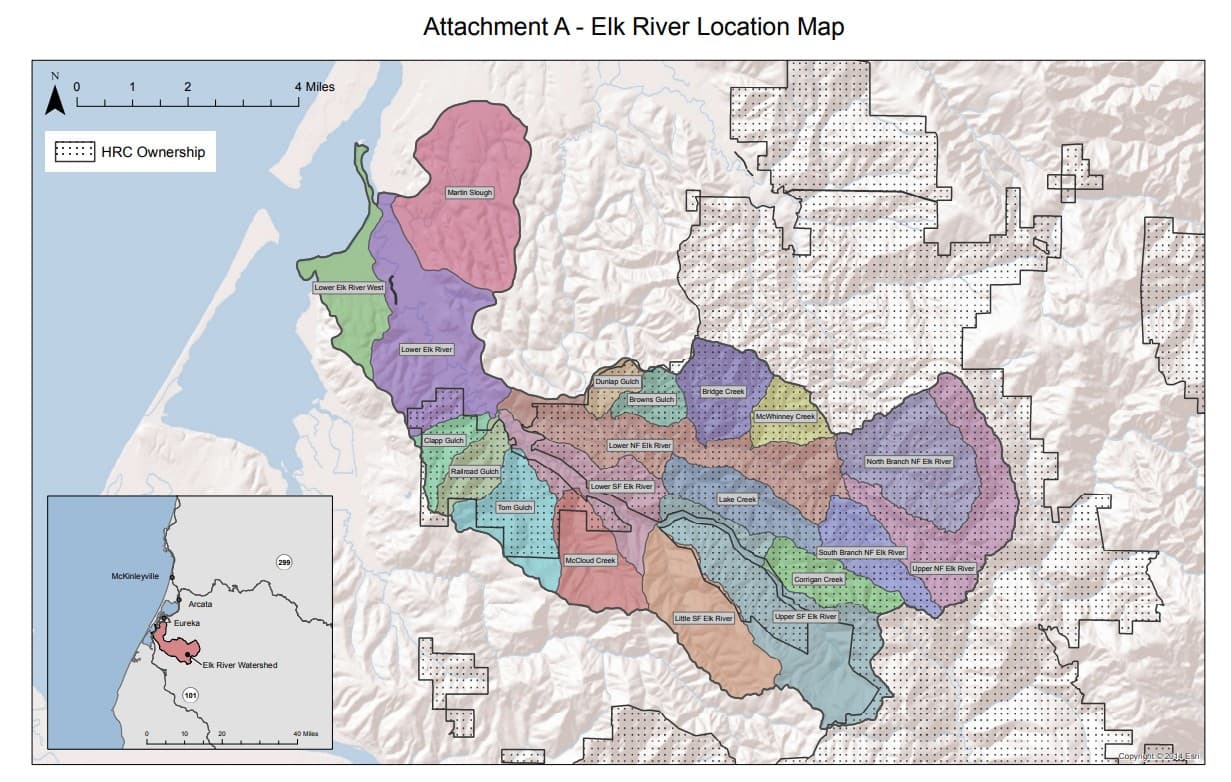
State water regulators left Humboldt Redwood Company under the existing Upper Elk River sediment rules after voting 4-2 in Eureka to reject the company’s request for changes, a decision that keeps pressure on logging in a watershed where sediment has long been tied to flooding, blocked access, and damage downstream.
The North Coast Regional Water Quality Control Board took up the issue at its May 7-8, 2026 meeting at Eureka City Hall and concluded the record did not show sediment conditions in the river improving enough to loosen protections. Dale Romanini and Jake Mackenzie voted in favor of HRC’s proposal, while four other board members opposed it.
HRC had sought changes to its Waste Discharge Requirements, the permit structure that governs sediment pollution from timber harvesting and related activities in the Upper Elk River watershed. The current order, adopted June 19, 2019 as Order No. R1-2019-0021, implements the Upper Elk River Sediment TMDL Action Plan adopted May 12, 2016. That framework includes riparian zone protection, road management, landslide prevention, wet-weather restrictions, limited harvesting in high-risk subwatersheds, sediment-source inventory and treatment, restoration, and monitoring and reporting.
The rejected 2026 proposal would have replaced the 2019 order with alternative measures for riparian-zone protection and wet-weather requirements. Board staff said the changes would not reduce water-quality protections, but environmental groups warned they could raise sediment loads instead. One board member said it was hard to imagine that increasing logging on steep slopes would not send more sediment downhill and into the river.
The vote matters far beyond the hearing room. HRC owns about 79% of the Upper Elk watershed, and the company’s harvest practices carry direct consequences for people living downstream in Humboldt County. The Elk River is the largest freshwater tributary to Humboldt Bay and provides critical habitat for coho salmon, Chinook salmon, steelhead and coastal cutthroat trout. The river was designated sediment-impaired in 1998 by the U.S. Environmental Protection Agency, and local residents have long linked runoff from historic and ongoing logging to nuisance flooding, property impacts and degraded fish habitat.
The board process had been moving for months. The draft 2026 order was publicly noticed on March 2, 2026, with comments accepted through April 1. Regulators received one written comment letter from Vivian Helliwell of Salmon Returning and Andrew Colonna of the California Sportfishing Protection Alliance, and staff said no changes were made in response.
The rejection keeps the 2019 rules in place while the broader Upper Elk Sediment Action Plan moves through its update cycle, with updates identified for 2021, 2026 and 2031. The 2021 update was delayed until August 2022 because of COVID-19 and staffing delays, a reminder that the watershed’s sediment fight has been managed through years of deadlines, reports and continued scrutiny rather than any sign of a quick fix.
This article was produced by Prism’s automated news system from verified source data, official records, and press releases, then run through automated quality and moderation checks before publishing. The system is built and supervised by the people who set the standards it runs under. Read our full AI policy.
Did this article answer your question?