Why Humboldt Transit Skips Bayside and Sunday Service
Humboldt Transit Authority and regional planners say low ridership and steep operating costs make extending regular routes into Bayside and adding Sunday service impractical for now. The decision affects commuters, seniors, and residents without cars, and could shift if planned housing projects increase local demand.

Humboldt County transit officials concluded late last year that extending regular HTA routes into Bayside and restoring Sunday service across several local lines would be cost-ineffective given current ridership and budget constraints. A Humboldt County Association of Governments (HCAOG) staff analysis cited Bayside’s small population, about 1,800 residents, and 2020 census commute data showing only six people used local bus service to commute, leading planners to rule out immediate route extensions of the Red and Orange lines.
Humboldt Transit Authority previously experimented with service along Old Arcata Road but discontinued that route after ridership failed to justify continued operation. Regional planners and HTA staff say the experience reinforced the analytical finding that extending fixed-route service into low-demand corridors produces high per-rider subsidies and strains limited operating dollars.
Adding Sunday service to the Redwood Transit System would likewise require substantial new funding. Consultants estimated an approximate cost of $600,000 per year to add Sunday operations systemwide, with roughly $200,000 attributed to operating expenses and additional staffing and related costs accounting for the remainder. Those consultants warned the average subsidy per rider under a Sunday schedule would be far higher than current funding levels can sustain, a calculation central to both HTA and HCAOG decisions.
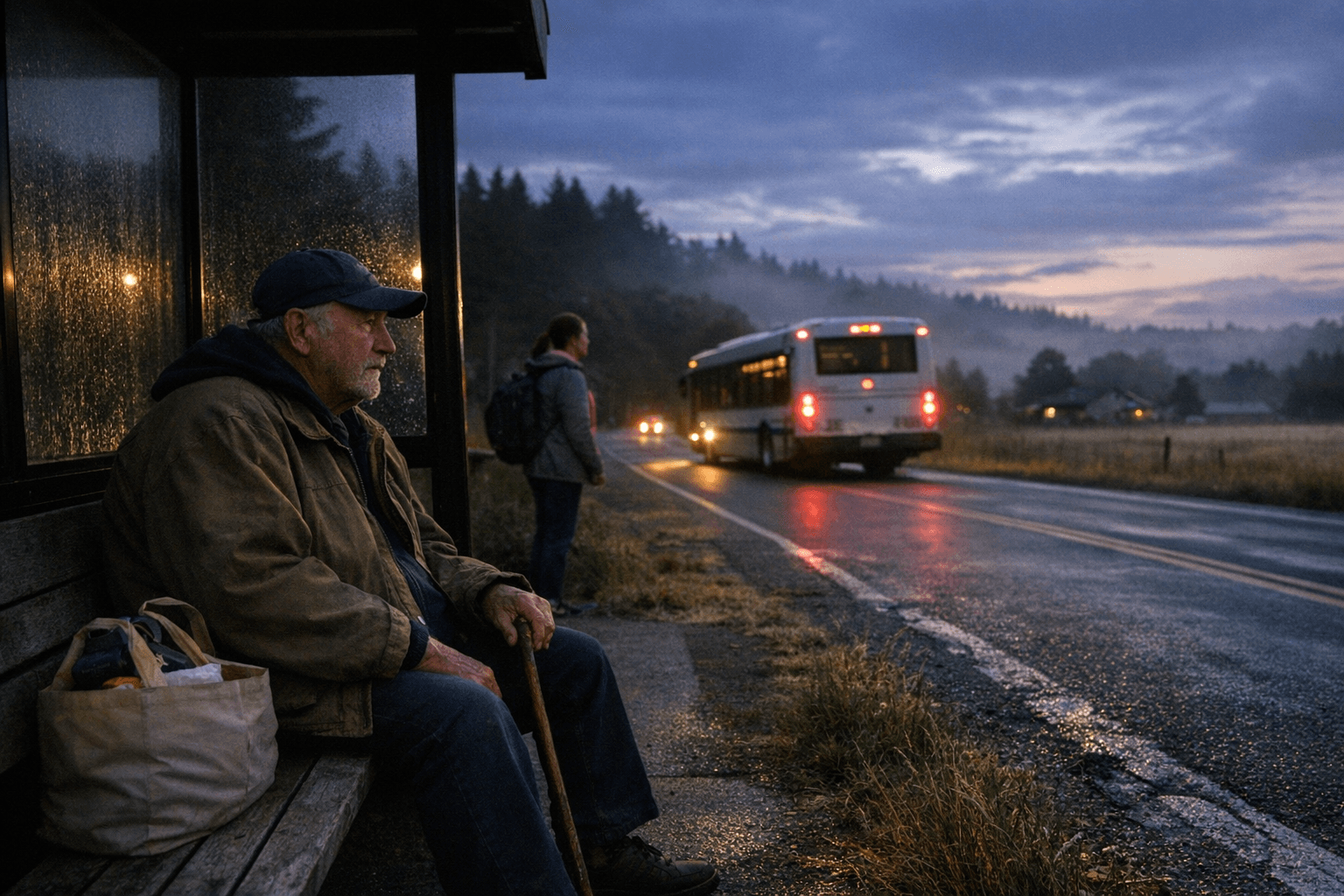
For Bayside residents without access to private vehicles, the absence of regular HTA service and weekend buses narrows mobility choices for work, shopping, medical appointments, and recreation. Local seniors, low-income households, and people who rely on transit for access to jobs and services are most affected. Planners say that without demonstrable ridership increases or new funding streams, expanding service would divert resources from higher-ridership corridors that currently support essential connections across the county.
Officials did not rule out future service changes. Planned or proposed housing development, such as the Roger’s Garage project, could alter ridership projections and the cost-benefit analysis that now underpins route and schedule decisions. If housing density rises and demonstrated demand materializes, HTA and HCAOG say they would revisit service options and funding strategies.
Until then, the authority’s stance is pragmatic: maintain reliable service where demand and funding align, and monitor demographic and development changes that might justify broader coverage. For residents concerned about gaps in transit access, the agencies encourage continued communication with planners and participation in local planning forums so evolving needs are reflected in future transit planning.
This article was produced by Prism’s automated news system from verified source data, official records, and press releases, then run through automated quality and moderation checks before publishing. The system is built and supervised by the people who set the standards it runs under. Read our full AI policy.
Did this article answer your question?