Fairview School lives on as a preserved Iron County home
A one-room school built in 1908 became a private home, preserving a rare piece of Iron County history. Its survival shows how reuse can outlast abandonment.
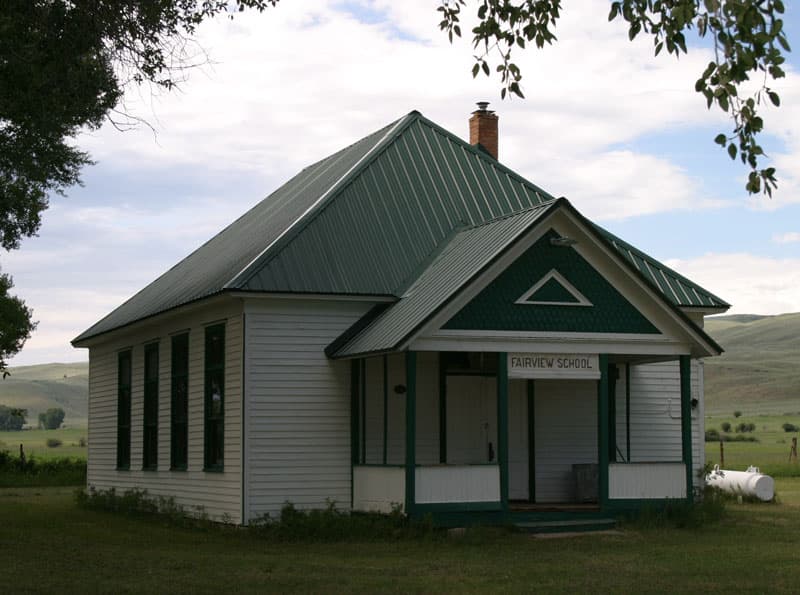
Fairview Road hides one of Iron County’s clearest reminders that old public buildings do not always disappear when their original purpose ends. Near the end of the road, a stately white home still carries the bones of Fairview School, a one-room schoolhouse built in 1908 by local homesteading families and now regarded as perhaps the county’s best-preserved early 20th-century school building. What looks like a private residence is also a record of how rural institutions grew, burned, were rebuilt, and eventually gave way to consolidation.
A schoolhouse that changed with the county
Fairview School began as a practical answer to a scattered rural landscape. Iron County was organized in 1885, and with 1,211 square miles of land, it was the kind of place where small neighborhood schools made daily life possible for families living far from town centers. In 1908, homesteading families established Fairview School as a one-room building on the site, giving children a local classroom in an era when distance shaped nearly everything about education.
That first building did not last long. About five years after it was built, it burned. The community rebuilt it, and the replacement included two outhouses and a coal building, a reminder that even modest schoolhouses were fully built environments with their own routines, needs, and maintenance burdens. The rebuilt structure stood not just as a place to learn, but as a communal investment in a rural way of life that depended on shared effort.
From public classroom to private home
Fairview School’s second life began after 1945, when school consolidation sent students to Nicodemus School in town and Fairview School closed. That shift matters because it marks the broader loss of neighborhood-based schooling across Iron County and across Michigan. When children were moved into larger centralized schools, the small buildings that had anchored local identity were left without a public function.
The building was later moved to town next to School Street, a practical act of preservation that also changed the meaning of the structure. It no longer served as the center of a district’s daily schooling, but it did not vanish from the landscape either. Instead, it became a home, and that reuse gave the building a second identity: private residence on the outside, preserved community artifact underneath.
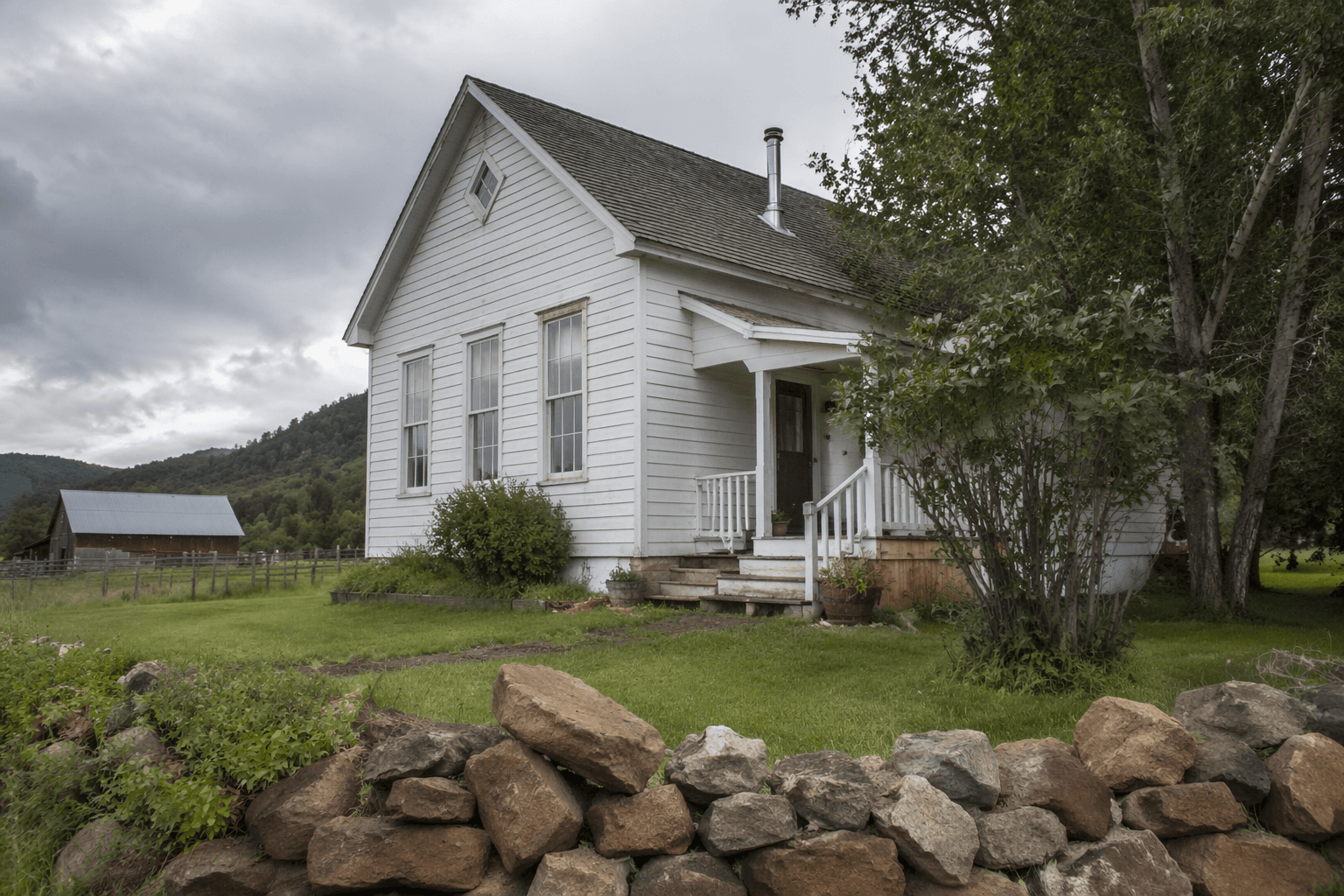
The National Park Service says the property’s story includes a continuous family presence on the land for close to 100 years. That kind of continuity is part of what makes the house more than a renovation project. It suggests stewardship rather than reinvention, and it helps explain why the building still reads as a landmark even in domestic form. The old school survives because somebody kept caring for it, not because it was frozen in place.
What the building says about shrinking institutions
Fairview School is valuable because it shows what happens when institutions outlive the systems that created them. The school was built for a settlement pattern defined by homesteads, distance, and local self-reliance. Once consolidation gathered students into Nicodemus School in town, the small one-room model could no longer carry the county’s educational needs, even if it still held emotional weight for the families who had built it.
That tension between loss and reuse is visible in the house itself. The building has outlasted a fire, a closure, and a relocation, but it did so by changing purpose. In that sense, it mirrors a larger Iron County story: communities lose some landmarks when institutions shrink, yet some structures survive by being absorbed into ordinary life. A schoolhouse turned home may no longer ring with the sound of lessons, but it still preserves the scale, memory, and craftsmanship of a previous era.
For residents driving Fairview Road, that matters in a very immediate way. The home is easy to pass without noticing what it was, which is exactly why it holds power as a hidden historical site. It turns an everyday route into a lesson about how much local history remains embedded in the buildings people use, cross, and drive by without a second look.
A county pattern of preservation, not just nostalgia
Fairview School is not the only Iron County building that tells this story. Another recent profile of Alpha School described it as a National Register of Historic Places property, opened in 1914 and used to educate children of area miners for 53 years. That building, too, shows how schools can become repositories of memory long after the last class has ended.
The comparison matters because it places Fairview School inside a wider county pattern. Iron County’s school buildings were not merely structures for instruction. They were community anchors, markers of settlement, and evidence of how people organized daily life across a large, sparsely populated landscape. When those schools survive, they preserve more than architecture. They preserve the social geography of a county that once depended on them.
Why the home still matters now
Fairview School lives on because it was rebuilt, moved, and cared for across generations. Its survival says something important about preservation in Iron County: the most meaningful landmarks are not always the grandest or the most obvious. Sometimes they are the buildings people pass every day, never realizing they carry the county’s educational history in their walls.
Seen that way, the house on Fairview Road is not just an old school turned home. It is a reminder that public life leaves traces, and that those traces can remain visible when communities choose reuse over erasure. In Iron County, where land is wide and institutions have changed, that kind of continuity is part of the public record too.
This article was produced by Prism’s automated news system from verified source data, official records, and press releases, then run through automated quality and moderation checks before publishing. The system is built and supervised by the people who set the standards it runs under. Read our full AI policy.
Know something we missed? Have a correction or additional information?
Submit a Tip