Golden Lake gets boat-cleaning station to block invasive species
Golden Lake’s new boat-cleaning station is now at the campground launch, giving boaters a way to scrub off invasive species before they reach the water.
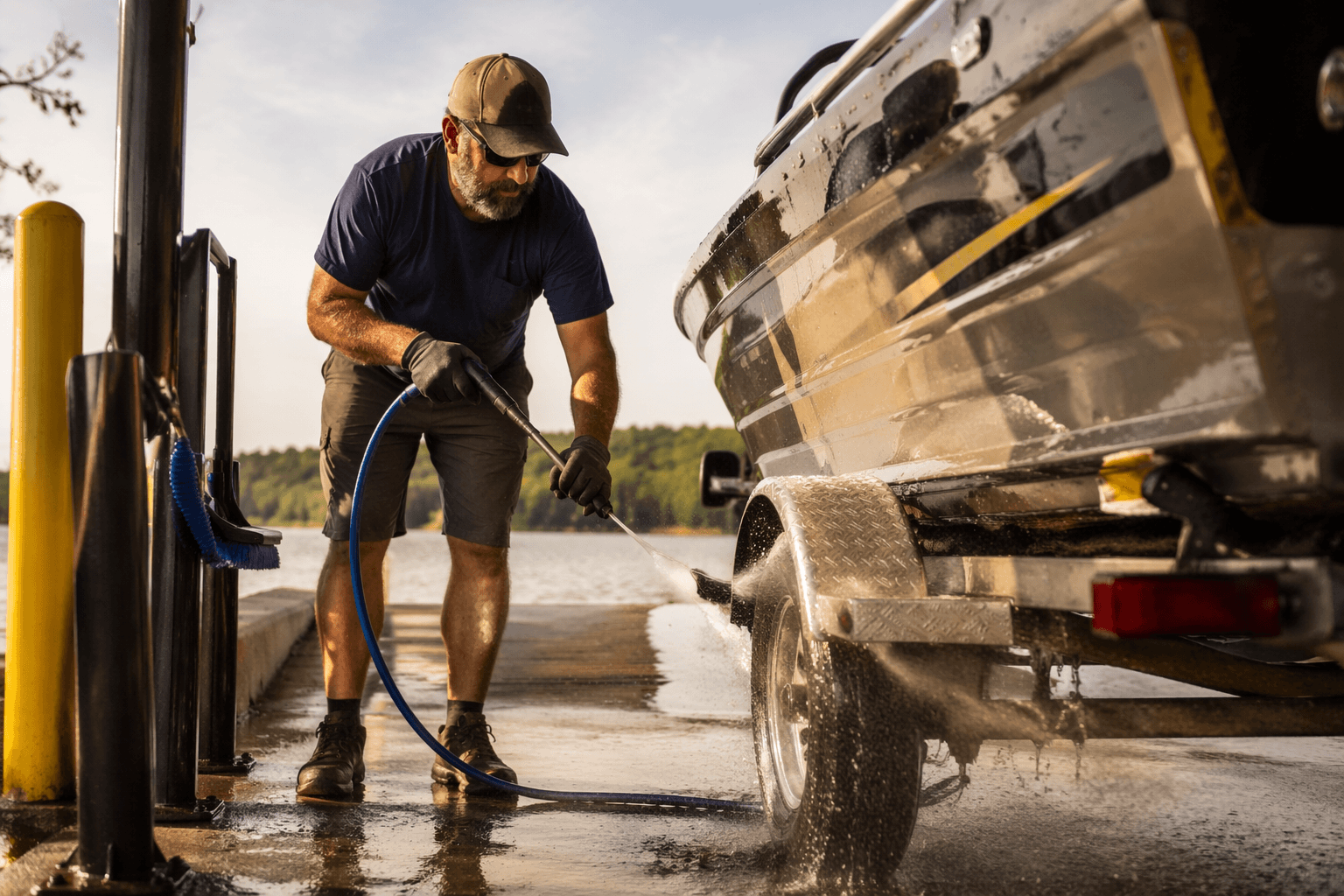
The Golden Lake Land Owners Association installed a CD3 Boat Cleaning Station at the campground boat launch on June 4, adding a new layer of protection to one of Iron County’s cleaner lakes. The trailer-mounted unit sits at a public access point at Golden Lake Campground, where summer boaters can clean off hulls, trailers, bilges and live wells before launching.
Golden Lake Campground is on the Ottawa National Forest’s Iron River Ranger District, about 15 miles northwest of Iron River. The site includes 22 campsites, a boat ramp, a small picnic area and a parking lot next to the launch, and it typically opens with full services the Friday before Memorial Day. That makes the station part of the everyday traffic pattern for campers, anglers and other boaters who use the lake through the summer.
The project came together through the U.S. Forest Service, Wildlife Forever and the Golden Lake Land Owners Association, with funding from a Great Lakes Restoration Initiative grant. Wildlife Forever says 14 watercraft cleaning stations are being installed at key public boat launches across Michigan. The stations are solar powered, user-operated and designed to work without staff on site, a practical setup for remote public launches where constant supervision is not realistic.
The trailer-mounted design also helped the project move faster. Because the station could be placed on a trailer instead of a permanent pad, organizers avoided a site-evaluation process that could have delayed installation by up to two years. The long-term plan is to set the unit on a dedicated pad at the campground launch once the arrangement becomes permanent.
The risk the station is meant to address is not abstract. Zebra mussels can attach to native mussels and underwater structures, while Eurasian watermilfoil is a restricted invasive plant in Michigan that can spread quickly and form dense stands that interfere with recreation. Michigan State University Extension says invasive species can move on bilge water, trailers and gear, and that launch-site cleaning equipment can help stop that spread. Extension also notes that trailer-mounted systems are a practical option when permanent stations are not feasible, and that the most effective system is often the one people will actually use.
For Iron County, the work lands in a lake region already under pressure. Iron County Lakes & Streams Partnership says its mission is to prevent and control aquatic invasive species through cooperation, outreach and education. A June 2025 Iron County Reporter article said Eurasian watermilfoil had taken root in a dozen local lakes, underscoring why local lake groups have pushed prevention before contamination becomes expensive and harder to reverse.
This article was produced by Prism’s automated news system from verified source data, official records, and press releases, then run through automated quality and moderation checks before publishing. The system is built and supervised by the people who set the standards it runs under. Read our full AI policy.
Know something we missed? Have a correction or additional information?
Submit a Tip