Iron County heritage trail links historic sites and scenic outdoor stops
Iron County’s trail network turns a simple walk into a low-cost tour of museums, lake views and mining history. The 36-mile Heritage Trail links 14 sites across the county.
A trail system that does more than connect places
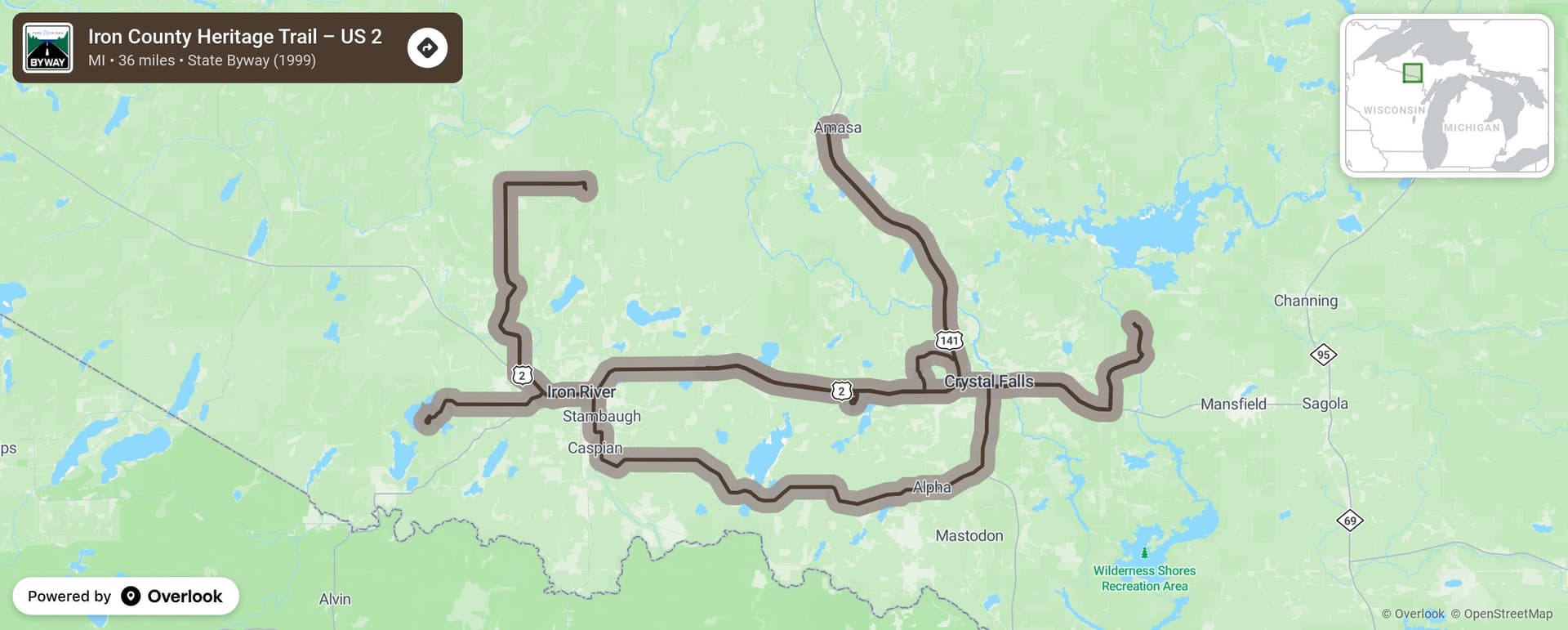
Iron County’s trail network gives residents and visitors an easy way to get outside without turning it into a big trip or a big expense. The Iron County Heritage Trail is the backbone of that system, a 36-mile loop that threads together 14 premier sites and works as a self-guided tour of the county’s past and present.
That matters in a county that was established in 1885 and had 11,631 residents in the 2020 Census. Mining and logging shaped the region’s early transportation patterns, and today’s trail corridors carry that history forward in a form that fits modern life: paved stretches, heritage stops and access to forests, water and town centers. The Heritage Trail’s state byway designation in 1999 reinforces that role, placing recreation, interpretation and local identity on the same map.
Where the Heritage Trail takes you
The loop reaches from downtown Crystal Falls toward Fortune Lake and extends from Iron River to Chicaugon Lake, so it works as both a local outing and a broader countywide route. Official trail materials identify 14 stops along the way: the Iron County Heritage Museum, Pentoga Park Indian Burial Grounds, Alpha Circle Historic District, the Iron County Courthouse, Harbour House Museum, Mansfield Location and Pioneer Church, Amasa Museum, Fortune Pond, Bewabic State Park, Larson Park, Apple Blossom Trail, Lake Ottawa Recreation Area and Campground, Mile Post Zero and Treaty Tree, and Camp Gibbs Recreation Area.
The trail’s museum and historic-site mix gives it unusual range. The Iron County Heritage Museum grounds alone contain six complexes and 26 buildings, which makes it one of the most information-dense stops on the route. Other places capture turning points in local history, including Mansfield Location, where a mining disaster on September 28, 1893 killed 27 miners in a cave-in, and Alpha Circle Historic District, established in 1914 and described as a precursor to the modern roundabout.
Stops that explain Iron County’s story
Several sites along the loop show how deeply the county’s economy was tied to iron ore. Fortune Pond is one of the clearest examples, with official trail materials noting that it produced 1,316,905 tons of iron ore from 1953 to 1958. The Apple Blossom Trail adds another layer, since it was originally a rail corridor that carried iron ore from local mines to steel mills in Chicago and Indiana. It also marks the site of Harvey Mellon’s discovery of iron ore in 1851, a detail that links the trail directly to the county’s earliest mining era.
The route also preserves places that help explain how people lived around that industry. Bewabic State Park is described in trail materials as a 315-acre state park with Civilian Conservation Corps log buildings from the 1930s, blending recreation with New Deal-era history. Lake Ottawa Recreation Area and Campground, Camp Gibbs Recreation Area, Pentoga Park Indian Burial Grounds, the Harbour House Museum and the Amasa Museum round out a trail system that moves between cultural memory, outdoor stops and local institutions without losing its sense of place.
A short walk with a different feel
Not every Iron County trail day has to be a full-loop outing. A 1.5-mile loop trail with a short spur to Mount Margaret offers a shorter, easier wander through scenic woods, with interpretive signs that mix natural history, art and a slower pace. It is the kind of trail that works when you want fresh air and a clear destination, but not a long hike or a complicated plan.
That shorter route has broad appeal because it lowers the barrier to getting outside. Families can use it as an introduction to the landscape, beginners can treat it as a manageable outing, and anyone looking for a quiet reset can use the interpretive signs as a reason to slow down instead of just moving through the woods. In a county with 250 lakes and a wide outdoor recreation base, that kind of close-to-home access is part of the draw.
How to choose the right trail for your day
If you want a practical way to match the trail system to your plans, the Heritage Trail’s mix of paved route, historic stops and shorter side trails makes that easy.
- For walking: The 1.5-mile Mount Margaret loop is the simplest choice for a short, scenic outing, especially if you want interpretive signs and a calmer pace.
- For biking or a longer ride: The 36-mile Heritage Trail loop and its paved stretches, including the route from downtown Crystal Falls toward Fortune Lake and the stretch from Iron River to Chicaugon Lake, give you the broadest countywide ride.
- For beginners: A heritage stop paired with the Mount Margaret loop keeps the outing straightforward while still giving you something to see and learn.
- For families: Bewabic State Park, Lake Ottawa Recreation Area and Campground, and the museum sites provide a strong mix of open space and educational stops.
- For scenic payoff: Fortune Pond, Bewabic State Park and the wooded Mount Margaret route deliver the clearest blend of water, trees and quiet landscape.
- For access: Trail materials point to access points in downtown Iron River or Caspian, and the trail head is located at the Iron County Chamber of Commerce.
That flexibility is one reason the route works as a utility rather than a novelty. You can build a whole day around it or use one segment for a quick reset, which is exactly what makes a local trail network valuable when household budgets are tight and time is limited.
A public asset with economic and civic value
The Michigan History Center says heritage trails connect people with the natural and cultural heritage of the landscape they travel through, and it adds that heritage trail development can attract visitors who stay longer, spend more and are more likely to return. In Iron County, that idea is not abstract. The route links towns, forests, shoreline stops and historic landmarks in a county that already markets itself as a place for year-round discovery.
The Friends of the Heritage Trail, a nonprofit, coordinates site maintenance and development, while the Iron County Trail Club supports trails and events through volunteer effort. That kind of stewardship matters because it keeps the system usable as both recreation infrastructure and heritage corridor. In the end, Iron County’s trails are doing several jobs at once, and that is what makes them one of the county’s most practical and enduring public assets.
This article was produced by Prism’s automated news system from verified source data, official records, and press releases, then run through automated quality and moderation checks before publishing. The system is built and supervised by the people who set the standards it runs under. Read our full AI policy.
Know something we missed? Have a correction or additional information?
Submit a Tip