Iron County logging camp became a University of Michigan classroom
Three original camp buildings at Golden Lake still mark where Iron County's logging boom turned into a University of Michigan forestry camp.
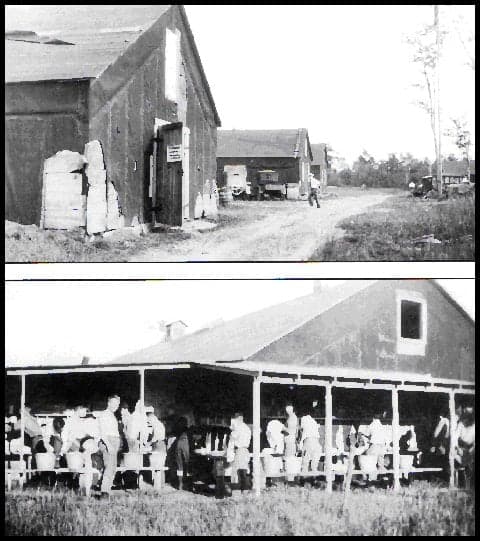
On the west shore of Golden Lake, Iron County still has a place where a logging camp, a railroad timber operation, and a University of Michigan field classroom all meet in one landscape. The surviving office and store, cookhouse and mess hall, and two bunkhouses make Van Platen-Fox Lumber Company Camp, later Camp Filibert Roth, one of the county’s clearest physical links between extraction and education.
What still stands at Golden Lake
The camp sits at 281 University Rd., about 6.3 miles west of Beechwood, on the western shore of Golden Lake. The structures that remain are one-story wood-frame buildings resting on concrete blocks and finished with vertical pine plank siding. That preserved cluster matters because it is not a single relic but a working camp layout: the office and store handled business and supplies, the cookhouse and mess hall fed crews, and the bunkhouses held the people who kept the logging operation running.
Van Platen-Fox built the camp in 1921, and the logging camp operated until 1935. SAH Archipedia identifies the office and store, cookhouse and mess hall, and two bunkhouses as the only surviving structures from what was once a much larger camp. In a county where so much of the timber era disappeared with the woods it helped cut, that survival makes Golden Lake less like a preserved monument and more like a readable site, where the shape of everyday work is still visible in the buildings themselves.
How timber moved out of Iron County
The company that built the camp was headquartered in Iron Mountain and had extensive lumbering operations across the western Upper Peninsula and northern Wisconsin. After acquiring the Golden Lake property in 1921, Van Platen-Fox began harvesting hardwoods there, tying the camp to a wider industrial network rather than to a single isolated cutting site. That network depended on rail, and the Chicago and North Western Railroad carried the logs from Basswood, about 2.5 miles northeast of the camp, to mills in Crystal Falls, Menominee, and other points south.
That railroad connection is part of why the site still tells a bigger Iron County story. Golden Lake was not only a place where trees came down; it was part of the system that made those trees profitable, connecting the woods to mills and markets through a transport corridor that linked the county to the rest of the Upper Peninsula. The surviving camp buildings give that system a human scale, because they show where crews were housed and organized before the logs ever reached the tracks.
How a logging camp became a classroom
By the time the University of Michigan took over the site, the land’s purpose had changed from extraction to training. SAH Archipedia says the university has used the Golden Lake site as a summer training camp for forestry students since 1937, and that U-M added classroom buildings and log cabins after the transition. The Bentley Historical Library’s finding aid describes Camp Filibert Roth as a summer training camp for forestry students and says its records document the camp’s administration, research, training, and recreational activity.
The broader Camp Filibert Roth history stretches back to 1929, when the University of Michigan opened the camp in Iron County as a summer field experience site for students in the School of Natural Resources. University records say the camp first opened in an abandoned logging cabin southwest of Munising, then moved to Golden Lake in the mid-1930s and remained in use through the 1980s. That timeline helps explain why this Iron County location is unusual: the same institution that trained foresters also inherited a former logging camp and kept using the land for hands-on forestry instruction.
The university’s own materials make clear that Camp Filibert Roth was not a ceremonial outpost. Its curriculum combined academic and practical skills in a three-month summer session in the Upper Peninsula, with timber management classes, fire fighting skills, and harvesting techniques required of upper division forestry majors. The records also note that the camp’s holdings include correspondence, photographs, slides, scrapbooks, and other materials from camp directors and School of Natural Resources faculty, which underscores how much of the university’s forestry education was built around fieldwork in places like Golden Lake.
Why this place still matters in Iron County
Golden Lake gives Iron County residents a rare site where the county’s logging, railroad, and educational eras remain physically connected. Few places let you stand beside the last camp buildings from a 1921 hardwood operation and then trace the same property into the University of Michigan’s forestry program, but this one does. That continuity gives the site value beyond nostalgia: it helps explain how Iron County moved from timber cutting toward forest science without erasing the older landscape entirely.
For anyone interested in local heritage, the appeal is that the site still reads as a place, not just a date in a history book. The camp’s surviving buildings, its rail link from Basswood to Crystal Falls and Menominee, and its long university use at Golden Lake show one Iron County property doing three jobs over more than a century of change. That is why it remains one of the county’s most revealing landmarks, and why it still matters to the identity of the woods around Beechwood and the shoreline around Golden Lake.
This article was produced by Prism’s automated news system from verified source data, official records, and press releases, then run through automated quality and moderation checks before publishing. The system is built and supervised by the people who set the standards it runs under. Read our full AI policy.
Did this article answer your question?