Iron County Museum preserves Caspian mining history and heritage
The Iron County Museum turns a former mine site into a walk through cabins, rail stops and immigrant homes. Its 539-foot shaft and 25-plus buildings make Caspian's past visible.

The first thing Iron County Museum gives you is not a room but a landscape. A tall headframe still rises over the former Caspian Mine, and beneath it sits a flooded shaft that drops 539 feet, a reminder that the county’s history is literally built over industrial depth.
A museum born from a changing county
Iron County Historical and Museum Society formed in October 1962, when local residents moved to preserve a county economy and memory that were changing fast as the mines closed. The following year, Pickands-Mather Company deeded 5.5 acres, including the Caspian Mine headframe and engine house, to Iron County for the museum. By the time the museum opened in 1968, the old mining ground had become a public place for remembering how work, settlement, and family life shaped Caspian and the wider county.
That scale is part of what makes the site worth reading as more than a stop on an afternoon drive. Current museum listings describe 25-plus buildings and more than 100 exhibits, while other listings put the campus at 26 buildings and over 100 major exhibits on nearly 10 acres. The museum is not a single display case about mining. It is a preserved historic landscape where the county’s industrial past, domestic life, and cultural memory sit side by side.
Follow the log cabins, and you follow the county
The museum’s identity as the Historic Log Cabin Capital of Michigan is not just a slogan. The campus includes the Homestead Complex and Barn, the Peterson House, the Beechwood Cabin, the Kaleva Puotinen Barn, the Koski Cabin, the Playhouse, the Maki Sauna, the Logging Camp, and more. Other buildings moved in or reassembled over the years include the Brule Cabin, Beechwood Log Home, Stager Depot, Johnson Homestead Cabin, Sharrard Lumber Camp, the Carrie Jacobs-Bond home, the Pioneer School, St. Mary’s Church from Gaastra, the Maki sauna, the Lee LeBlanc Gallery, and the Giovanelli Home and Studio.
That collection turns the grounds into a map of how people actually lived here. A sauna tells you about Finnish and broader immigrant traditions. A depot points to rail travel and the movement of workers and families into Iron County communities. A church, a school, a lumber camp, and a composer’s home each mark a different way people built a life here, whether through faith, labor, art, or education. Seen together, the buildings show that the county’s heritage is not only about extraction, but also about domestic routines and cultural survival.
Mining remains the anchor underfoot
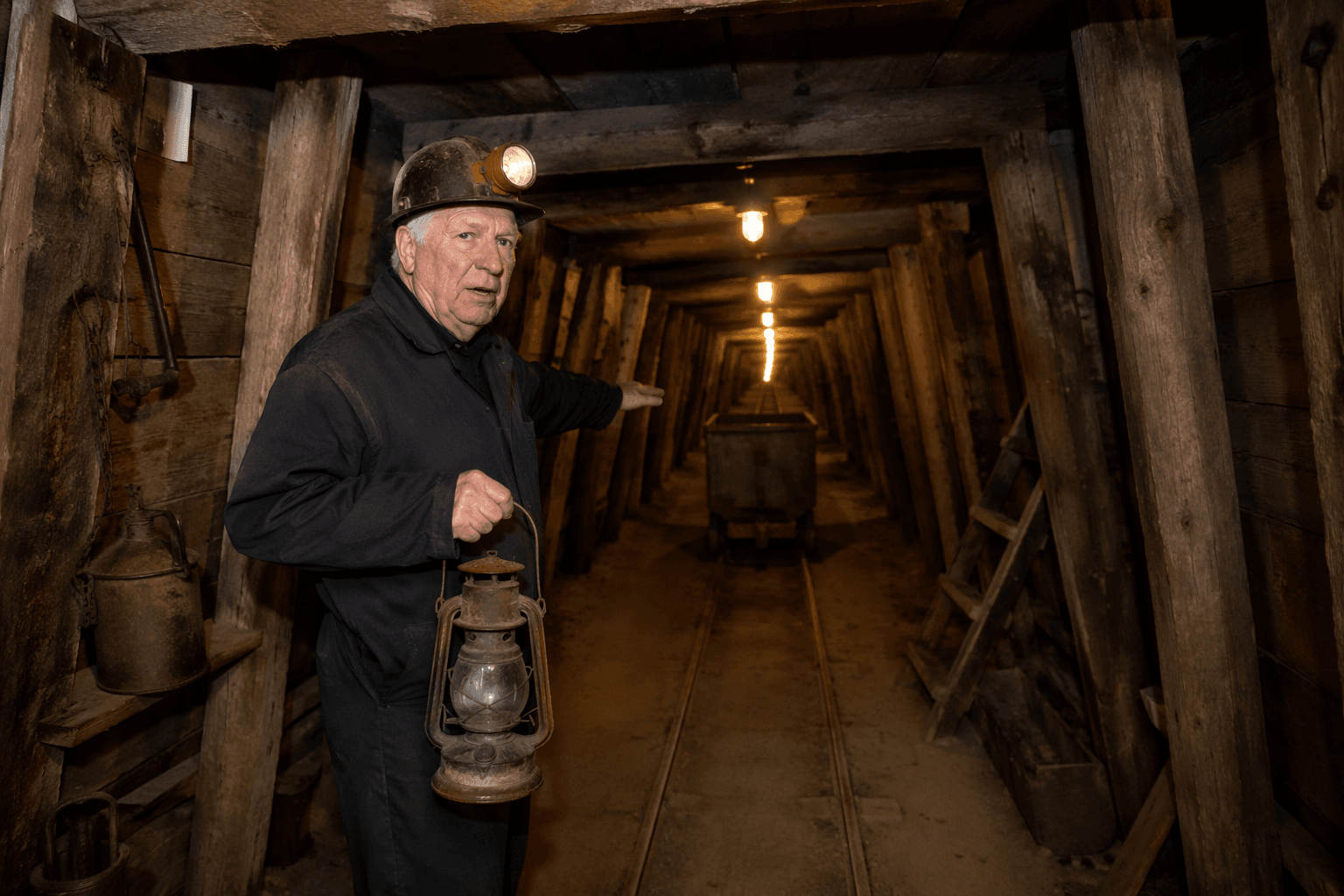
The former Caspian Mine still shapes the museum experience even after the mine itself closed in 1937. The old engine house remains central to the main building, and the headframe continues to frame the site above the shaft below. One current travel listing identifies the headframe as a 1921 structure on the National Register, while the museum’s own site centers the industrial remains as part of its public history.
That underground void matters. The 539-foot flooded shaft is not visible in the same way as a cabin or depot, but it is the reason the museum feels rooted in Caspian rather than simply imported into it. The site preserves both what the mining economy left above ground and what it took away beneath it, which gives visitors a clearer sense of the physical cost of the industries that once sustained Iron County.
Inside the galleries, archives, and research center
The museum’s reach goes well beyond its outdoor buildings. Staff and volunteers maintain an extensive research center and archives, along with two art galleries, including the Lee LeBlanc Wildlife Gallery. That makes the museum useful not only for casual visitors but also for families tracing names, dates, and places through the county’s layered past.
The collection also widens the story past mining alone. The Carrie Jacobs-Bond House, moved from Iron River in 1978, ties the site to the county’s musical and cultural history. The Giovanelli Home and Studio brings in visual art, while the Stager Depot links the museum to the arrival routes that connected newcomers to Iron County life. In a county shaped by logging, mining, and migration, those links matter because they preserve the places where working families turned labor into community.
How to read the museum on the ground
A walk here works best if you treat the campus like a route through Iron County memory rather than a checklist of buildings. Start with the Caspian Mine headframe and engine house, then move outward to the cabins, church, school, and depot. The sequence makes the shift from industrial center to domestic and civic life easy to see.
- The mining structures show where the county’s wealth once came from.
- The log cabins and homesteads show how families adapted to that economy.
- The school, church, and depot show how people stayed connected to one another.
- The art galleries and archives show how the county keeps interpreting its own past.
The museum is generally open seasonally from June through September, and only the main building is accessible in winter. One current listing says it opened in time for the Caspian and Mineral Hills Jubilees, which fits the way the site still feels today: not like a sealed-off relic, but like a place folded into local life and local celebration.
What remains at Iron County Museum is more than a set of preserved structures. It is a working memory map of Caspian and the county around it, where mining, lumbering, immigrant household life, art, and family history are all held in the same landscape.
This article was produced by Prism’s automated news system from verified source data, official records, and press releases, then run through automated quality and moderation checks before publishing. The system is built and supervised by the people who set the standards it runs under. Read our full AI policy.
Did this article answer your question?