Iron County road commission holds back $1.3 million amid tax lawsuit risk
Iron County is holding its expected $1.3 million road share in reserve, wary a marijuana-tax lawsuit could force repayment while flooding already keeps roads closed.
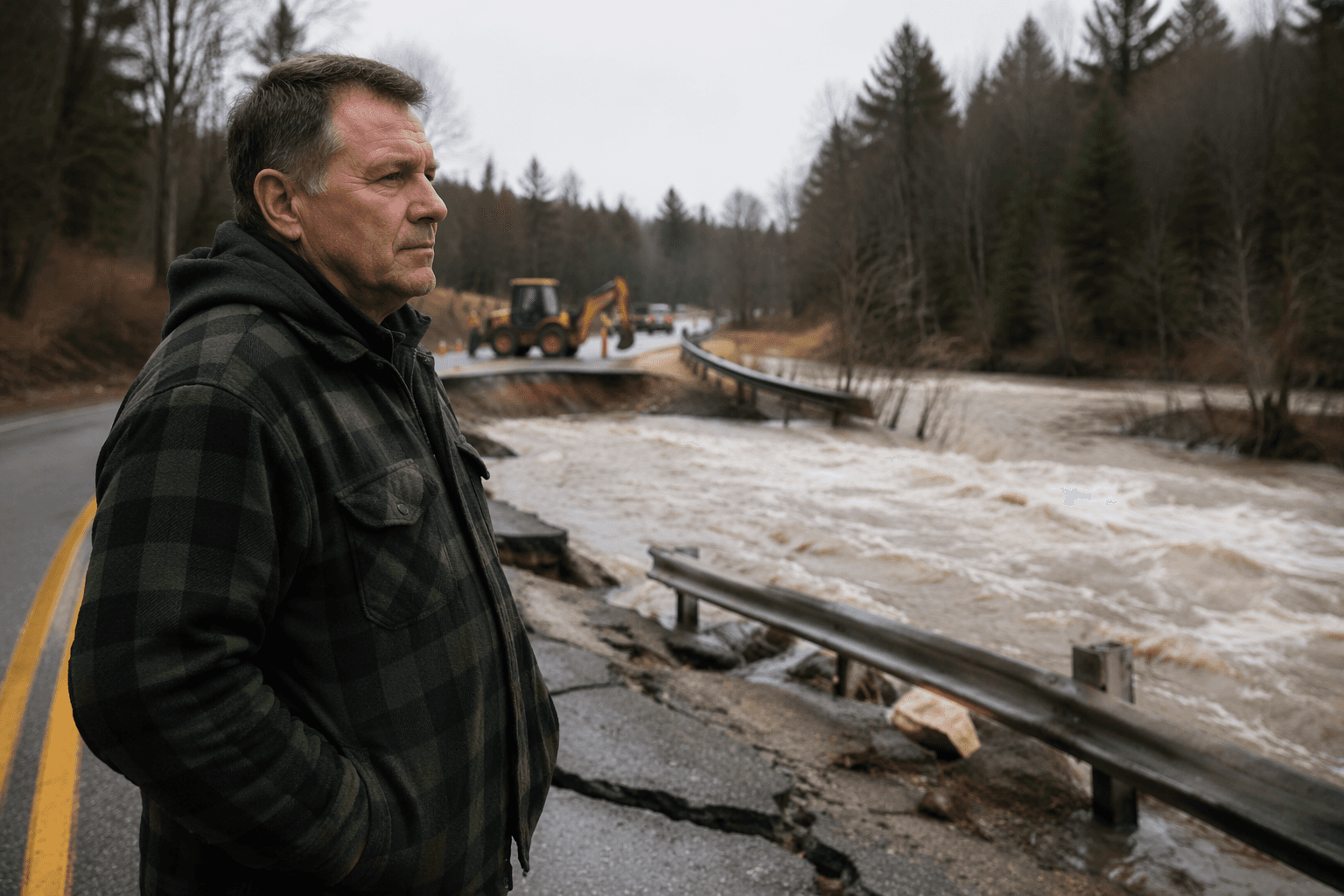
Iron County road officials are choosing caution over a quick cash infusion, holding back an expected $1.3 million from the state’s new road-funding stream because a marijuana-tax lawsuit could leave the county owing the money back. That hesitation comes as some county roads are still closed from flooding and damage, putting road crews and taxpayers in a budget bind before the construction season can fully move ahead.
The issue surfaced at the Iron County Road Commission’s May 19 meeting, where Superintendent Brad Toivonen and Finance Director Michelle Johnson laid out the risk tied to Michigan’s 24% wholesale marijuana tax. The tax was approved as part of a 2025 budget deal and was designed to help finance the Neighborhood Roads Fund, but the Michigan Cannabis Industry Association has asked the Michigan Court of Claims to strike it down, arguing the Legislature needed a supermajority because the change altered a 2018 voter-approved ballot law. If the state loses, Toivonen said, “we would end up paying that money back.”
Johnson’s numbers made the stakes plain. The state projected the tax to generate about $420 million a year for roads, with roughly 38% of the Neighborhood Roads Fund expected to come from marijuana tax revenue. The tax was scheduled to take effect Jan. 1, 2026, and the Legislature’s plan also set aside $3 million for the Comprehensive Road Funding Fund, with the rest going to the neighborhood fund. On paper, Iron County’s share would be welcome relief. In practice, the commission does not want to spend money that could later have to be returned.
That caution lands in a county already stretched by weather damage. Iron County declared both local and state disaster conditions after widespread spring flooding, and the road commission said some county roads remained closed with no reopening timeline. Emergency Manager Chris Peterson told commissioners the Way Dam Reservoir had reached near capacity because of rapid snowmelt, raising concern that more releases could push the Michigamme River high enough to threaten the bottom of the M-69 bridge.
For Iron County, the question is not just whether Lansing’s road money survives the lawsuit. It is whether local officials can keep faith with a road system that includes 224 MDOT highway miles and 633 primary and local miles while juggling flood repairs, closed roads and a funding source still tied up in court. The commission’s wait-and-see approach reflects a simple calculation: better to delay spending now than risk a costly repayment later.
This article was produced by Prism’s automated news system from verified source data, official records, and press releases, then run through automated quality and moderation checks before publishing. The system is built and supervised by the people who set the standards it runs under. Read our full AI policy.
Know something we missed? Have a correction or additional information?
Submit a Tip