Iron County sheriff’s office handles patrol, schools, recreation safety
Iron County’s sheriff’s office is more than patrol. It is the county’s round-the-clock hub for jail, school, seat-safety and trail enforcement.

A 24/7 county safety hub
The Iron County Sheriff’s Office is built to do far more than answer patrol calls. Its public-facing office page shows a department that stays open 24/7 and spreads its work across jail operations, school safety, juvenile prevention, road patrol and recreation enforcement.
For residents, that matters because Iron County is large, rural and lightly populated. The county covers 1,166.1 square miles of land and had 11,631 people in the 2020 Census, with recent Census Bureau estimates placing the population at 11,757 as of July 1, 2025. In a county that big, the sheriff’s office is part of the everyday support system, not just the place that shows up after something goes wrong.
What the office handles beyond patrol
The sheriff’s office page lays out a department structure that includes Danielle Cunningham as jail administrator, April Anderson as administrative assistant, Sergeant Brent Benson as crime scene tech and firearms instructor, Deputy Adam Schiavo as D.A.R.E. officer, Deputy Michael Mansell as child safety seat coordinator, Deputy Jeremy Allen as school resource officer for West Iron County, Deputy Michael Webster as ORV-snowmobile-marine patrol, and part-time deputies Abe Varoni, David Painter and Douglas Weesner.
That mix of roles shows how many different problems the office is expected to solve. If the issue involves jail operations, inmate matters, school safety, child-seat help, drug prevention, or outdoor recreation enforcement, the sheriff’s office is designed to handle it. It is a public-safety office with specialized duties, not a one-size-fits-all patrol unit.
When residents should think of the sheriff’s office
The practical value of the office is that it gives county residents one local agency for a broad set of concerns. People can rely on it for road patrol, jail questions, school-related safety matters, child passenger seat guidance, and enforcement on trails and waterways. In a county where services are spread across a wide rural area, that kind of consolidation is important.
The sheriff’s office is also part of the county’s emergency chain, alongside Iron County Central Dispatch. Central Dispatch says it is the county’s only 24/7/365 agency and identifies itself as the Public Safety Answering Point for 911 calls. That means urgent calls begin there, while the sheriff’s office carries out much of the field response, jail work and specialized enforcement that follow.
Why recreation enforcement is such a big part of the job
Iron County’s geography explains a lot about the sheriff’s office structure. The county recreation plan documents snowmobile trails, ORV trails and river access sites, which means outdoor travel is not a side issue here. It is a regular part of life, especially when seasonal weather turns trails and waterways into major routes for recreation and transportation.
That is why an ORV-snowmobile-marine patrol deputy makes sense in this county. Deputy Michael Webster’s role reflects the reality of a place where snowmobiles, off-road vehicles and water access all need law-enforcement attention. In a rural county, public safety extends onto the trail system, the river access points and the seasonal routes people use to get around.
Jail operations are a major county function
The jail is another reminder that the sheriff’s office is doing more than street patrol. The jail administrator job description says that the administrator is responsible for jail staff supervision, inmate and staff safety, facility security, inmate services, programming, staffing, budget and purchasing. That is a full management role, not a narrow custodial assignment.
Danielle Cunningham’s listing as jail administrator underscores how central that operation is to the department. When a county sheriff’s office manages jail operations in addition to patrol and specialized enforcement, it becomes one of the county’s most important 24-hour institutions. That is especially true in a place where residents may have limited access to larger public-safety systems nearby.
School safety and prevention reach into daily life
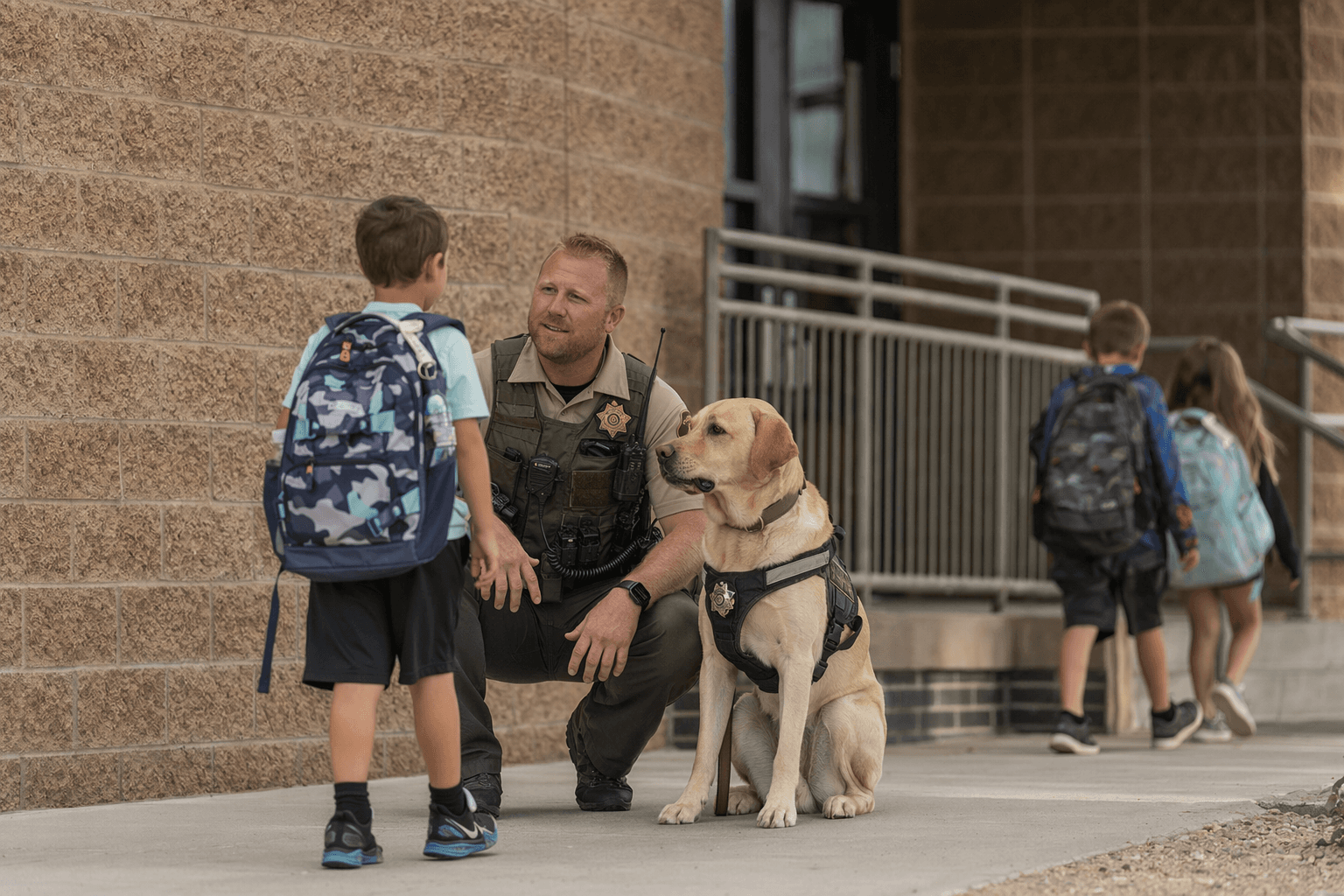
The sheriff’s office page also makes clear that school safety is part of the department’s routine work. Deputy Jeremy Allen is listed as school resource officer for West Iron County, and an August 2018 county meeting notice said the Sheriff’s Department was working with West Iron County Schools to create a partnership supporting drug prevention. Those details show that the office’s role reaches beyond response and into prevention.
That kind of work is especially important in a smaller county, where schools, law enforcement and families are tightly connected. A school resource officer can help with daily safety, relationship-building and communication between students, staff and law enforcement. The D.A.R.E. role held by Deputy Adam Schiavo fits that same pattern, tying the sheriff’s office to education and prevention rather than enforcement alone.
Child safety seats and crime-scene work add to the load
The department’s duties also include public education and technical response. Deputy Michael Mansell is listed as child safety seat coordinator, which points to a practical service that many families rely on when transporting young children. That role is an example of how the office handles prevention before a crash or citation ever becomes an emergency.
Sergeant Brent Benson’s work as crime scene tech and firearms instructor shows another side of the office’s expertise. County residents may not see that work every day, but it is part of what allows the department to investigate incidents carefully and maintain internal training. In a county this size, having those capabilities locally matters because it reduces the need to depend on distant agencies for specialized support.
A department shaped by local geography and local age
Iron County’s public-safety needs are shaped not only by its size, but also by its population profile. Recent Census Bureau estimates put 32.7% of residents age 65 or older, a high share that can increase the need for accessible law enforcement, emergency coordination and safety outreach. Rural counties with older populations often depend heavily on clear, local points of contact when something happens.
That is why the sheriff’s office page works as a useful public guide even without a major news event attached to it. It tells residents who handles patrol, who handles the jail, who handles school safety, who helps with child seats, and who covers the trails and waterways. In a county this large and this spread out, the sheriff’s office is not just a department name on a website. It is a 24-hour operating center for the everyday public-safety needs that keep Iron County moving.
This article was produced by Prism’s automated news system from verified source data, official records, and press releases, then run through automated quality and moderation checks before publishing. The system is built and supervised by the people who set the standards it runs under. Read our full AI policy.
Did this article answer your question?