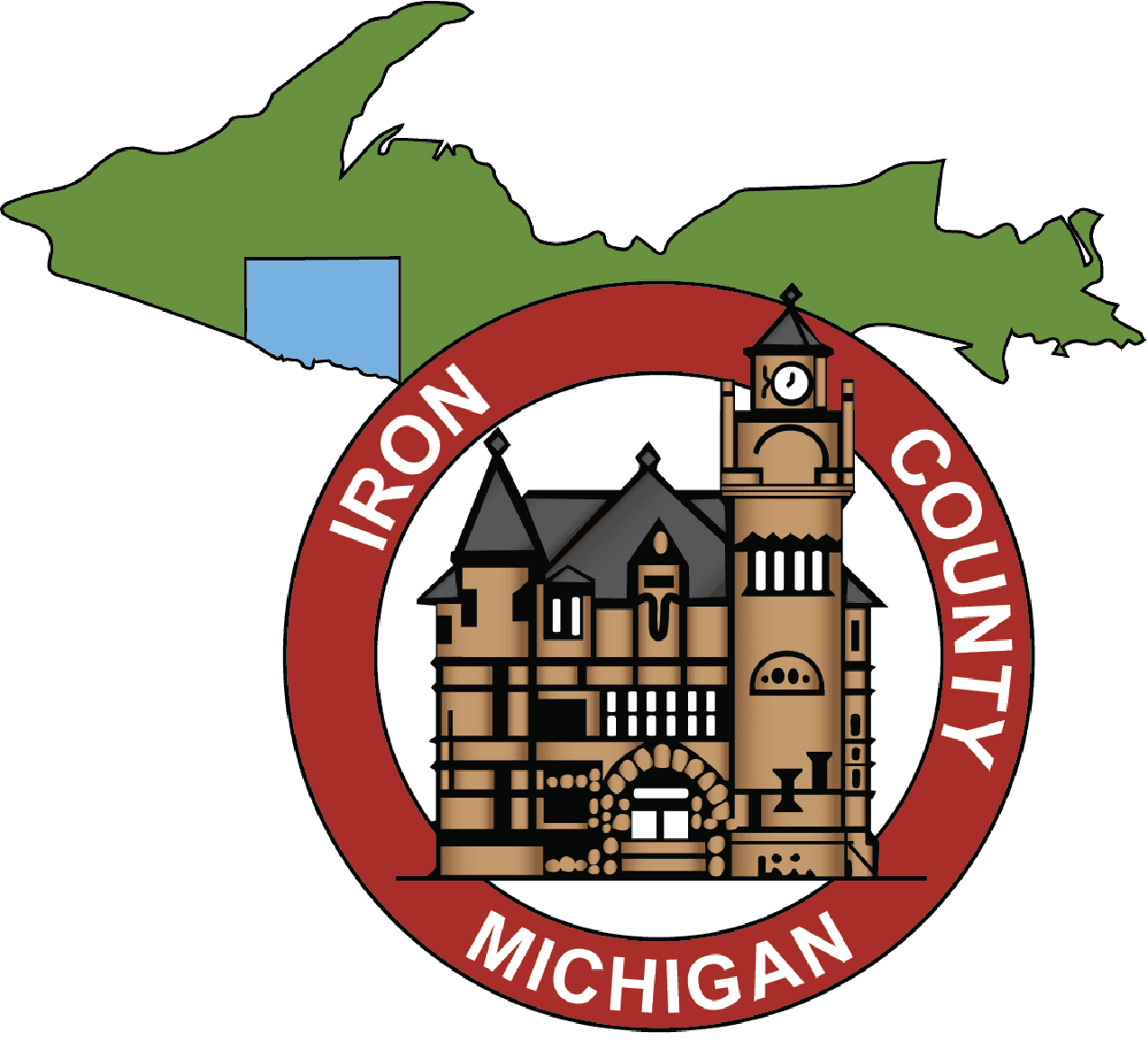
Iron County’s patchwork of townships and cities, explained
Iron County is not one civic block but 12 municipalities, and Iron River’s rare consolidation explains who governs, who pays, and where services begin.

Iron County’s local map is built from a dozen separate governments, not one big city spread across the Upper Peninsula. With seven townships, five cities, a county seat in Crystal Falls, and only 11,631 residents spread across 1,166.1 square miles, the county’s civic life depends on knowing which office controls which street, tax bill, or service boundary.
How Iron County is put together
The county’s structure starts with seven townships: Bates, Crystal Falls, Hematite, Iron River, Mansfield, Mastodon, and Stambaugh. It also includes five cities: Alpha, Caspian, Crystal Falls, Gaastra, and Iron River. That mix matters because each municipality keeps its own elected clerk, treasurer, supervisor or manager, and assessor, while county offices are centered at the courthouse in Crystal Falls.
For residents, that means local government is split into layers. A property owner may deal with a township or city assessor for one question, the county for another, and a city hall or township office for everything from elections to road and land-use issues. The county seat in Crystal Falls is where the larger county machinery sits, but day-to-day accountability still begins in the individual municipality.
Why Iron River stands apart
Iron River is the most unusual piece of the county map because it is not just a city, it is a consolidated city formed from three former jurisdictions. Stambaugh and Mineral Hills voted to consolidate with Iron River, and the combined city took effect on July 1, 2000. The new city was estimated at 3,576 residents at the time, and the result is the only consolidated city in Michigan.
The voting record shows how firmly the plan passed. Of 949 people who voted, 76.6 percent supported the charter. The totals were 394-75 in Iron River, 270-124 in Stambaugh, and 63-23 in Mineral Hills. That mattered because the city’s new shape did not simply redraw a boundary line, it brought three governments into one administrative structure.
What consolidation changed on the ground
The consolidation did more than merge names on a map. Local government material says the former communities combined staff and utilities into one unit, which helps explain why Iron River’s service map can feel different from that of nearby towns. The city’s own planning documents also describe the unusual pattern of land development that came from three consolidated jurisdictions being stitched together inside one municipality.
That history still shows up in practical questions about addresses, contracts, employees, and elected offices. Those were among the sticky issues that had to be worked through over time, which is one reason Iron River remains a useful example of how small communities in Michigan can choose consolidation instead of continuing as separate units. The former Mineral Hills area adds another layer to that story: it was a rural municipality with a dispersed population of 214 in 2000.
The long road to one city
The consolidation did not appear overnight. A study sponsored by the U.S. Department of Housing and Urban Development in 1971 examined the possible consolidation of Iron River, Stambaugh, Gaastra, Caspian, and Mineral Hills. Years later, in 1997, four of those municipalities filed a petition with the State Boundary Commission, while Gaastra did not participate.
That timeline helps explain why Iron River’s current structure feels so rooted in local history rather than in a single political decision. The city’s 2022 master plan says Iron River’s population peaked at more than 7,500 in the 1920 census, then generally declined along with the area’s iron-mining economy. The consolidation became a response to that long decline, not just a bureaucratic experiment.
How the countywide map still shapes daily life
Iron County’s patchwork is easiest to understand when you look at how different places anchor different parts of county life. Crystal Falls is both the county seat and one of the county’s cities, so it carries civic weight beyond its size. Iron River is the largest city, Gaastra is noted as one of Michigan’s smallest incorporated cities, Alpha has multiple buildings on the National Register of Historic Places, Caspian is linked to the Apple Blossom Trail and the Iron County Historical Museum, and Amasa is home to Connor Sports Flooring.
Those places matter because they give the county more than one center of gravity. A person living in a township outside a city may rely more heavily on township offices for local questions, while someone in Iron River may navigate a consolidated city government shaped by three former jurisdictions. Either way, the county’s civic geography is a reminder that services, representation, and accountability do not stop at a single town line.
What to remember when you deal with local government
The simplest way to read Iron County is to think in layers. The county handles countywide matters from Crystal Falls, each township and city keeps its own elected officers, and Iron River operates under a rare consolidated structure that still influences how land, services, and administration fit together.
That is why Iron County can confuse newcomers and still make perfect sense to longtime residents. The county’s power map is compact, but it is not uniform, and the difference between a township office, a city hall, and the courthouse in Crystal Falls can shape everything from who answers a question to which government is responsible for the answer.
This article was produced by Prism’s automated news system from verified source data, official records, and press releases, then run through automated quality and moderation checks before publishing. The system is built and supervised by the people who set the standards it runs under. Read our full AI policy.
Did this article answer your question?