Short trail leads to historic Michigan-Wisconsin border marker near Brule Lake
A four-tenths-mile walk from Stateline Picnic Area reaches Mile Post Zero, where Brule Lake turns Iron County into a lesson in border-making and public-land history.
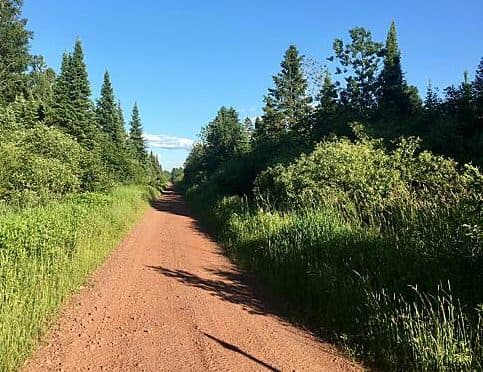
A short dirt trail off Stateline Picnic Area leads to one of Iron County’s clearest border landmarks: Mile Post Zero, where Michigan and Wisconsin meet near Brule Lake. The U.S. Forest Service keeps the walk simple, but the story behind it reaches back to the survey crews, boundary disputes and federal decisions that shaped the Upper Peninsula’s edge.
Why this stop matters
For Iron County, this is more than a pleasant side trip. It is a tangible place where county identity, treaty-era history and public-land access come together in one walk that most visitors can do in minutes. The site gives local readers a concrete answer to a question that often lives only on maps: how did this border get here, and why does it matter today?
The appeal is practical as well as historical. The trail leads to a marked border location, sits beside Brule Lake and connects directly to the Forest Service’s recreation network around Lake Ottawa. That makes it useful for families, day-trippers and anyone who wants a quick stop that still carries real historical weight.
How to reach Mile Post Zero
The Stateline-Mile Post Zero Trail is described by the U.S. Forest Service as a non-loop trail that is easy, relatively flat and about four-tenths of a mile long. The trailhead sits beside the Stateline Picnic Area, and the route leads to the historic Mile Post Zero location marking the border between Michigan and Wisconsin. Because the trail is so short and direct, it works well as a standalone stop or as part of a wider outing around Brule Lake.
Brule Lake itself sits on the Michigan-Wisconsin border and adds to the sense of place. The Forest Service notes that the lake has two boat ramps, one on the north end and one on the south end, and that the area is next to the Stateline Picnic Area and the Stateline/Treaty Tree hiking trail. In other words, the border story is not tucked away in a remote backcountry corner. It is built into a public recreation area that is easy to reach.
The survey history behind the marker
Iron County tourism materials identify the site as the place where Captain Thomas Cram placed the first marker for the Wisconsin-Michigan boundary survey point in 1840. That makes Mile Post Zero a rare local landmark where the abstract work of cartography becomes visible on the ground. The name Treaty Tree carries that history forward, tying the site to the wider story of state boundaries in the Upper Midwest.
A Smithsonian National Museum of American History record adds the federal context. Congress created the Wisconsin Territory in 1836, set aside $3,000 for a Wisconsin-Michigan boundary survey in 1838 and assigned the task in 1840. The museum’s record identifies Thomas Jefferson Cram as a U.S. Military Academy graduate and captain in the Corps of Topographical Engineers, and says he used sextants and chronometers while concluding that the region’s geography did not match the enabling legislation. His report went to Congress in 1842.

The Wisconsin Department of Natural Resources adds one more layer. In March 1841, Congress ordered a second survey, and Cram returned to Wisconsin with Douglass Houghton. The DNR says the two men were working on a boundary assignment over 100 miles long. A later blaze inscription reading “XIX T. J. Cram D. Houghton Aug. 11, 1841” was found on a pine tree near Trout Lake in Vilas County, preserved after the tree was cut, and given to the Wisconsin Historical Society.
What else is around Brule Lake and Lake Ottawa
The Mile Post Zero stop sits inside a larger recreation system centered on the Lake Ottawa Recreation Area, about 5 miles southwest of Iron River, Michigan. The Forest Service says that area includes Lake Ottawa, Brule Lake, Hagerman Lake, Brule River, Bass Lake, the Historic Mile Post Zero/Treaty Tree, the Ge-Che Trail and miles of hiking trails. That means a border-history walk can be paired with fishing, a picnic, a boat launch or a longer hike without leaving the same public-land corridor.
The Forest Service also says the Lake Ottawa Campground is 95% surrounded by National Forest System lands, which helps explain why the area feels so thoroughly public and open. The campground includes a pavilion, two log toilet buildings and a day-use recreation building built by the Civilian Conservation Corps in the late 1930s. The day-use building is currently closed pending repairs, and the pavilion is closed for rehabilitation work, a reminder that stewardship here includes maintaining the older structures as well as the historic trail system.
Fishing access is part of the draw, too. The Forest Service lists lake trout, bass, walleye and panfish in the Lake Ottawa area, and says the area can be reached by passenger car. That combination of road access, water access and short trails gives the site an unusual range for such a small stop.
What visitors take away
The value of the Mile Post Zero trail is that it makes border history legible at ground level. You can park near Stateline Picnic Area, walk a short dirt path, stand at a point that marks the Michigan-Wisconsin line and then see how the surrounding Forest Service landscape still carries that history in its names, trails and recreation features. For Iron County, that is a local landmark with statewide reach, because it links a county stop to the federal survey work that helped define the Upper Peninsula’s place on the map.
The result is a compact public-history site that still functions as an easy outing. The trail is short, the setting is accessible and the historical lesson is built right into the landscape around Brule Lake.
This article was produced by Prism’s automated news system from verified source data, official records, and press releases, then run through automated quality and moderation checks before publishing. The system is built and supervised by the people who set the standards it runs under. Read our full AI policy.
Did this article answer your question?