10th District lawmakers host bipartisan virtual town hall for constituents
Sen. Ron Muzzall, Rep. Dave Paul and Rep. Clyde Shavers held a one-hour Zoom town hall April 8 to field constituent questions on ferries, housing, higher education and county budgets.
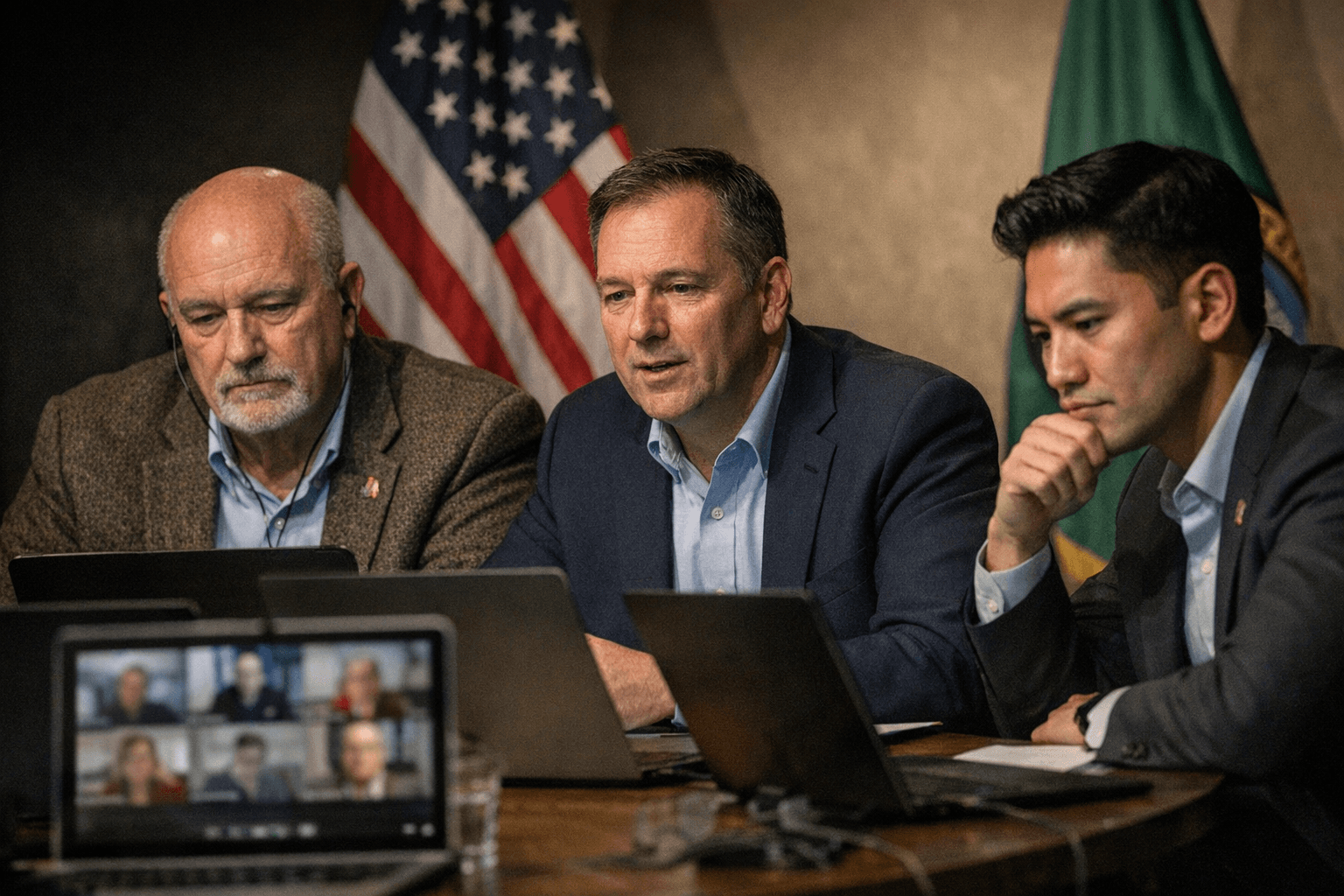
Sen. Ron Muzzall, Rep. Dave Paul and Rep. Clyde Shavers convened a bipartisan virtual town hall on April 8, 2026, from 5:30 to 6:30 p.m. on Zoom to recap the 2026 legislative session and take constituent questions about ferry funding, district projects and the supplemental budget. The three 10th District seatmates framed the hour as a direct accountability touchpoint for voters across Island County, Clinton and Oak Harbor and the parts of Snohomish and Skagit counties the district covers.
The event was promoted widely in early April by the lawmakers’ offices and local outlets, with registration links posted to Sen. Muzzall’s site and the House Democrats’ constituent bulletins and notices in the Whidbey News‑Times and South Whidbey Record on April 3–4. Organizers encouraged advance question submissions and emphasized accessibility for island residents who rely on virtual access for travel‑limited participation.
First and foremost for many Island County residents was the fate of Washington State Ferries funding. The town hall took place against a backdrop in Olympia where lawmakers prioritized preservation and maintenance in the 2026 transportation package but did not advance Gov. Bob Ferguson’s proposed $1 billion borrowing plan to immediately acquire new vessels. That decision matters locally because residents depend on the Mukilteo–Clinton route and because Mukilteo ferry terminal wingwall repairs, scheduled to begin January 6, 2026, have already caused planned service impacts that affect commutes, medical access and commerce.
Housing and local revenue questions were central during the hour. The legislators reviewed session items tied to housing affordability and district projects while observers noted the interaction with Island County’s own finances: the county adopted a roughly $164.7 million 2026 budget and approved a 0.1% law‑and‑justice sales tax set to begin in April 2026. Lawmakers framed state grant decisions and supplemental budget choices as factors that will determine how county capital projects and service demands are funded going forward.
Higher education funding for community colleges was raised as a district priority linked to Skagit Valley College’s Whidbey Island Campus in Oak Harbor. The 2026 supplemental budget included operating adjustments and fund shifts that advocacy groups say require monitoring for local impacts on course offerings and student capacity at the campus that serves Island County students.
For residents seeking concrete next steps, lawmakers’ offices and local coverage point to constituent pages where registration details and, as typical practice, event recordings or summaries are posted. Constituents were invited to follow up by submitting service requests through the offices of Sen. Muzzall, Rep. Paul and Rep. Shavers, signing up for legislative newsletters and asking for specific status updates on ferry procurement, Mukilteo terminal timelines, county grant applications and Skagit Valley College funding lines.
The April 8 virtual meeting continued a pattern of joint outreach by the three seatmates, following multiple town halls in 2025 and earlier in 2026, and it left clear institutional tasks: translate the session’s prioritization of ferry preservation into firm procurement and terminal timelines, reconcile state supplemental budget shifts with county fiscal planning, and track whether community college operating changes affect course access on Whidbey Island.
This article was produced by Prism’s automated news system from verified source data, official records, and press releases, then run through automated quality and moderation checks before publishing. The system is built and supervised by the people who set the standards it runs under. Read our full AI policy.
Did this article answer your question?