Appeals Court to Hear WEAN Challenge to Oak Harbor Parkland Ordinance in April
A 2,600-square-foot slice of Hal Ramaley Memorial Park could determine whether Oak Harbor residents ever vote on parkland swaps again. Appeals court hears arguments April 21.

Two thousand, six hundred square feet of Hal Ramaley Memorial Park on Bayshore Drive doesn't sound like much ground to fight over. But that sliver of city parkland sits at the center of a state appeals court case that will determine whether Oak Harbor residents retain the right to vote on parkland disposals or whether the city council can negotiate those deals on its own.
The Washington State Court of Appeals will hear oral arguments in the case on April 21 at 9:30 a.m. at the Skagit Valley College Whidbey Island campus in Oak Harbor. The Whidbey Environmental Action Network, known as WEAN, is inviting the public to attend.
The dispute centers on Ordinance 1999, which the Oak Harbor City Council passed 6-1 in 2024, loosening restrictions established in a 1997 code that required a public vote before the city could sell, swap, or otherwise dispose of parkland. The new ordinance replaced that requirement with a process allowing the council to approve certain land swaps without sending the question to voters. Councilmember Bryan Stucky cast the lone dissenting vote.
Ordinance 1999 was introduced in part to clear the way for a proposed swap involving the 2,600-square-foot parcel at Hal Ramaley Memorial Park. That swap, if completed, would enable development of a planned Hilton hotel with conference facilities, a project that has remained on hold while the litigation plays out.
WEAN challenged the ordinance in Island County Superior Court, arguing that its adoption constituted a "substantial nonproject action" under the State Environmental Policy Act, which would have required an environmental review before the ordinance could take effect. Judge Carolyn Cliff rejected that argument and granted Oak Harbor's motion for summary judgment, dismissing WEAN's challenge. WEAN is now appealing that ruling.
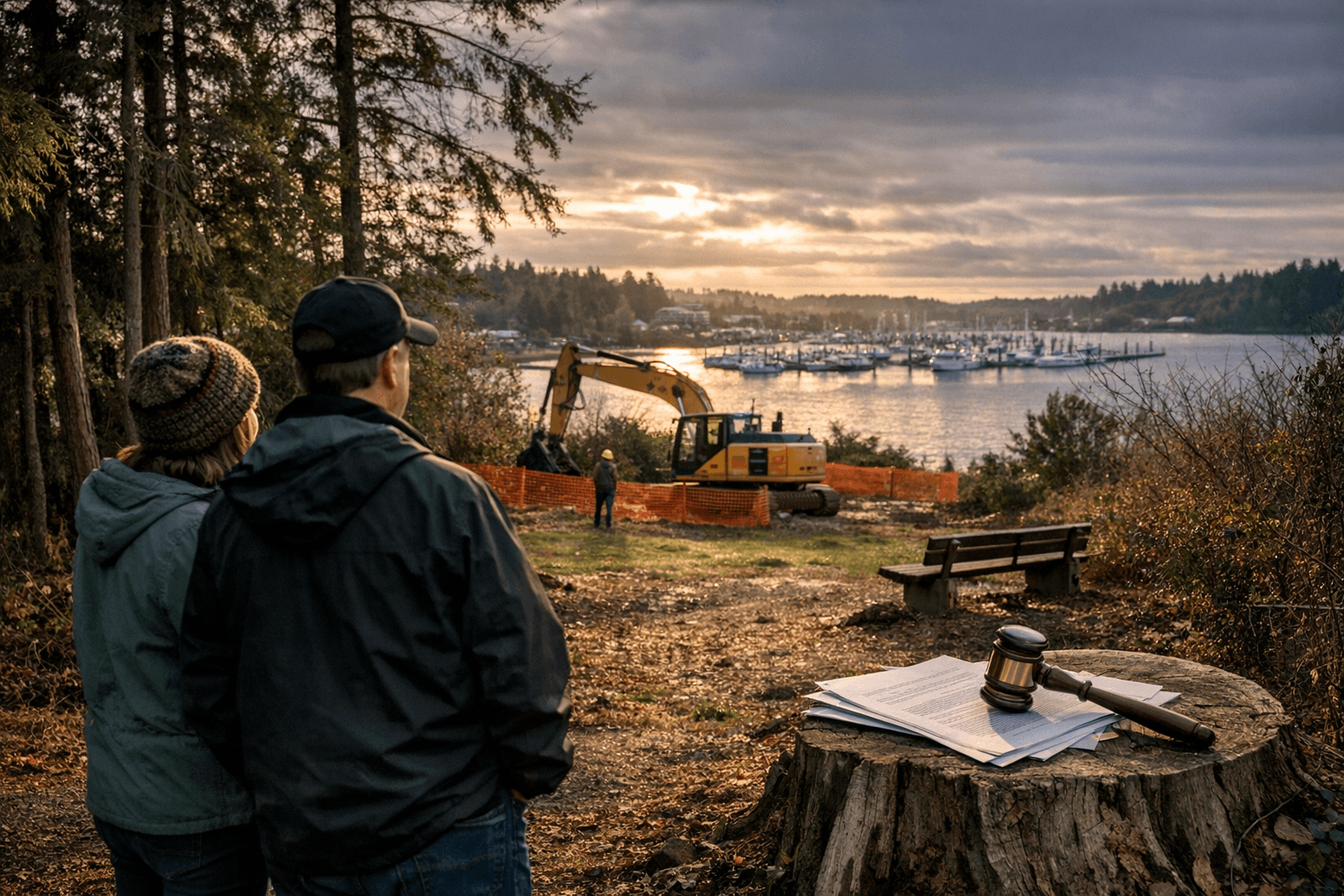
The city maintains that SEPA review was unnecessary because Ordinance 1999 is procedural, not environmental, and does not directly regulate the use or modification of the environment.
What the appeals court decides will set the immediate future of Hal Ramaley Park and could establish a statewide precedent for how Washington cities craft policy affecting public land. If the court sides with WEAN, a SEPA review would be required before Ordinance 1999 can stand, effectively restoring the 1997 voter-approval requirement and stalling the Hilton hotel swap until voters weigh in. If the court affirms Judge Cliff's ruling, the ordinance holds, the council retains authority to negotiate land swaps without a public vote, and the Hilton project could resume.
For Stucky, who stood alone in opposing the ordinance on the council, and for the parks advocates who challenged it through the courts, April 21 represents the last public moment before the court retires to deliberate. Decisions from oral arguments typically take weeks to months to issue, meaning the fate of that 2,600-square-foot stretch of Bayshore Drive parkland, and the precedent it carries with it, won't be settled the day the arguments end.
The hearing at Skagit Valley College's Whidbey Island campus is open to the public at 9:30 a.m. on April 21.
This article was produced by Prism’s automated news system from verified source data, official records, and press releases, then run through automated quality and moderation checks before publishing. The system is built and supervised by the people who set the standards it runs under. Read our full AI policy.
Did this article answer your question?