Clinton woman identified in fatal RV fire, blaze accidental
Investigators say the Clinton RV fire likely started when a propane heater was lit inside a cramped camper; check heaters, ventilation and carbon monoxide detectors tonight.
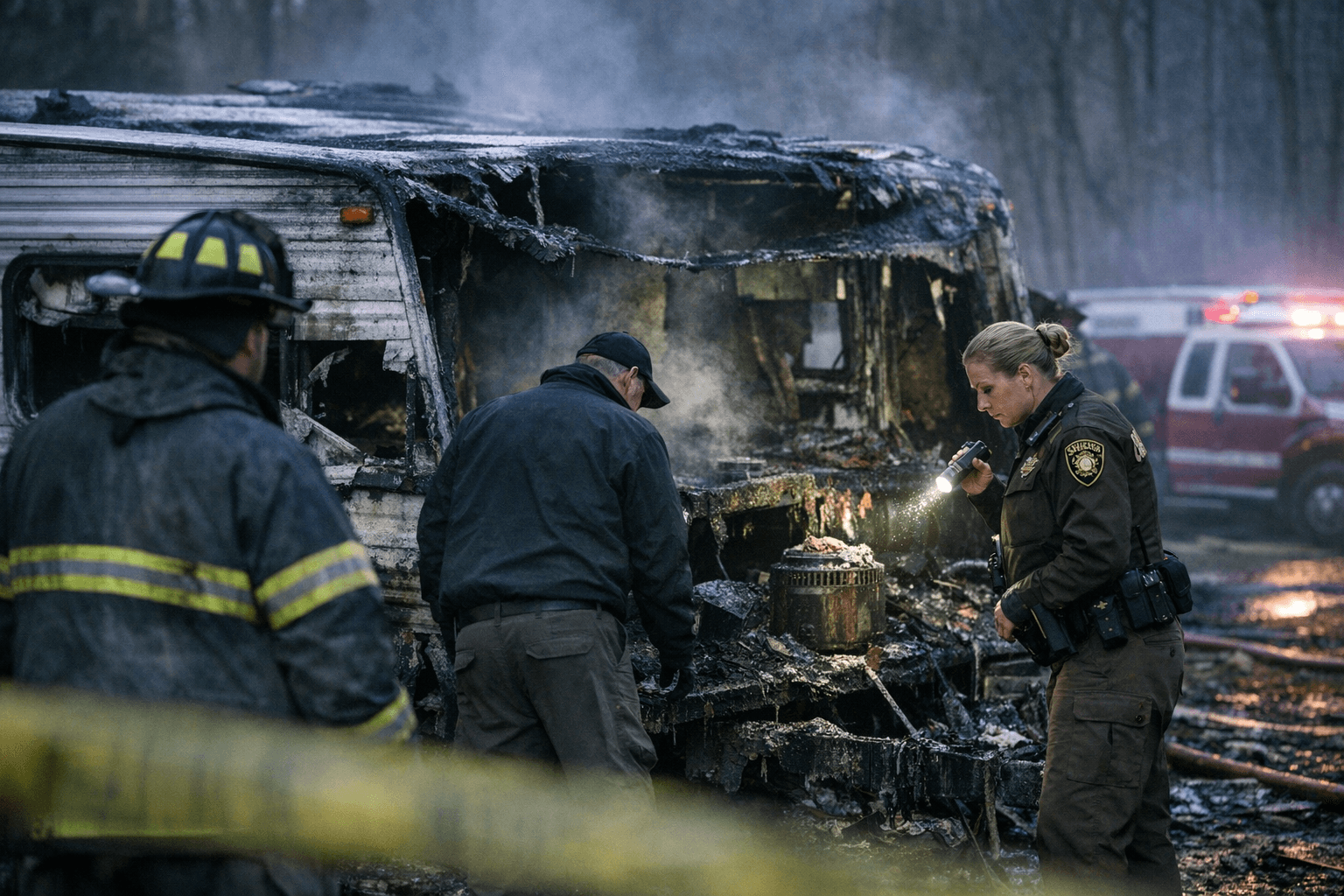
Island County fire officials say a propane heater ignited inside a confined RV space, killing 63-year-old Sara Silverman of Clinton and prompting renewed warnings for residents who sleep in vehicles, tiny homes or outbuildings. Investigators from South Whidbey Fire/EMS and a Snohomish County fire investigator determined the blaze was accidental and consistent with an attempt to light a portable propane heater, Island County authorities relayed.
Silverman lived in the RV parked off Highway 525 across from the Clinton Dairy Queen. South Whidbey Fire/EMS crews arrived after a call at about 8 a.m. and established a landing zone at Dan Porter Park. Battalion Chief Joe Burbank said he saw a "column of black smoke" from the highway as crews approached. Firefighters, roughly ten personnel on scene according to department reports, had the fire under control within about 5–10 minutes, but the RV was a total loss. Fire crews found Silverman lucid at the scene, administered oxygen, and she was airlifted to Harborview Medical Center in Seattle, where she later died of injuries that local reporting described as severe burns to more than 90 percent of her body.
The King County Medical Examiner’s Office confirmed the decedent’s identity following medical evaluation at Harborview. The Island County Sheriff’s Office relayed the investigators’ origin-and-cause finding that lighting a propane heater inside the small, enclosed RV space was the likely ignition source. Following the determination, South Whidbey Fire/EMS and county officials urged residents to inspect heaters and carbon monoxide detectors and to exercise caution with portable fuel-burning appliances in confined living spaces.
National safety authorities reinforce the local warnings: the U.S. Consumer Product Safety Commission warns that people die every year from carbon monoxide poisoning when using portable camping heaters, lanterns or stoves inside tents, campers and vehicles, and recommends against using portable heaters while sleeping in enclosed areas and for homeowners to ensure ventilation and working CO detection. The U.S. Fire Administration’s three-year snapshot for 2018–2020 shows recreational vehicle fires carry notable risks, with roughly 3.9 fatalities and 16.3 injuries per 1,000 RV fires, underlining that RV fires can be disproportionately deadly compared with other property categories.
The fatality has sharpened local conversations about housing and safety for people living in vehicles. Island County’s five-year Homeless Housing Plan for 2025–2030 and prior county planning discussions have looked at RV living rules and pilot safe-RV-park programs; local PIT and HMIS snapshots have shown hundreds of residents identified as unhoused or unstably housed in recent counts. South Whidbey Fire/EMS continues seasonal public education on portable-heater safety, and local nonprofits including the Island County Housing Support Center, Opportunity Council and Whidbey Homeless Coalition are part of ongoing outreach efforts aimed at reducing risk for people using makeshift or vehicle-based housing. The loss of Sara Silverman underscores those policy and outreach gaps and places practical prevention steps—ventilation, certified indoor heaters, tip-over and oxygen-depletion safeguards, and working CO detectors—at the top of the county’s public-safety agenda.
This article was produced by Prism’s automated news system from verified source data, official records, and press releases, then run through automated quality and moderation checks before publishing. The system is built and supervised by the people who set the standards it runs under. Read our full AI policy.
Did this article answer your question?