Ebey’s Landing reserve preserves Coupeville’s living history and landscape
A Coupeville addition can trigger layered review in Ebey’s Landing, where private property, public comment, and historic standards decide what changes survive.
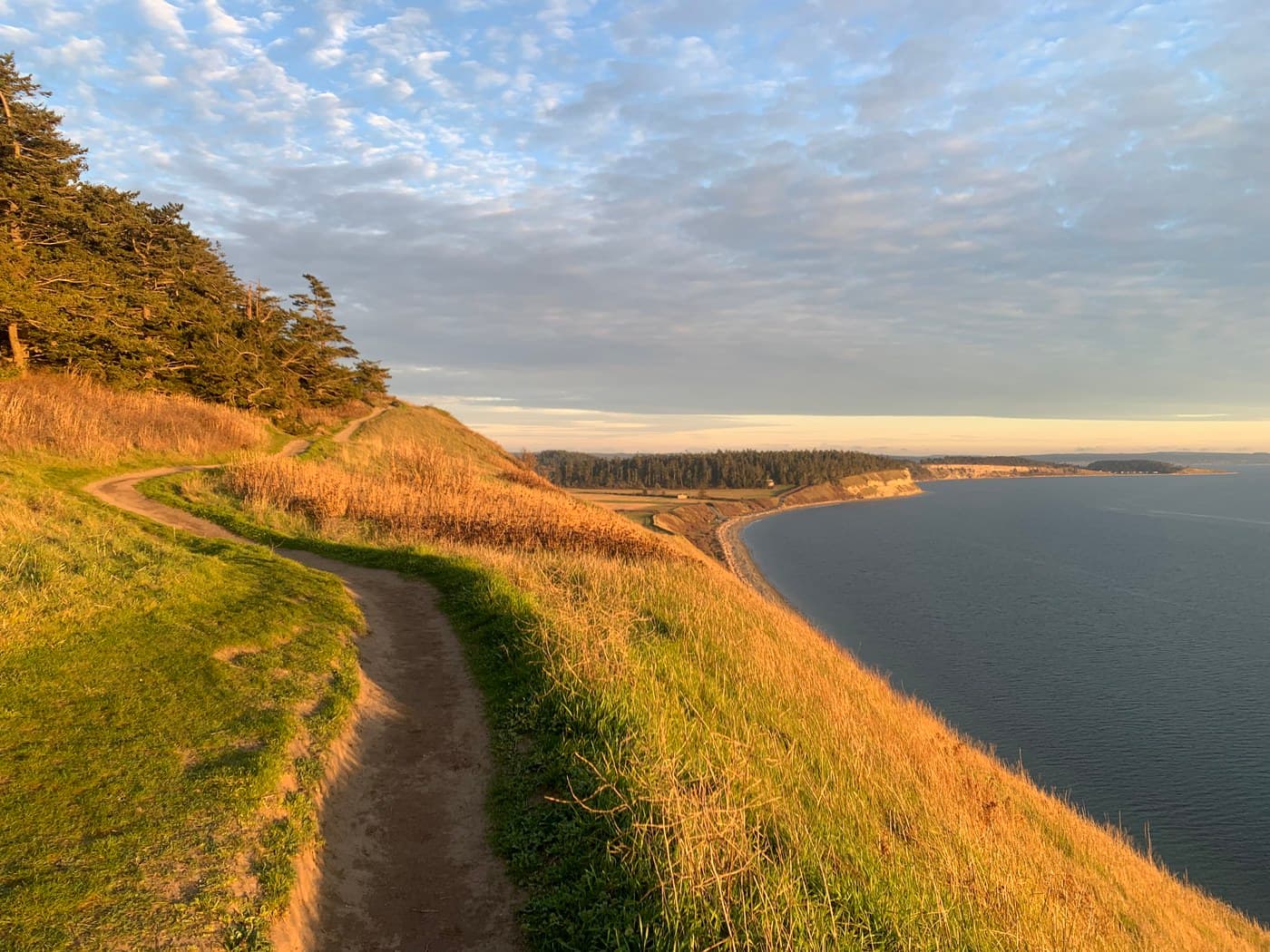
A homeowner in Coupeville who wants to add a porch, enlarge a house, or build on a lot inside Ebey’s reserve does not begin with a building permit. The proposal first meets a site-review system built to protect a living landscape, and depending on where the parcel sits, it can face a Certificate of Appropriateness, public comment, and a hearing before the county’s historic commission. That is how Island County keeps Ebey’s Landing from becoming a frozen museum while still limiting what can change.
A reserve built to keep a community alive
Ebey’s Landing National Historical Reserve was established by the National Parks and Recreation Act of 1978 and remains the first national historical reserve in the United States and in the National Park System. The reserve covers 17,572 acres in all, including 13,617 acres of land and 3,955 surface acres of water in Penn Cove. Its boundaries coincide with the Central Whidbey Island Historic District, which was listed on the National Register in December 1973.
Because about 85% of the land inside the reserve is privately owned, preservation here depends heavily on rules, easements, and design review rather than on a single public park boundary. The reserve spans all of Coupeville and much of the surrounding forested land and farmland near Penn Cove, tying the town to the fields, shorelines, and historic structures around it.
The history the reserve is meant to hold in place
The reserve does not preserve just one era. Central Whidbey has been inhabited for more than 10,000 years, and the Lower Skagit maintained permanent villages around Penn Cove long before the town of Coupeville took shape. The reserve commemorates four key chapters: Captain George Vancouver’s 1792 exploration of Puget Sound, Isaac Neff Ebey’s settlement, settlement under the Oregon Territory Donation Land Claim Act, and Coupeville’s growth since 1883.
Ebey’s Landing includes a working agricultural landscape, shoreline access, and the continuity of a place where Native and Euro-American histories are layered into the same ground. Fort Casey, Fort Ebey, Ebey’s Landing State Park, and Coupeville itself sit inside the same protected setting, so the reserve’s historic character is experienced as much through roads, fields, and views across Penn Cove as through buildings.

Who actually holds the power
The reserve is managed through partnership, not by a single agency acting alone. The Ebey’s Landing National Historical Reserve Trust Board coordinates management on behalf of four partners: the U.S. National Park Service, the Washington State Parks and Recreation Commission, the Town of Coupeville, and Island County.
The Historic Reserve Committee was created in 2011 through a cooperative agreement among the Town of Coupeville, Island County, and the Trust Board. The Historic Preservation Commission is the public-facing decision body in the review system, with four representatives from the town, four from the county, and one representative from the reserve. Island County Planning & Community Development runs the site-review process that tells applicants whether their property falls into the reserve’s review areas and what level of approval a project needs.
How a project moves through review
The county directs applicants to check ICGeoMap and turn on the Site Review layer before they draw up plans. That step shows whether a parcel sits in Design Review Area 1 or 2 and whether it lies within 100 feet of a contributing historic structure. If it does, the work may need a Certificate of Appropriateness unless an exemption applies under County Code 17.04A.090.
The county uses three levels of review. Level A projects are typically processed in 7 to 14 days. Level B projects add a 14-day public comment period and Historic Reserve Committee review. Level C projects add the same comment period, Historic Reserve Committee review, and a public hearing before the Historic Preservation Commission.

What standards shape the outcome
The design guidelines cover repair, maintenance, new construction, additions, alterations, site design, sustainability, and subdivisions. The rules reach far beyond historic facades. They govern how a new house fits a lot, how a change affects neighboring structures, and whether a project respects the reserve’s larger cultural landscape of maritime prairies, forests, shorelines, farmland, and historic architecture.
Viewsheds and soundscapes are part of what the reserve protects. A building can be historically accurate and still fail if it disrupts the broader setting that makes Coupeville and central Whidbey legible as an historic place.
Where neighbors can influence the result
The system gives residents several points of access. The 14-day public comment period on Level B and Level C projects is one. A public hearing before the Historic Preservation Commission is another. Trust Board meetings are also open to public participation, giving residents a place to follow management decisions beyond a single permit application.
Friends of Ebey’s Landing National Historical Reserve, a 501(c)(3), funds preservation and educational programs, including the Ebey’s Forever Grant program for heritage buildings in the Central Whidbey Island Historic District. The county and reserve are also asking for public input on an update to the Ebey’s Reserve design guidelines.
This article was produced by Prism’s automated news system from verified source data, official records, and press releases, then run through automated quality and moderation checks before publishing. The system is built and supervised by the people who set the standards it runs under. Read our full AI policy.
Did this article answer your question?