Island County anglers seek longer halibut seasons as quotas remain unused
Whidbey anglers got longer halibut windows in 2024, but quotas, closures and in-season changes still decide who can fish and when.
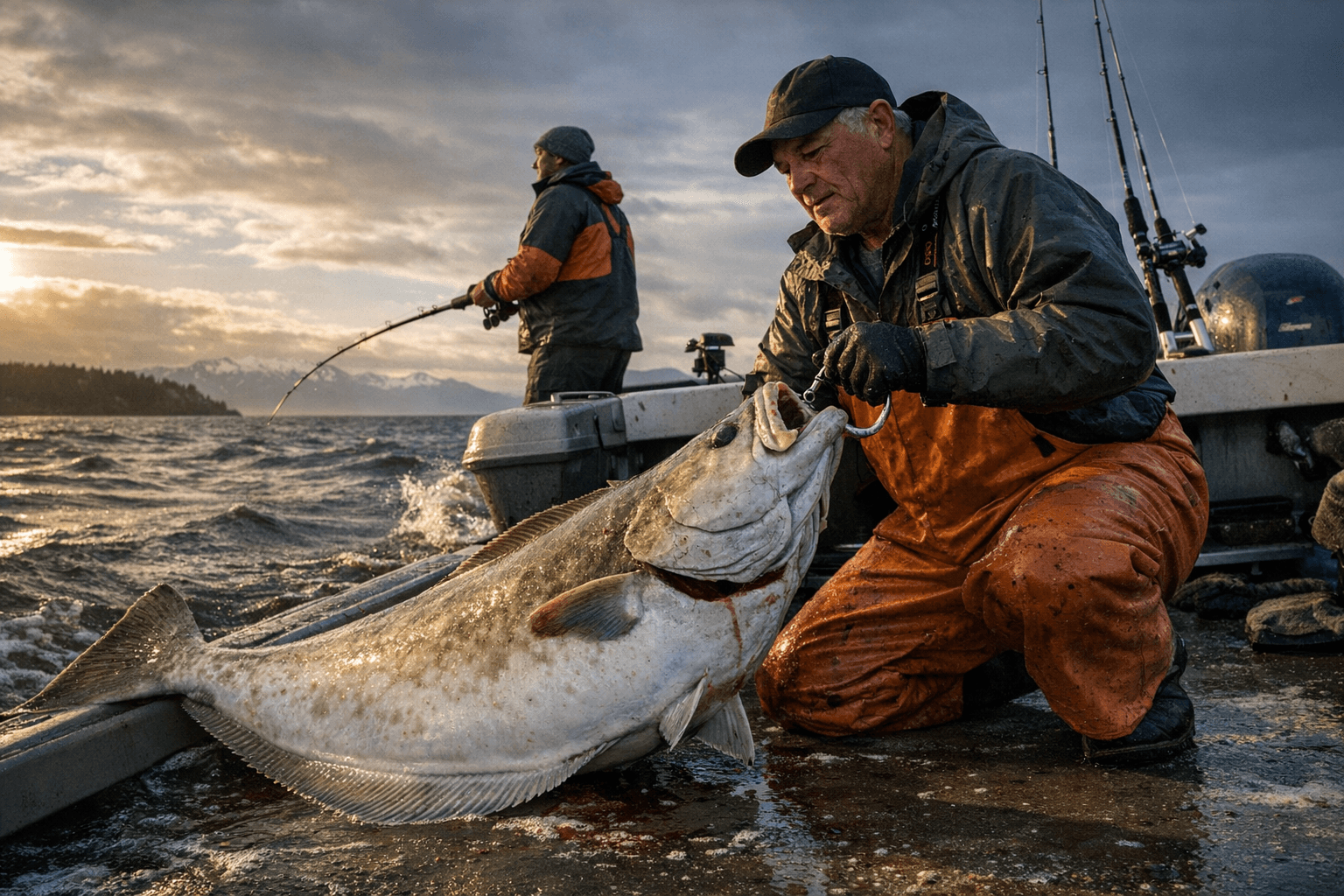
What Island County anglers are really getting
For Whidbey fishers, the big question is not whether halibut are in the water. It is whether the season is open long enough, often enough and safely enough to make a trip worth planning. Tracy Loescher’s push for longer, seven-days-a-week opportunity reflects what many Island County anglers have felt for years: short, weather-choked windows can turn a family fishing day into a gamble.
The shift in 2024 gave local anglers more breathing room. Washington’s halibut season opened some Puget Sound marine areas on April 4, then added late-season opportunity beginning August 16 in some areas, with the statewide season later closing on September 30. WDFW also increased the annual limit to six halibut, a change that mattered for island boaters trying to make the most of each fair-weather stretch.
Why the rules changed at all
Pacific halibut in Washington, Oregon and California are managed through Area 2A by the International Pacific Halibut Commission, with annual catch limits set through a catch-sharing plan. For 2024, Area 2A’s total allocation was 1.65 million pounds. Washington’s statewide recreational halibut quota was set at 290,158 pounds, and the Puget Sound recreational allocation was listed at 81,729 pounds.
That framework is at the center of the frustration. Loescher argues that after more than 20 years of restrictive in-season limits, Washington finally got the message that halibut seasons should stay open longer and be available seven days a week instead of being chopped into shorter, riskier windows. The concern was not just about harvest, but about who could realistically fish. When the season is compressed, anglers with flexible schedules and boats ready to go have an advantage over everyone else.
What changed in 2024
The policy fight sharpened when California petitioned to shift some of Washington’s quota south, which pushed Washington anglers to ask why local waters still seemed to have unclaimed catch while recreational fishermen were being constrained by scheduling and safety. That debate played out through late 2023 and early 2024, when Washington anglers, charter interests and state managers pressed for more opportunity.
The Pacific Fishery Management Council and NOAA later approved changes to the catch-sharing plan for 2024, and NOAA published the final rule on April 3, 2024. As the season unfolded, NOAA also issued an inseason adjustment on July 23, 2024 for Washington and Oregon halibut fisheries, and later transferred 12,000 pounds of recreational allocation from Oregon to Washington to help achieve the total Area 2A recreational allocation.
For Whidbey anglers, the practical meaning was simple: the season was no longer locked into the narrow, early-opening, weather-dependent pattern that used to dominate halibut fishing. There was still a cap, still a schedule and still a set of rules, but the fishery was more usable.
What it means for a day on the water
The main benefit of the longer season is safety. Loescher says the better structure over the last two years has reduced the pressure to launch in bad weather or unsafe wind conditions just to catch a brief opening. That matters on Whidbey, where saltwater runs are never just about the fish; they are about crossing exposed water, watching conditions and deciding whether it is worth taking the boat out at all.
In practical terms, anglers planning a halibut trip in Island County need to build around three realities:
- The fishery is quota-managed and can change inseason.
- Openings can vary by marine area, so checking the specific Puget Sound or coastal rule set matters.
- Weather still shapes whether a legal day is a sensible day to fish.
That is why the longer windows matter so much. They do not guarantee a catch, but they do let more anglers choose a safe forecast instead of forcing a trip into the one open day that falls in rough water.
Why the local debate is not over
Even with the 2024 changes, the halibut system is still being negotiated. WDFW held public virtual meetings in the fall and winter to discuss halibut options, and on August 13, 2024 it held a webinar specifically to discuss proposed catch-sharing-plan changes and 2025 annual regulations. That is a sign that the issue remained active, not settled.
There were still limits built into the structure, including a July closure that Loescher says needed to be addressed. The continued use of inseason actions shows how tightly managers still have to steer the fishery to keep harvest within bounds. For anglers, that means the season is more accessible than it once was, but not free from sudden adjustment.
Did the longer season work?
By WDFW’s accounting, it came close to working very well. The agency reported that the statewide Washington recreational halibut season closed on September 30, 2024, and its preliminary catch estimate was 293,280 pounds, or 98 percent of quota. That is a strong sign that the expanded framework did not leave the fishery idle. It brought anglers close to the allowable harvest while giving them more time to get on the water.
For Island County, that is the heart of the story. The argument for longer halibut seasons is not abstract policy talk. It is about whether a Whidbey family can launch on a good forecast, whether charter trips can be booked with confidence and whether local anglers have a fair shot at using the quota that exists in nearby waters. The 2024 rules did not solve every problem, but they moved the fishery closer to something island anglers can actually use.
This article was produced by Prism’s automated news system from verified source data, official records, and press releases, then run through automated quality and moderation checks before publishing. The system is built and supervised by the people who set the standards it runs under. Read our full AI policy.
Did this article answer your question?