Island County Considers Funding to Clean Up Lone Lake
County officials are weighing whether to apply for a grant to treat persistent algal toxins in Lone Lake, a shallow South Whidbey water body that has repeatedly tested above state safety levels. The decision matters to residents because treatment could protect public health, pets, and recreation, but it would be costly and take several years to complete.
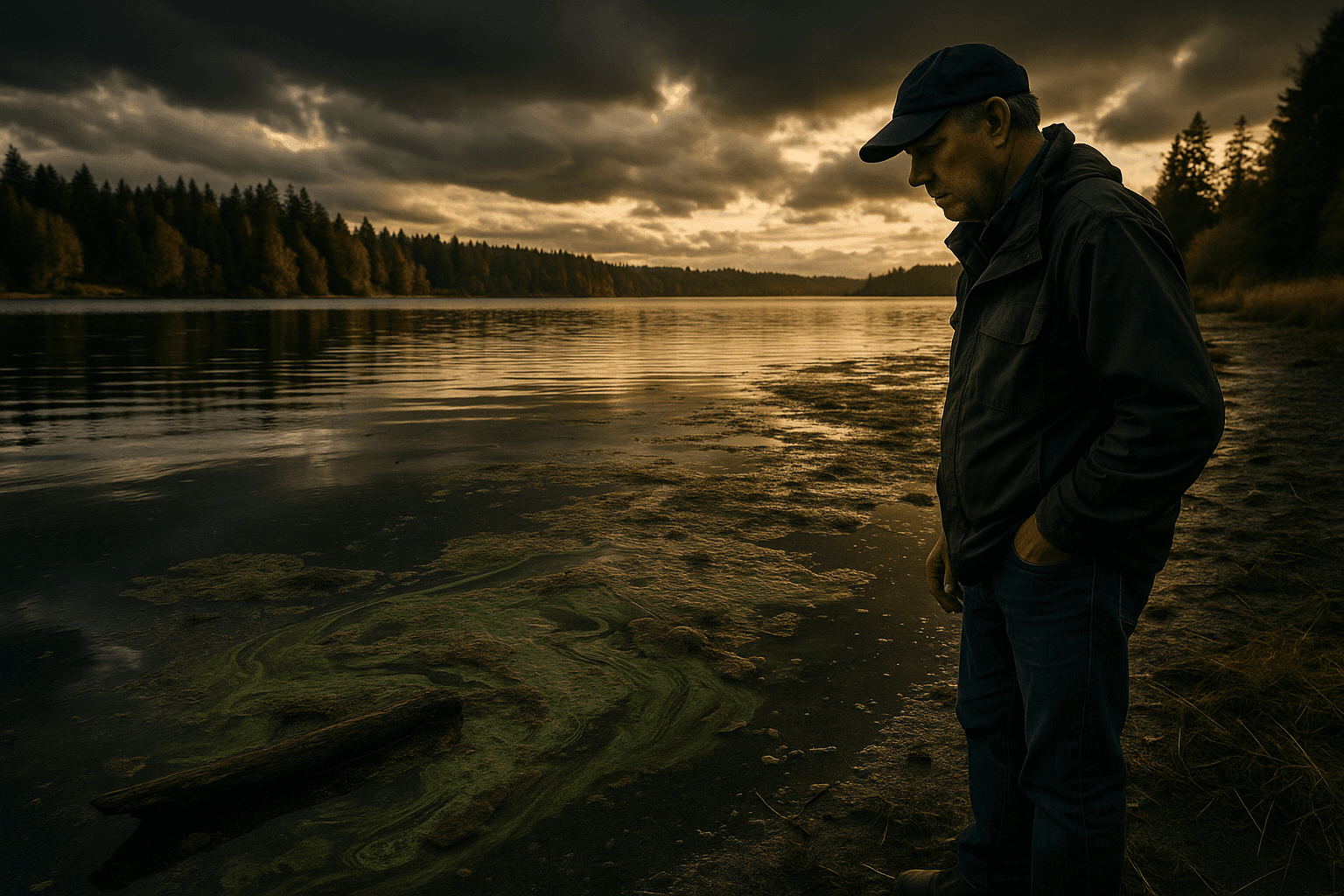
Island County is examining options to address recurring harmful algal blooms in Lone Lake after testing over many years detected toxins that can affect people and animals. Public Health and Natural Resources staff shared information indicating the shallow, nutrient rich lake is prone to blooms, and that testing has occasionally found two toxins of concern, anatoxin a and microcystin. Microcystin was detected in the lake from 2007 through 2023, and anatoxin a has been present intermittently from 2010 through 2025.
State recreational guidance allows for one microgram per liter for anatoxin a and eight micrograms per liter for microcystin. When tests show concentrations above those thresholds, advisory signs are posted at public access points to warn residents and pet owners. Health officials note that anatoxin a is a nerve toxin that can paralyze muscles and be particularly dangerous for pets, and that microcystin is a liver toxin that can cause nausea, vomiting and diarrhea. Staff also recall blooms occurring more often during summer months when temperatures are warmer.
Local efforts to manage the lake reflect a longer history of ecological change. Previous reporting shows that the eradication of native underwater plants through herbicide use and the introduction of grass carp, measures intended to control an invasive plant, shifted Lone Lake toward an algae dominated state. That history underscores the complexity and cost of restoring the lake to a more balanced ecosystem.
Commissioner Melanie Bacon has received letters from residents urging the county to seek funding to treat the algae. County staff estimate a full treatment would cost approximately two hundred fifty thousand dollars, while the maximum grant award available is fifty thousand dollars. Because treatment would likely take about five years to complete, officials are weighing whether to start a program they cannot guarantee funding to finish. The matter may come before the county commissioners for consideration in an upcoming work or regular session, though no date has been set.
Residents can track water quality history and toxin trends for Lone Lake at nwtoxicalgae.org/HistoricalCharts.aspx?SiteID=14. Local decisions will balance costs, public health protection, and the long term stewardship of a lake that remains important to the community.
Know something we missed? Have a correction or additional information?
Submit a Tip