Langley Council Tables Controversial Edgecliff Downzoning Proposal for Now
A divided Langley City Council on November 25 tabled a proposal to downzone parcels along Edgecliff Drive, delaying a decision on whether to change zoning from RSF 7200 to RSF 15000. The pause leaves unresolved tensions between bluff stability concerns, housing supply pressures, and protections for large trees during the city infrastructure project.
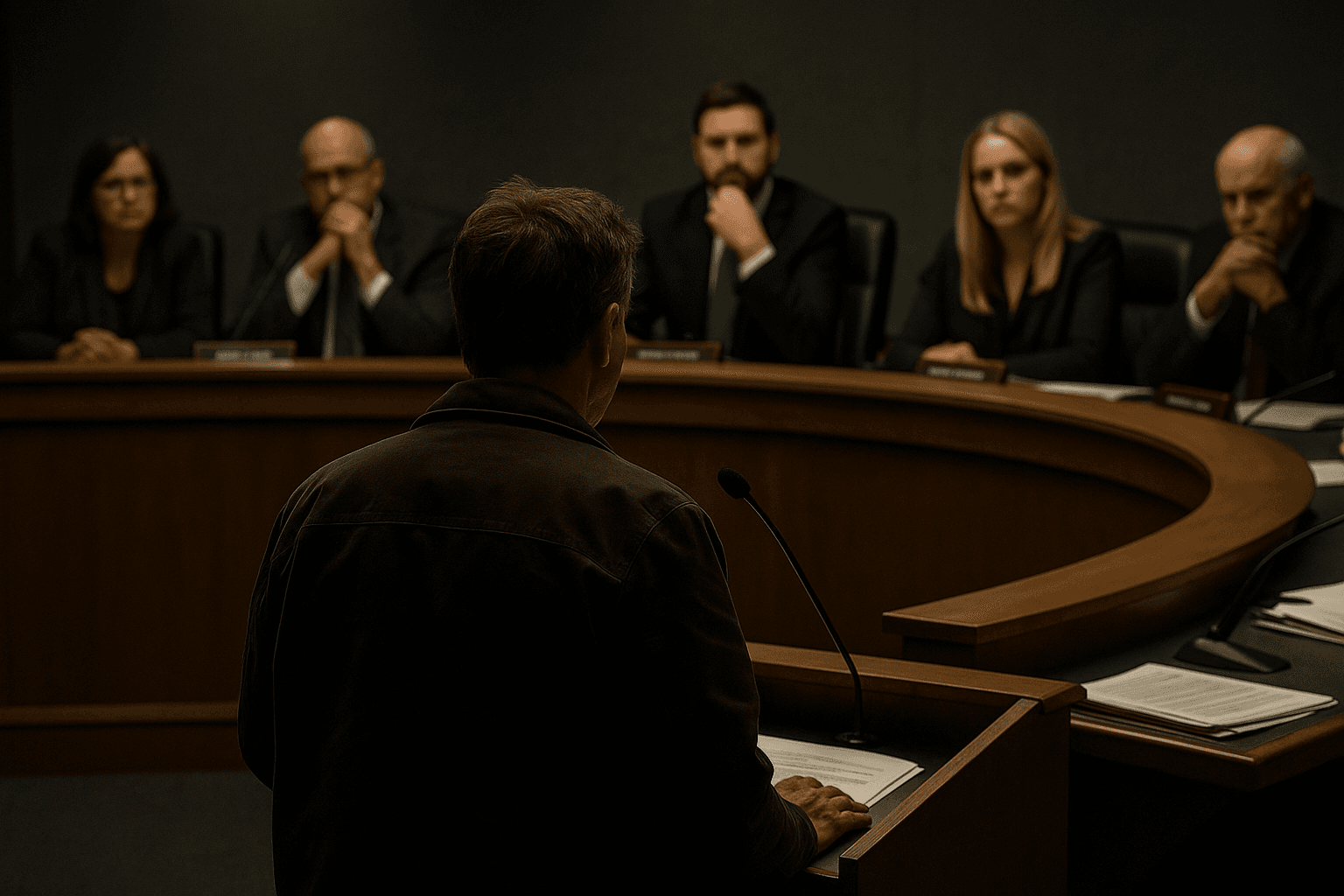
Langley city leaders postponed a contentious zoning decision on November 25 after councilmembers failed to reach consensus on a proposal to reduce allowable density on the south side of Edgecliff Drive. The measure would have changed parcel zoning from Residential Single Family 7200 to Residential Single Family 15000, effectively limiting future density and aligning that side of the street with the north side.
Councilmember Rhonda Salerno framed the initiative as a response to recurring bluff instability near Edgecliff Drive, citing local concerns and a white paper submitted with her memo. Advocates argued that lower allowable density would better reflect the geological and hydrological realities of the area and reduce the risk of further landslide activity documented in local reporting as recently as 2022.
Opposing councilmembers raised questions about the evidence linking housing density to groundwater infiltration and bluff failure, and warned that removing multifamily options would reduce the supply of homes at a time when the city needs more. The debate underscored a deeper policy question for Langley, where recent infrastructure investments have changed development possibilities and community priorities.
The Langley Infrastructure Project installed sewer lines that make subdivision and higher density housing technically possible on both sides of Edgecliff Drive, allowing up to three parcels per acre and permitting cottage housing, duplexes, tiny homes and up to two accessory dwelling units. That technical capacity complicated the zoning discussion, because utility availability does not resolve geological constraints or neighborhood character concerns.
Community members spoke for and against the downzoning during the meeting, and anxiety around tree removal added another layer to the controversy. Six large trees were recently taken down to clear the path for sewer work, prompting Planning Director Meredith Penny to note gaps in the city code that leave significant trees at risk. Penny said strengthening tree protections is likely to be placed on the planning work plan for next year.
By tabling the motion the council set a near term deadline to revisit the issue before the end of the year. For Edgecliff residents and property owners that means uncertain rules for subdivision and development remain in place, and the city will need to balance public safety, housing availability and environmental stewardship in follow up deliberations.
This article was produced by Prism’s automated news system from verified source data, official records, and press releases, then run through automated quality and moderation checks before publishing. The system is built and supervised by the people who set the standards it runs under. Read our full AI policy.
Did this article answer your question?