Oak Harbor leaders consider regulating kratom sales after youth concerns
A neon kratom sign near Cranberry Lake pushed Oak Harbor leaders into a new debate about youth access, safety, and whether the city should act before state rules arrive.

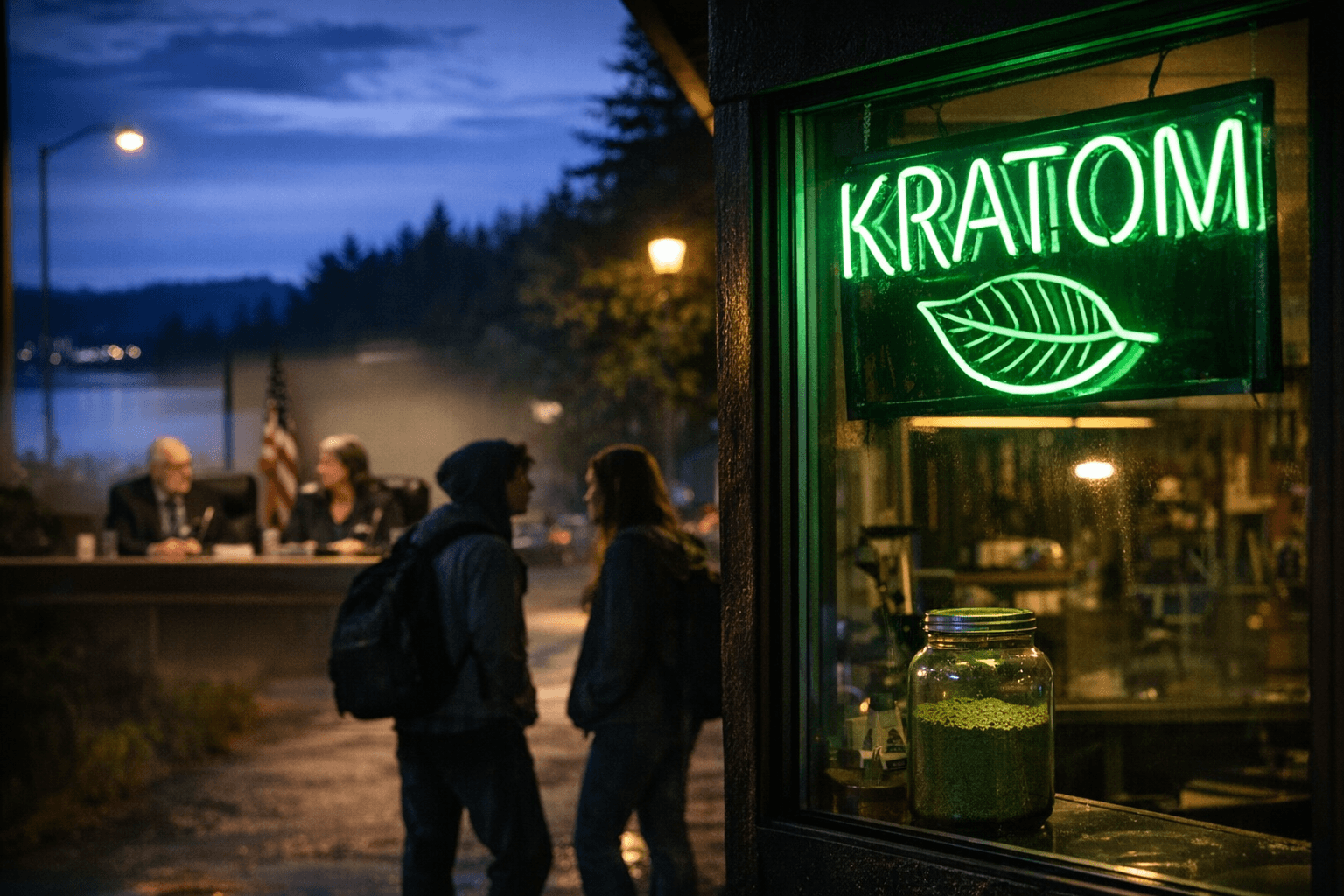
A neon sign advertising kratom near Cranberry Lake helped push Oak Harbor’s city government into a new public debate over a substance many residents still know little about. During an April 14 council workshop, leaders discussed whether the city should regulate kratom sales within Oak Harbor after Amy Walden, coordinator for the Oak Harbor Youth Coalition, raised concerns about its availability and potential harm to young people and adults.
Mayor Ronnie Wright invited Walden to speak after she first raised the issue at a Wright Blend talk, moving the conversation from a community warning to a city hall discussion. The workshop did not produce a final decision, but it put kratom squarely on the council’s agenda and raised the possibility of local rules covering age limits, sales restrictions or warning requirements.
Kratom is legal in Washington and can be bought in stores and online. The U.S. Food and Drug Administration says it is a tropical tree native to Southeast Asia and that no prescription or over-the-counter kratom drug products are legally on the U.S. market. The National Institute on Drug Abuse says people report using kratom for opioid withdrawal, pain, fatigue and mental health problems, even though the substance has no FDA-approved medical use.
Federal and public-health data have added urgency to the local debate. The Centers for Disease Control and Prevention reported that kratom-related poison-center exposure reports rose from 258 in 2015 to 3,434 in 2025, an increase of about 1,200 percent. Health officials have also warned that the most serious outcomes are more likely when kratom is used with other substances, a point that matters in a community worried about mixed-product sales and unclear potency.
Oak Harbor’s discussion is unfolding as Washington lawmakers also weigh statewide action. House Bill 2291, titled the Kratom Consumer Protection Act, would restrict sales to people 21 and older, require licensing and labeling, and impose an 11 percent excise tax on retail kratom products. A separate Senate bill, SB 6196, would also tax and regulate the market.
The Oak Harbor Youth Coalition says its members represent at least eight sectors of the community, including students, educators, youth organizations, first responders and mental health professionals. The coalition says Oak Harbor has about 23,500 residents within city limits and about 39,000 in greater North Whidbey, where Naval Air Station Whidbey Island shapes daily life and about half of local youth come from active-duty or retired military families. In that setting, even a small number of storefronts selling a little-known product can quickly become a citywide public-health and public-safety question.
This article was produced by Prism’s automated news system from verified source data, official records, and press releases, then run through automated quality and moderation checks before publishing. The system is built and supervised by the people who set the standards it runs under. Read our full AI policy.
Did this article answer your question?