Oak Harbor Prepares to Release 30,000 Coho Salmon Into Regional Waters
Oak Harbor's marina is weeks from releasing 30,000 Coho salmon, the fifth consecutive year the city has raised the fish since volunteers rebuilt the program from scratch.

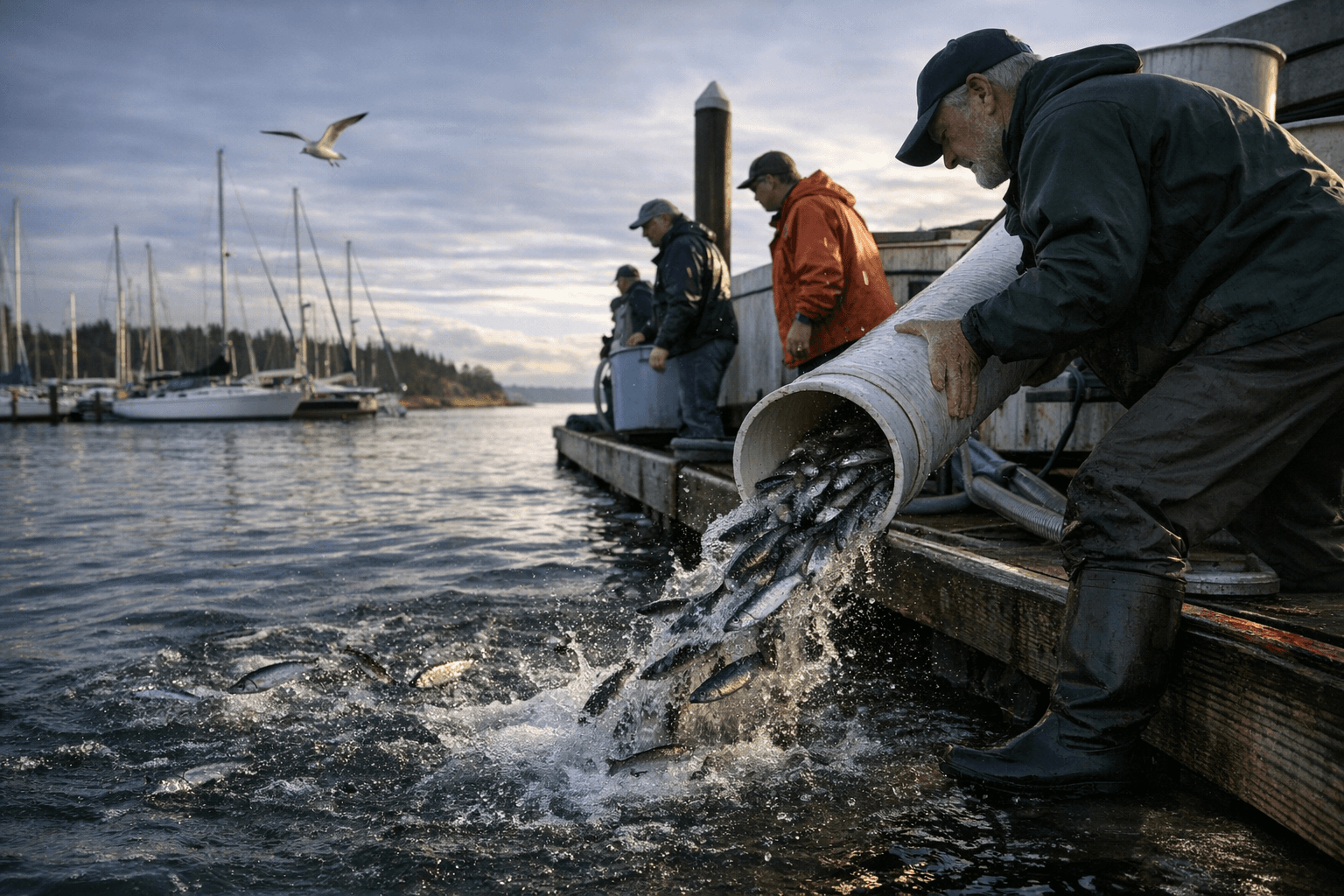
Silver fish thrashed beneath the surface of Oak Harbor Marina on Thursday as volunteer Tracy Loescher and Harbormaster Alyce Henry led community members through a feeding session for 30,000 juvenile Coho salmon being raised in the city's harbor pens. "They haven't eaten since Saturday, so they're a little bit hungry," Loescher said, describing the spectacle that plays out three times a week when pellets hit the water.
The feeding event doubled as a public education program, with city archaeologist and Jamestown S'Klallam Tribe member Gideon Cauffman sharing a tribal legend explaining how the Coho acquired the distinctive hooked nose used during spawning. Cauffman framed the story as a lesson in teamwork and creativity, using it to connect visitors to local indigenous knowledge alongside the basics of salmon biology.
The program's scale is significant for a city marina: Oak Harbor has reared roughly 30,000 Coho annually for the past five years since volunteers rebuilt the rearing pens and city staff persuaded the Washington Department of Fish and Wildlife to resume hatchery shipments. The juvenile fish arrived from a facility in Marblemount and currently measure between four and five inches. Mature Coho reach 22 to 30 inches and can weigh close to 10 pounds.
Release into regional waters is expected next month, with timing coordinated to align with migration patterns and improve the fish's prospects in open water.
Oak Harbor originally ran a marina salmon program beginning in 1982 before budget constraints ended it in 2012. The gap lasted more than a decade. Volunteers rebuilt the rearing infrastructure, and the city navigated permitting negotiations with Fish and Wildlife before the program returned with its current capacity. Continued operation requires periodic permit renewals.
Thursday's session drew local schools, elders, and tribal members alongside general visitors. For Cauffman, the feeding pens served as a classroom: a place where a Jamestown S'Klallam legend about a fish's hooked jaw becomes the starting point for a conversation about ecological stewardship in a harbor that once went quiet for 13 years.
This article was produced by Prism’s automated news system from verified source data, official records, and press releases, then run through automated quality and moderation checks before publishing. The system is built and supervised by the people who set the standards it runs under. Read our full AI policy.
Did this article answer your question?