Oak Harbor Schools Ask Public to Prioritize Capital Projects via Survey
Oak Harbor Public Schools asked residents to rank four potential capital projects in a survey open through Feb. 6; results will shape any bond or levy plans.
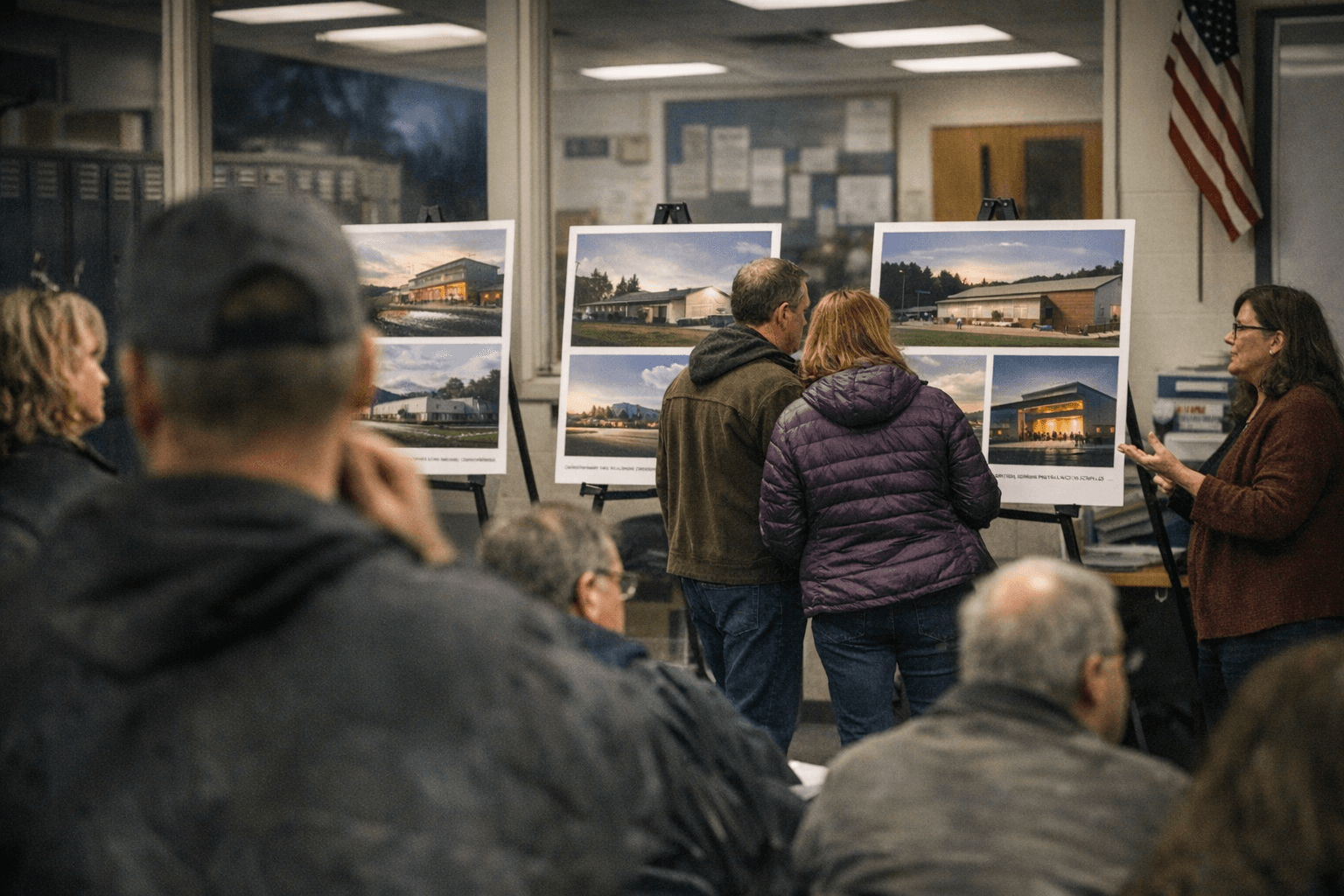
Oak Harbor Public Schools asked the public to weigh in on which capital projects should come first, opening a survey that remains available on the district website through Feb. 6. District officials say the input will help prioritize four options developed by a committee that spent the last two years “identify[ing] the physical and functional needs of its families.”
The Capital Facilities Advisory Committee, composed of parents, teachers and other community members and chaired by district officials, framed projects around aging buildings and functional gaps. The survey lists improvements to district roofing, heating and ventilation, safety and security and parking as broad needs. More specifically, it flags the transportation center, built in 1964, as requiring upgrades.
One proposal would build a new elementary school on Fort Nugent property to replace Oak Harbor Elementary and repurpose that campus for other community uses. Another would demolish and replace the south building of Oak Harbor Elementary and modernize the school library; the south building was constructed in 1948 and is now 78 years old. A third set of projects would add dedicated kitchens and gyms at Hillcrest Elementary, Broad View Elementary and Olympic View Elementary; the survey notes that “Makeshift kitchens” feed students and dining areas double as “physical education spaces,” since those schools predate school lunch programs.
For local taxpayers, the survey asks not only to rank project priorities but also to indicate whether they would support bonds or capital levies to finance them. Those choices have direct fiscal implications: bonds and levies typically affect property tax bills and the district’s ability to issue long-term debt for construction versus pay-as-you-go maintenance. The committee’s two-year review and the specific building ages, a 1948 south building and a 1964 transportation center, underscore the trade-off between ongoing repair costs and larger replacement investments that can lower energy and maintenance expenses over time.
School facilities affect daily life across the island: safer buildings and modernized kitchens can change how students are fed, how physical education is delivered, and how transportation is staged. If voters later approve a bond or levy, the district would gain the authority to move forward with construction and upgrades; if voters reject financing measures, the district would need to defer projects or seek alternative funding.
Residents can take the survey at ohsd.net through Feb. 6. The district will use responses to set priorities and decide whether to pursue a ballot measure, a decision that will shape school infrastructure and local tax choices in the years ahead.
This article was produced by Prism’s automated news system from verified source data, official records, and press releases, then run through automated quality and moderation checks before publishing. The system is built and supervised by the people who set the standards it runs under. Read our full AI policy.
Did this article answer your question?