Oak Harbor teen builds GSA, faces backlash over student safety
Olive Walker's GSA fight exposed how a student safety request turned into backlash in Oak Harbor. The cost landed on one teen, and on the district's duty to protect LGBTQ+ students.
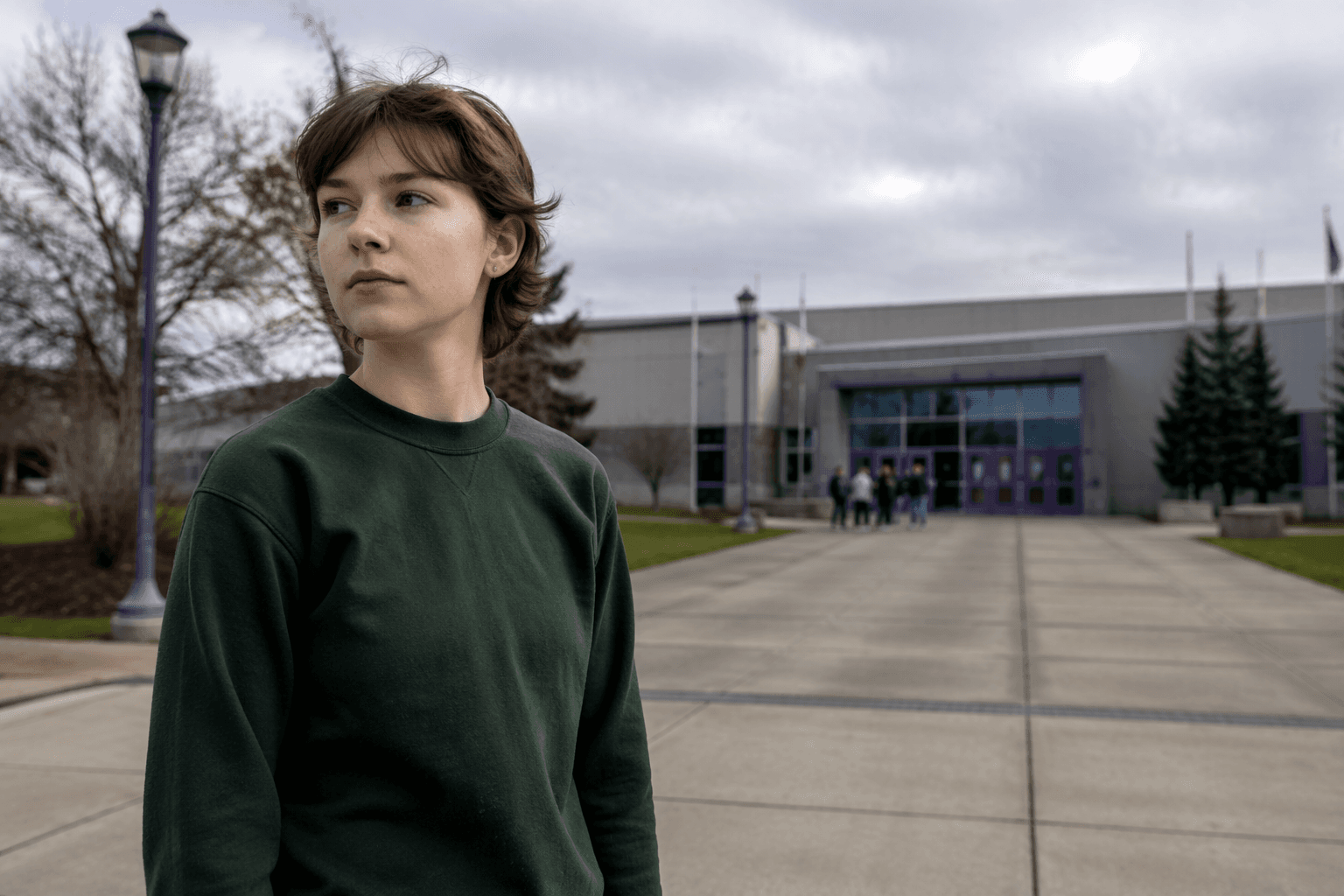
Olive Walker says building a Gay-Straight Alliance at HomeConnection was supposed to give queer students in Oak Harbor a place to breathe. Instead, the effort became a public fight over student safety, with posters taken down, parents objecting and classmates watching a freshman carry the fallout. The story now asks a local question with real stakes: when LGBTQ+ students ask for belonging, do schools have clear systems to protect them, or do teens end up doing the work alone?
What Olive Walker tried to build
Walker was 14 when she started ninth grade in HomeConnection, Oak Harbor School District’s home-school program in Oak Harbor. She began hearing from other queer students who felt they had no safe place at school, and with an adviser’s help, she and her peers followed district guidelines for interest groups to form a Gay-Straight Alliance.
That detail matters because the club did not appear as a surprise project or an outside campaign. It grew from students trying to solve an everyday problem in the place where they were expected to learn, socialize and stay safe. In a school setting, that kind of student-led response is often the first sign that adults have not yet created enough space for young people to speak honestly about identity and belonging.
How the backlash changed the year
The resistance came quickly. Posters were taken down, parents complained that the club was inappropriate, and some critics accused the students of pushing harmful ideologies. What should have been a straightforward request for community became a referendum on whether queer students deserved the same comfort and visibility other students take for granted.
Walker says the backlash took a heavy toll on her mental health and social life during her freshman year. She felt isolated and anxious about who supported her, a burden that can be especially hard for teenagers who are already navigating friendship, identity and the ordinary pressure of ninth grade. Her teacher, Erika Jenkins, and her mother, Kelsie Gibson, both describe how hard the year was on the whole family and how deeply it affected Walker’s sense of belonging.
Walker also says she has no regrets about speaking up. That is one of the most striking parts of the story: even after the backlash, the student at the center of it still sees the club as necessary for people who needed a place to be themselves. In a local conflict that could easily have stayed abstract, the cost became deeply personal.
Why the meeting mattered beyond one club
A November 2024 Whidbey News-Times report on the same HomeConnection club showed how quickly the issue had already escalated. That report said the group had existed for less than a month when more than 30 people, including parents, staff and students, shared opinions at a Family Support Team meeting with Principal Shane Evans.
The earlier coverage used the name Addy Walker, age 14, for the student who proposed the club, while the later profile identifies Olive Walker. That detail may matter for anyone trying to piece together the timeline around the club’s creation and the response it triggered. What is clear in both accounts is that a student request for a support space rapidly became a schoolwide conversation about identity, authority and who gets to define a safe environment.
For Island County readers, the significance is not just that a meeting was noisy or contentious. It is that the adults in the room were being asked to respond to a basic student need before the school culture had enough trust in place to handle it calmly. When that trust is missing, teenagers end up paying the emotional cost.
What the district, state and federal rules say
Oak Harbor Public Schools says it does not discriminate on the basis of sexual orientation, gender expression or identity, and it provides equal access to designated youth groups. HomeConnection’s website carries the same non-discrimination statement, and the program lists its address as 600 Cherokee Lane, Oak Harbor, WA 98277. HomeConnection also says it started in 1997, which underscores that this is a long-running part of the district, not a new or temporary experiment.

Washington state law also prohibits discrimination in public schools based on sexual orientation, gender expression and gender identity. At the federal level, the U.S. Department of Education says student-led LGBTQI+ support groups can help create safe, inclusive environments, and the Equal Access Act requires public secondary schools with a limited open forum to give noncurricular student groups equal access.
Put simply, the legal framework already points schools toward inclusion. The real question is whether district culture and adult response match the language on the website. A nondiscrimination statement is only meaningful if students can see it reflected in everyday practice, from club approvals to how staff respond when the complaints start.
Why this became a broader Island County issue
This dispute sits inside a wider advocacy network that has been active across Washington. GLSEN Washington State says its mission is to make Washington schools more inclusive for all students, while PFLAG Whidbey Island says it has held board meetings and special meetings advocating for LGBTQ children’s rights in the Oak Harbor Public School District. The Washington State LGBTQ Commission, the ACLU and the Washington Education Association have also framed GSAs and similar support as part of broader student safety and civil rights work.
That wider context matters because it shows Olive Walker’s experience is not an isolated family dispute. It reflects a statewide and national debate over whether schools will treat LGBTQ+ belonging as a core part of student safety or as an optional extra that can be delayed whenever adults feel uncomfortable. In Oak Harbor, the cost of hesitation has already been borne by one teenager who had to push for change while still trying to get through freshman year.
The most actionable local question now is simple: when a student asks for a space to feel safe at school, do adults have a clear, consistent system to protect that student, or do they leave the burden on the teenager who was brave enough to ask first? In HomeConnection, that answer will shape not only one club, but the credibility of the district’s promise to every LGBTQ+ student who walks through its doors.
This article was produced by Prism’s automated news system from verified source data, official records, and press releases, then run through automated quality and moderation checks before publishing. The system is built and supervised by the people who set the standards it runs under. Read our full AI policy.
Know something we missed? Have a correction or additional information?
Submit a Tip