Passenger Only Ferries Gain Momentum, Clinton Dock Nears Completion
Regional and local initiatives, together with proposed state legislation, renewed interest in passenger only ferry service across Puget Sound on December 20, 2025. The movement matters to Island County residents because it could deliver faster, lower cost, and lower emission connections for commuters, visitors, and island businesses.

On December 20, 2025 regional and local actors stepped up efforts to expand passenger only ferry service across Puget Sound, driven by the proposed Mosquito Fleet Act in the state legislature and local infrastructure projects. House Bill 1923 would establish a grant program to acquire and operate passenger only ferries, a policy push that local leaders say could unlock new routes and funding streams for Island County communities.
Locally the Port of South Whidbey advanced a key piece of that puzzle by moving its Clinton passenger only dock project toward construction. Port planning documents show design is roughly 90 percent complete, permitting filings remain pending, and preliminary engineering was expected to finish in December 2025. The port has secured 2.7 million dollars in state grant funding toward an estimated 4.6 million dollar dock project. The remaining funds are tied to federal congressional funding requests, which the port and regional advocates are pursuing.
Stakeholders on Whidbey Island and neighboring communities are discussing potential service patterns that could include Clinton to Everett, and a Langley to Hat Island to Everett routing. Those conversations are occurring alongside broader planning about electrification and vessel charging, which could align with planned upgrades at state ferry terminals and state climate goals. Washington State Ferries is studying possible roles for passenger only service, a process that could determine how new operations would integrate with the existing ferry system and schedules.
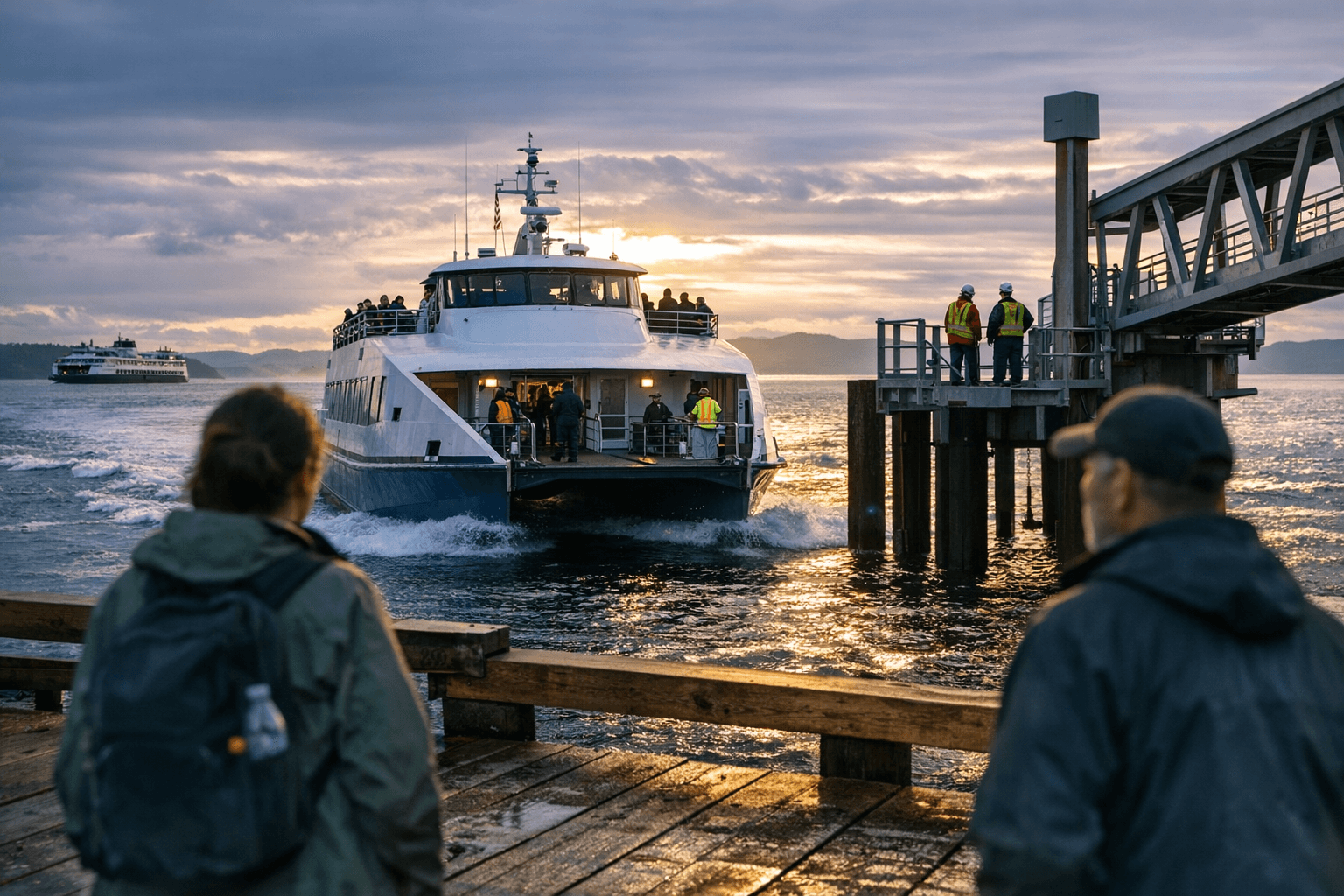
For Island County residents the proposed service could shorten travel times to employment centers, reduce vehicle congestion on fixed links, and support local economies by making the island easier to reach for visitors. Emissions reductions from electric vessel options are part of the appeal for communities balancing growth with environmental stewardship.
Next steps include finalizing permits, completing preliminary engineering, securing the remaining federal funds, and advancing House Bill 1923 through the legislature. As those processes unfold in the coming months Island County officials and transportation advocates say they will continue refining routes, service frequency, and infrastructure details to ensure any passenger only service meets local needs.
Know something we missed? Have a correction or additional information?
Submit a Tip