Puget Sound Bird Expert to Present Bird Banding Research in Coupeville
Scott Markowitz will show how 2.5 million banded birds reveal population trends few surveys can detect, and how Island County's own stations feed that continental science. Free, April 9, Coupeville.

The feathers of a Western Bluebird may look like an aesthetic accident of evolution, but Scott Markowitz has spent years demonstrating they carry measurable data about foraging success and survival. On Thursday, April 9, Markowitz will bring that research to Coupeville when the Whidbey Audubon Society hosts him at the Recreation Hall, 901 NW Alexander Street, for a free public presentation on bird banding science and what it means for Island County conservation.
Markowitz is director of research at the Puget Sound Bird Observatory and a faculty fellow at Pacific Lutheran University, where he studies avian ecology and population processes. His current project examines sexual selection mechanisms in Western Bluebirds, specifically whether male coloration reliably signals successful foraging. That work will anchor the evening's broader subject: the MAPS program, a continent-wide monitoring network that has tracked breeding bird populations across North America since 1989.
MAPS, which stands for Monitoring Avian Productivity and Survivorship, operates more than 1,200 stations across the United States and Canada. Since its founding, researchers at those stations have captured, banded, measured, and released more than 2.5 million individual birds during breeding season, building a long-term demographic record that no single-season survey can replicate. The Institute for Bird Populations hosts and coordinates the MAPS framework, and Markowitz will explain how that organization's standardized methodology produces continent-wide data on nest success, juvenile production, and adult survival rates.
The Puget Sound Bird Observatory runs two local banding stations whose numbers feed directly into that regional and continental picture. For Whidbey Island, MAPS-style monitoring can detect shifts in breeding success or adult survival that may reflect habitat loss, land-use change, or climate pressure long before those trends show up on any casual morning walk. Markowitz will trace how the data flowing out of local stations informs conservation decisions at a far larger scale.
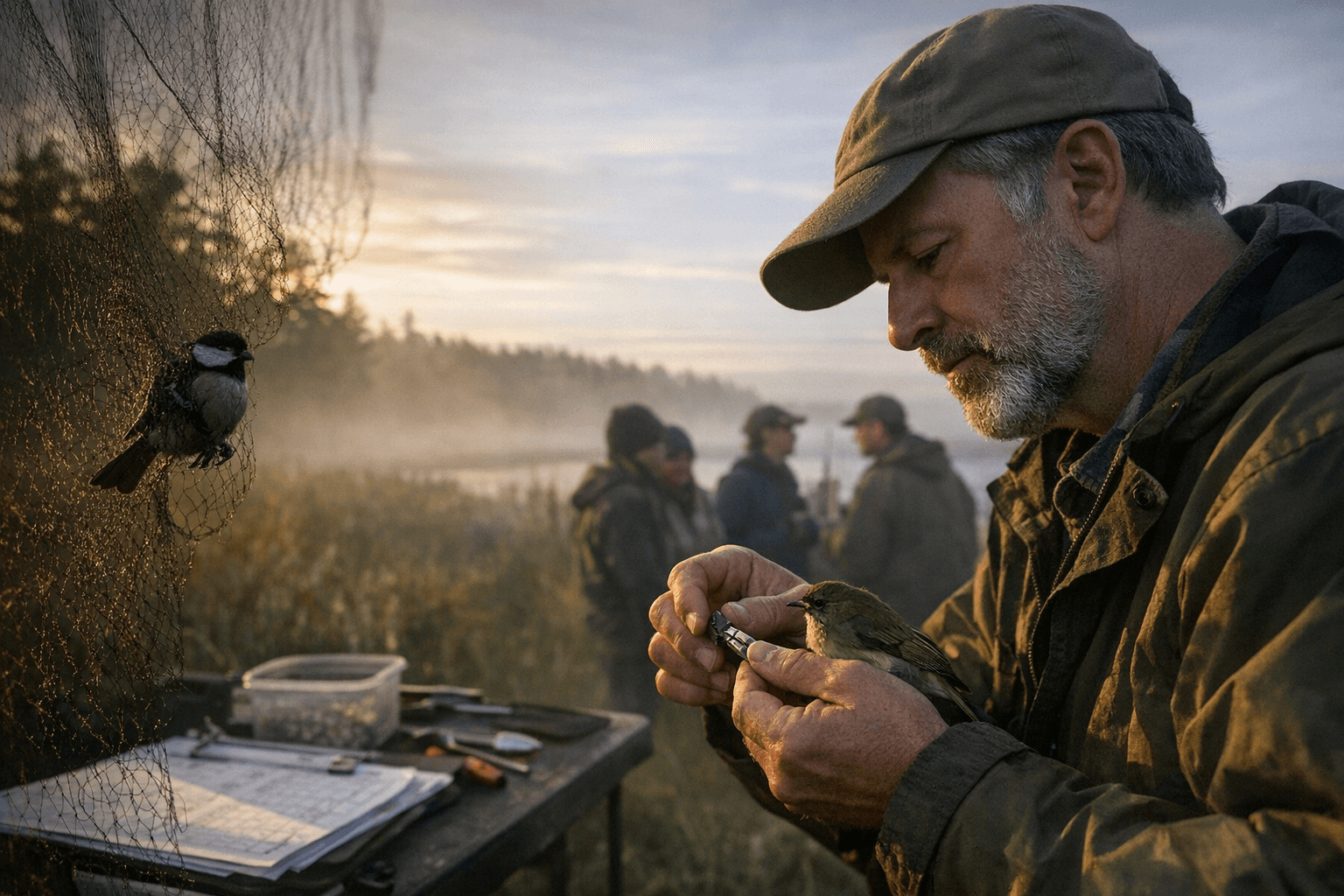
The presentation is designed for birders and non-birders alike. Attendees will learn how mist-netting, banding, and field measurement work in practice, what decades of demographic data reveal about bird population structure, and how those findings shape habitat and land management recommendations. The session will also outline volunteer opportunities at banding stations and through Whidbey Audubon's conservation work across Island County.
Doors open at 7 p.m. for socializing and refreshments. A brief Audubon business meeting begins at 7:15 p.m., with Markowitz's presentation starting at 7:30 p.m. Admission is free.
This article was produced by Prism’s automated news system from verified source data, official records, and press releases, then run through automated quality and moderation checks before publishing. The system is built and supervised by the people who set the standards it runs under. Read our full AI policy.
Did this article answer your question?