Salinity Seafood links Whidbey shoppers to native Olympia oyster conservation
Salinity Seafood turns a Bayview storefront into a doorway for Whidbey shoppers to learn why Washington's native Olympia oyster still matters to the shoreline.

A native oyster, sold like a local story
The Olympia oyster is small enough to fit easily in a palm, but on Whidbey it carries the weight of an entire conservation story. Salinity Seafood & More, inside Bayview Cash Store at Bayview Corner, is using that native shellfish to connect Island County shoppers to the water, the growers, and the ecology behind what lands on their plates.
That matters because the Olympia oyster is not just another seafood item. Washington Department of Fish and Wildlife says it is Washington’s only native oyster species, and that extensive harvesting and pollution had left as little as 5% of historical oyster bed habitat remaining by 2012. In other words, every purchase sits inside a larger effort to keep a once-depleted species visible, valuable, and alive in local waters.
Why the Olympia oyster belongs in a Whidbey food guide
For Island County readers, the appeal starts with place. Whidbey has long been a place where food, farming, and shoreline life overlap, and Salinity fits that pattern by bringing shellfish into a familiar South End landmark rather than a distant specialty market. The shop does not treat oysters as a luxury item detached from daily life. It presents them as part of the local food system, tied to beach farmers, hatcheries, and customers who want to understand where seafood comes from.
The ecological case is just as strong. WDFW says Olympia oysters help estuaries by cleaning water and providing habitat for marine life. That makes them more than a culinary curiosity: they function as living infrastructure in the shallows, helping shape the health of the bays and inlets around Puget Sound. WDFW has listed the species as a state candidate species since 1997, a reminder that conservation here has been a long-running public concern, not a recent trend.
The species also has a clear cultural dimension. Washington Sea Grant and restoration groups have long noted that Olympia oysters were once treated as abundant and inexhaustible, then pushed down by overharvest, habitat loss, and pollution. On Whidbey, that history gives Salinity’s sales a different meaning. Buying the oyster is not just supporting a shop. It is participating in a recovery story that links shoreline stewardship to the everyday act of choosing dinner.
How Salinity connects shoreline growers to island shoppers
Salinity Seafood & More is acting as a bridge between consumers and growers, especially the small-scale operators whose work is easy to overlook from a grocery aisle. The business sells and ships oysters from a network that includes commercial hatcheries and shellfish growers tied to Whidbey and neighboring waters, including the Swinomish Tribe’s farm in Similk Bay and Skagit Shellfish on Camano Island.
That network matters because it shows how regional seafood actually moves. These oysters are not abstract “local” products. They come from specific waters, with specific histories, handled by specific farms and tribal operations. The Swinomish Shellfish Company says its oysters are grown and harvested on Fidalgo Island in Skagit Bay, in the ancestral waters of the Swinomish Tribe. NOAA Fisheries has profiled the company as an oyster grower on Fidalgo Island and notes that the Swinomish people have harvested oysters in Skagit Bay for thousands of years.
That history makes the conservation story deeper than environmental messaging. Tribal voices have framed Olympia oyster restoration as cultural as well as ecological, because bringing back the species helps restore habitat and continuity of practice at the same time. Salinity’s role is to make that connection legible to shoppers on Whidbey who may not otherwise see how tribal food traditions, aquaculture, and conservation overlap.
Skagit Shellfish adds another layer to the supply chain. The family business produces oysters and clams in Skagit Bay and includes Olympia oysters among its varieties. A recent profile of the farm noted that its remote location near the northern tip of Camano Island has helped keep water quality high, and that in 40 years of shellfish farming it has not been shut down for a red tide or contamination event. Salinity’s wholesale page says the farm produces oysters and soft-shell clams in Skagit Bay by Camano Island, and notes that the oysters have a low salinity because of freshwater influx from the Skagit River.
For Whidbey shoppers, that means the seafood story stays close to home even when the shellfish come from nearby waters beyond the island itself. The store is selling a regional network, not a generic product.
Why the oyster is tiny, and why that matters
Part of Salinity’s educational mission is explaining why Olympia oysters are so different from the larger Pacific oysters most consumers know. Aquarium of the Pacific says Olympia oysters are typically 2.4 to 3.1 inches long, which is small enough to help explain why they are so vulnerable to harvest pressure. Washington requires a minimum size of 2.5 inches on oysters gathered, which effectively prevents most Olympia oysters from being harvested.
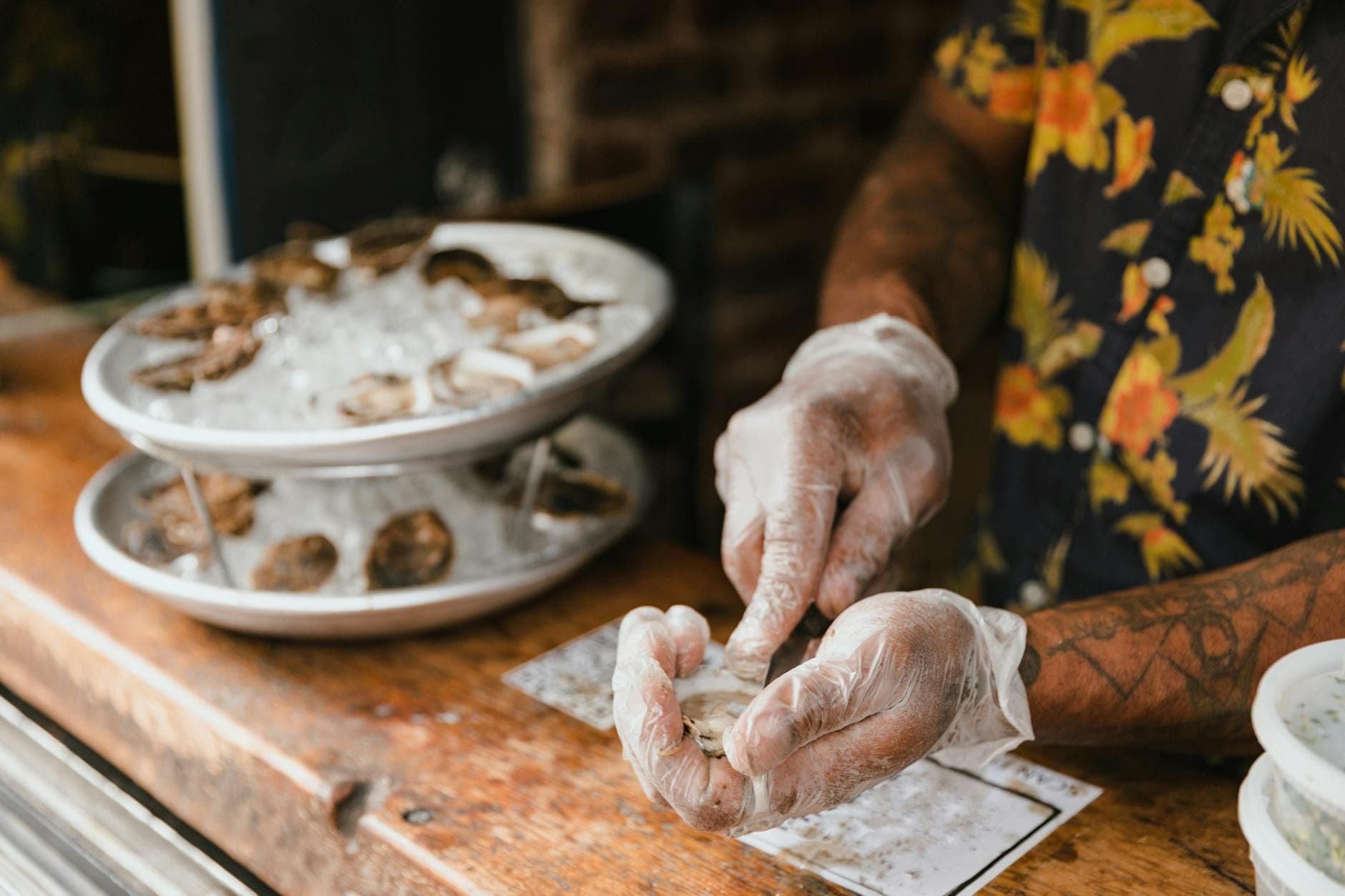
That size limit is not just a regulatory detail. It shows how conservation and consumption can come into tension when a native species is small, slow to recover, and historically overharvested. Aquarium of the Pacific also says Olympia oyster spawning occurs between May and August when water temperatures reach about 57.2 degrees Fahrenheit, a seasonal rhythm that helps explain why the species is so closely tied to temperature, habitat, and water quality.
The numbers tell the story plainly. This is a shellfish that was once widespread, then pushed to the brink, then slowly brought back through coordinated work. Puget Sound Restoration Fund set a goal in 2010 to restore 100 acres of Olympia oyster habitat by 2020, reached that goal in 2020, and reported more than 140 acres completed by early 2025. That progression shows a conservation movement that is active, measurable, and still growing.
What shoppers can learn from Salinity’s public programs
Salinity’s public-facing programming makes the Bayview storefront feel more like a shoreline classroom than a simple retail counter. A recent Whidbey Earth & Ocean Month event described an oyster-tasting workshop where Emily Wilder would offer a native Olympia oyster alongside two Pacific oysters grown differently in different bays. That format turns tasting into comparison, helping shoppers understand how species, growing conditions, and place affect flavor.
An upcoming Sno-Isle Libraries event also advertised an oyster talk by Wilder covering oyster life cycles, ecological benefits, the native Olympia oyster, shell recycling, and private beach shellfish gardening. Taken together, those events suggest Salinity is building local food literacy around the shoreline. The store is not only moving product. It is helping residents understand how oysters live, how they are farmed, and why shell recycling and beach gardening matter in a county with so much water at its edge.
For Whidbey, that is the real significance of the shop’s model. Salinity Seafood & More is turning a conservation challenge into an accessible buying choice, and turning a native oyster into a way to learn about Island County’s waters. In a region where food access, ecology, and identity are closely intertwined, the humble Olympia oyster becomes a practical lesson in how local commerce can support both shoreline culture and restoration.
This article was produced by Prism’s automated news system from verified source data, official records, and press releases, then run through automated quality and moderation checks before publishing. The system is built and supervised by the people who set the standards it runs under. Read our full AI policy.
Did this article answer your question?