Senator Murray Questions DoD Delays, Demands Answers on PFAS Cleanup
U.S. Sen. Patty Murray sent a public letter on November 25 asking the Department of Defense to explain delays that push planned PFAS investigations and cleanup work at military sites, including Naval Air Station Whidbey Island, into the 2030s. The move raises immediate concerns for Island County residents about the timeline for remediation, use of funds, and communication about local drinking water safety.
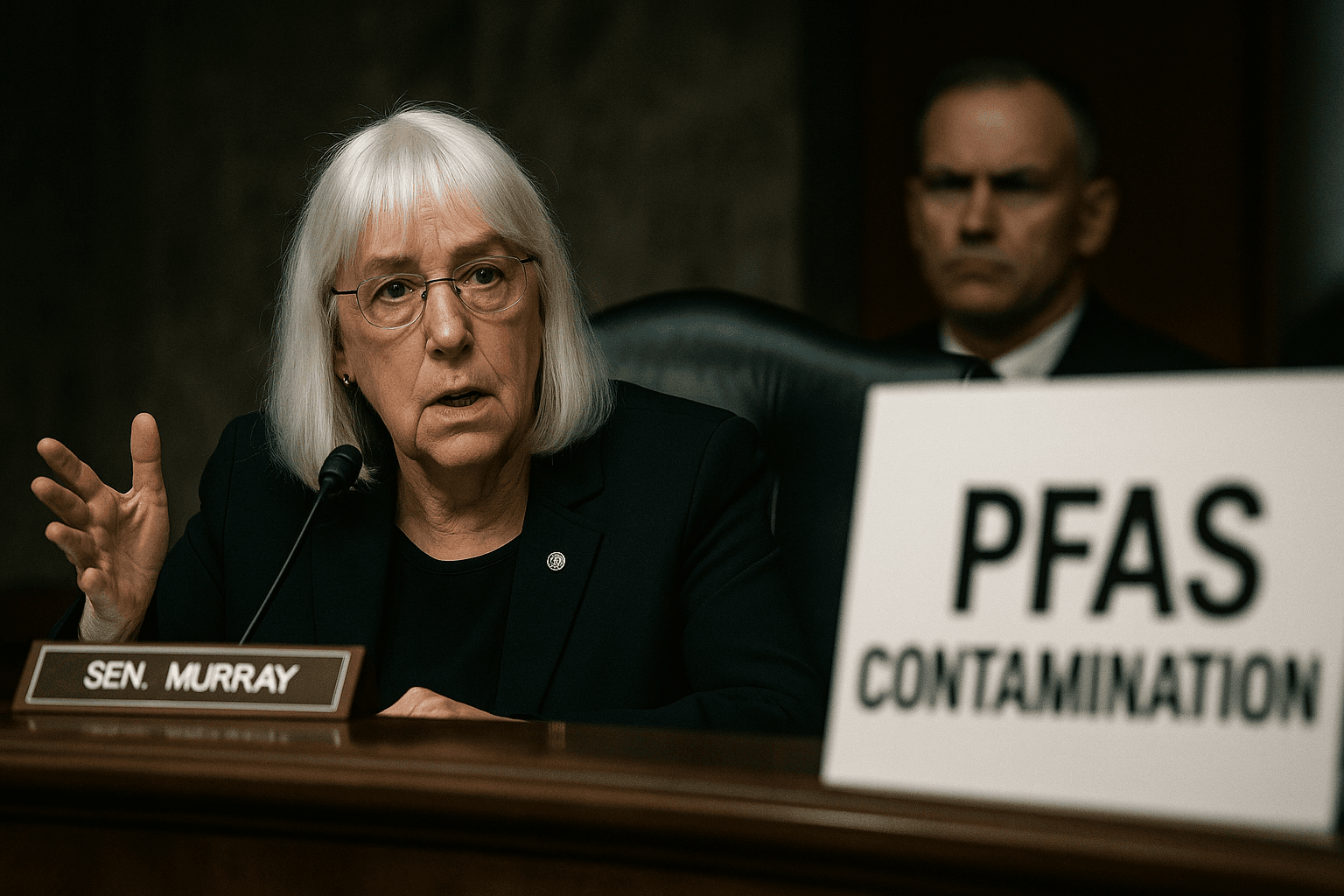
U.S. Sen. Patty Murray on November 25 publicly challenged the Department of Defense after officials revised timelines for planned PFAS investigations and remediation at multiple military installations, citing Naval Air Station Whidbey Island among the affected sites. In her letter Murray said recent schedule shifts would move some clean up milestones into 2032 through 2034 and she requested a briefing and written answers by December 15 about the rationale for the delays, how earmarked funds have been used, and how communities will be kept informed.
The senator framed the request as a demand for clarity on both technical and accountability issues. The altered dates accelerate concern that work already expected to take years could be postponed further, complicating monitoring and remediation plans that have involved local well testing and sampling at locations near the base.
Navy and NAS Whidbey officials issued a statement reiterating the Department of Defense commitment to cleanup while referencing regulatory steps under the Comprehensive Environmental Response, Compensation, and Liability Act and an evolving understanding of PFAS conditions. That response emphasizes that CERCLA processes guide decision making and that the nature of PFAS contamination continues to be reassessed as more data are collected.
For Island County residents the stakes are practical and immediate. Local sampling programs have been part of tracking perfluoroalkyl and polyfluoroalkyl substances contamination near military training and operations, and earlier actions included well testing and provision of a supplied water filtration system for Coupeville to reduce potential exposure. Delays to investigations and cleanup timelines could prolong reliance on interim measures while formal remedies are designed and implemented.
The request for answers by mid December places a near term deadline on a national conversation about how the military sequences long term remediation across many sites. Locally, officials, health authorities, and residents will be watching the briefings and responses for specifics on schedules, funding accountability, and improved communication so that community members can understand when and how permanent solutions will arrive.
This article was produced by Prism’s automated news system from verified source data, official records, and press releases, then run through automated quality and moderation checks before publishing. The system is built and supervised by the people who set the standards it runs under. Read our full AI policy.
Did this article answer your question?