South Whidbey sewer district weighs future of closed Holmes Harbor golf course
More than 100 residents packed a Freeland church as the district that owns the 54-acre Holmes Harbor course weighed golf, open space or resale.

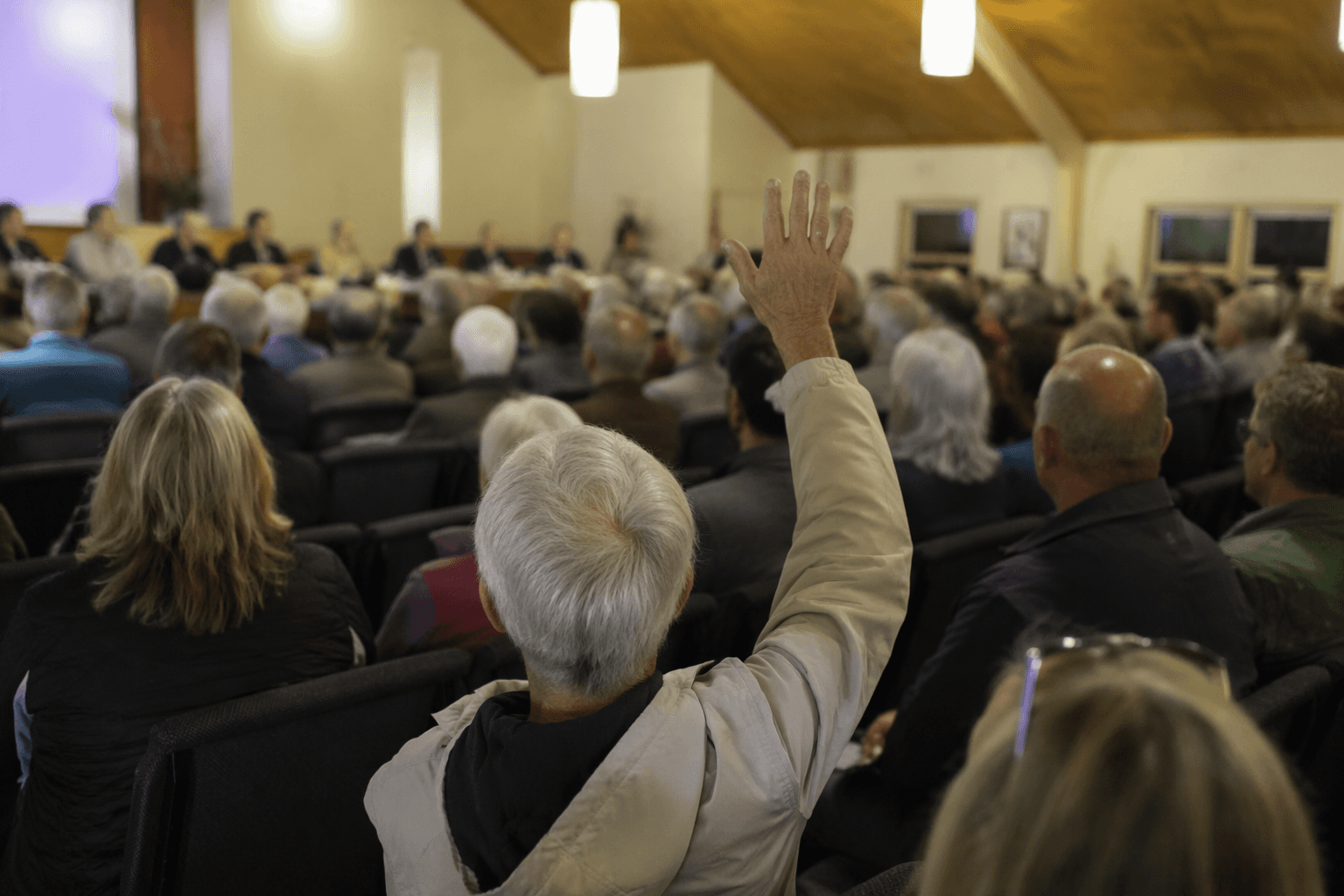
The Holmes Harbor Sewer District now controls the 54-acre Holmes Harbor Golf Course property, and the next decision could shape both neighborhood character and sewer rates on South Whidbey. More than 100 people filled a meeting room at Trinity Lutheran Church in Freeland, with others standing in the hallway, as district officials faced questions about what comes next for land that sits at the center of the district’s wastewater system.
The district won an unlawful detainer case against Holmes Harbor Golf Course LLC and Paul Lavin, and the course closed after the dispute. The lawsuit, filed April 4, 2025, focused on lease obligations, including maintenance of the rough, and the district has since said it is considering several paths forward: keeping the property as a golf facility, converting it to open space with trails, or finding another use that fits its wastewater mission.
That mission is a major reason the property cannot simply be redeveloped like other land on South Whidbey. District materials say Holmes Harbor Sewer District treats wastewater for more than 360 homes and can receive flow from more than 700 homes, while Washington State Department of Ecology records say Holmes Harbor is the district’s sole authorized user of reclaimed water. In 2024, the district processed 15.32 million gallons of influent wastewater and distributed 14 million gallons of reclaimed water to the golf course. Ecology records show that figure was 13 million gallons in 2020.
The money question is already central to the debate. District officials said the rough had been mowed at a cost of about $75,000 a year, paid by ratepayers, and argued that continuing to subsidize private golf-course maintenance with public funds could amount to an unlawful gift of public funds. If the site remains a golf course, that kind of operating expense could continue to fall on district customers. If the land becomes open space, that public maintenance burden could change, but so would the reclaimed-water use that has long helped anchor the district’s system.

Board president Bill Hamilton and attorney Julia Dougherty told residents that no final decision has been made. Hamilton said he had already started talking with people in the golf industry about possible operation or partnership models, while others urged the district to leave the acreage as open space. Residents also pressed for more transparency, saying they had not understood the legal and operational changes that led to the closure and noting that board agendas had not been posted online since 2022.
The district’s history helps explain why the fight has become so fraught. State auditor records say Holmes Harbor was formed in January 1976 as Holmes Harbor Water District to serve a planned development of about 673 single-family lots next to a golf course, and it was renamed Holmes Harbor Sewer District in 1998. Local golf reporting says the course closed for four years before reopening in 2013, then entered a new lease with the district in 2016. However the district proceeds, the decision will determine who pays to maintain the property, who benefits from its reuse, and whether one of South Whidbey’s most unusual public assets remains tied to golf or moves toward a different future.
This article was produced by Prism’s automated news system from verified source data, official records, and press releases, then run through automated quality and moderation checks before publishing. The system is built and supervised by the people who set the standards it runs under. Read our full AI policy.
Know something we missed? Have a correction or additional information?
Submit a Tip