Washington State Ferries hikes fares, Whidbey riders face higher costs
A Clinton-to-Mukilteo car trip that cost $7.35 in October now runs about $7.58, with summer peak fares climbing to roughly $10.22.

A one-way car trip between Clinton and Mukilteo that cost $7.35 in October now costs about $7.58, and the same crossing jumps to about $10.22 in summer peak season. For a Whidbey commuter making five round trips a week, that means about $2.30 more each week off-season and about $10.30 more in summer, before counting any passenger fare.
The increase took effect May 1 on the island’s busiest ferry link, where the impact depends on how riders pay. Credit and debit card purchases rose 3 percent, while cash and ORCA card users were not charged the higher card-based fare. The summer surcharge on single-ride vehicles and motorcycles also rose from 25 percent to 35 percent, raising the cost of a routine mainland run for service workers, families, and anyone who has to treat the boat like a bridge.
The Washington State Transportation Commission approved the package Aug. 6, 2025, as part of a broader plan to help Washington State Ferries meet a $408.8 million revenue target for the 2025-27 biennium. The state later projected the fare proposal would bring in about $412.3 million for ferry operations. The only rider-facing offset was a pilot program extending multiride pass expiration from 90 days to 120 days starting May 1.
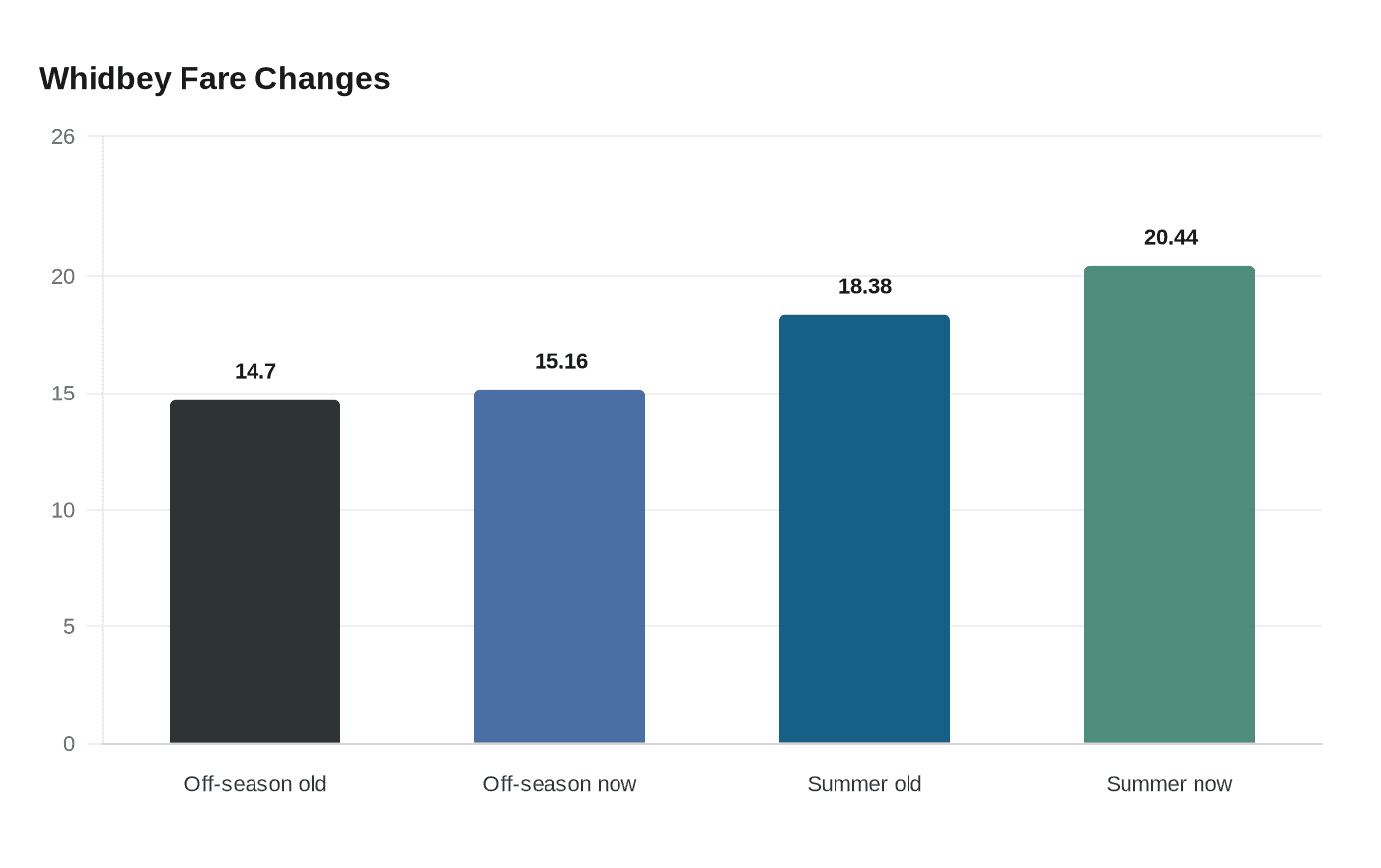
That matters on Whidbey because the Mukilteo-Clinton run is not a casual tourism route. Local reporting has described it as the second most popular ferry route in Washington, and one report says about 900 Boeing employees commute off island for work through it. A family making a round trip in one car now pays about $15.16 off-season, compared with $14.70 before the May increase. In summer, that same round trip rises to about $20.44, up from roughly $18.38 under the earlier fare and surcharge structure.
The long view is starker. Statistics cited in local coverage show ferry fares have risen 64 percent over 14 years, even before the latest surcharge increase. That helps explain why the new rates land as more than a bookkeeping change in Island County, where ferry costs shape school travel, medical appointments, commuting, and day-to-day business ties to Everett and Seattle.
Island County leaders have already responded with a joint letter protesting the planned increases. Lynda Eccles, executive director of the Coupeville Chamber of Commerce, has said she understands why the rates need to rise, but the practical question on Whidbey remains unchanged: riders, employers, or local businesses will absorb the higher cost, and the state has offered little beyond a longer window to use multiride passes.
Washington State Ferries remains the largest ferry system in the United States and the third largest in the world, and the Transportation Commission controls fares and policies. For Whidbey, that means the price of getting on and off the island is rising again, with no sign that convenience or reliability is improving enough to match the bill.
This article was produced by Prism’s automated news system from verified source data, official records, and press releases, then run through automated quality and moderation checks before publishing. The system is built and supervised by the people who set the standards it runs under. Read our full AI policy.
Did this article answer your question?