Whidbey advocate helps islanders find their civic voice in public meetings
Amanda Bullis is teaching Whidbey residents how to turn dense county planning into clear public comments that can shape Island County’s next 20 years.
Why this matters now
Island County’s comprehensive plan is not abstract paperwork. It is the framework shaping local code and policy for the next 20 years, which is why Whidbey Environmental Action Network has made public comment part of its civic playbook. In a place where technical planning language can shut people out, Amanda Bullis and Marnie Jackson are showing residents how to speak up without needing to sound like policy professionals.
WEAN’s roots help explain that approach. The group says it began in the 1980s, when community members organized against clear-cut logging on Whidbey Island, and it now works through civic education, policy advocacy, and litigation. The current workshop model treats public comment as another form of local stewardship, one that can protect ecosystems, influence county decisions, and make room for people who have long felt intimidated by the process.
Four ways to plug in right now
The easiest entry point is Bullis’s own system of regular email updates. She uses them to summarize environmental and climate developments and point people toward concrete next steps, including contacting elected officials, joining workshops, and responding to policy issues. That matters because most people do not miss civic life for lack of concern; they miss it because the information arrives fragmented, too technical, or too late.
- Use the email updates as an action calendar, not just a news digest.
When a county issue, workshop, or comment window opens, the point is to catch it early enough to do something with it. For many residents, that one habit can be the difference between watching a decision harden and having a voice before the language gets locked in.
- Treat the workshop as a practice space, not a test.
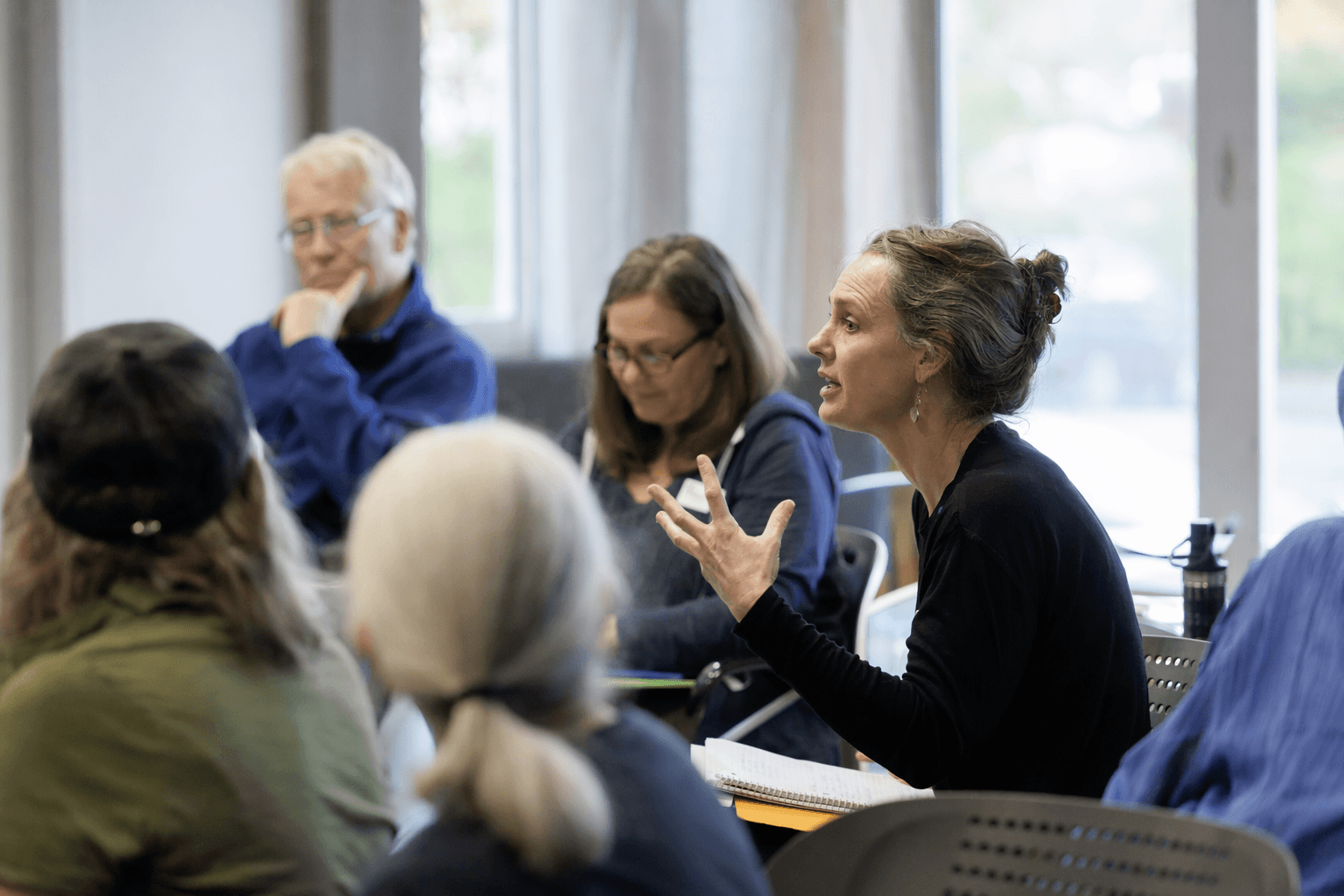
WEAN’s Finding Your Civic Voice sessions are built to help participants learn the public comment process and craft comments for a supportive audience. The aim is not perfection; it is clarity. Bullis and Jackson have been explicit that the work is about translating complicated county or environmental issues into personal stories people can actually use in a meeting.
- Lead with lived experience, then connect it to the policy.
That approach helps people make comments that are clearer, more persuasive, and less intimidating, especially when the background material is dense or full of planning jargon. If a proposal affects your water, your neighborhood, your commute, your shoreline, or your ability to stay rooted on the island, that is not a side note. It is the substance of the comment.
- Show up prepared for the structure of the meeting.
A Jan. 24 workshop at Bayview Corner ran from 9 a.m. to 4 p.m. and centered on the comprehensive plan and the purpose and structure of public comment as a democratic tool. The first recorded workshop in the series was held Dec. 8, 2024, and public descriptions made clear that the class was free, required registration, and had limited space. In practical terms, that means residents should not wait until the night of a hearing to figure out how the process works.
The workshop format also reflects a wider public policy reality: Island County’s planning choices will shape daily life long after the current news cycle moves on. That includes the conditions that affect environmental health, from shoreline protection to land use, and the fairness question of who has enough time, knowledge, and confidence to speak first. When only the most experienced insiders comment, the conversation narrows; when more residents can translate their own experience into public language, the process becomes more representative.

How Bullis turned fear into a teachable skill
Bullis’s role is part educator, part organizer, and part translator. She says she puts a lot of effort into making information understandable without oversimplifying it, which is a rare skill in public policy spaces where precision is often confused with accessibility. Her background as an actor in New York helped shape that ability to speak publicly and teach others how to do the same, but the deeper lesson is that public voice is learned, not inherited.
That lesson began with a simple moment. One woman approached Bullis and said she wished she could do what Bullis was doing but was afraid. That conversation became the seed for a broader effort to help people feel they have something valuable to say, even if they have never sat through a county hearing or read a planning packet cover to cover.
A bigger campaign than one workshop
The workshops are not a standalone civic exercise. In February, WEAN said Bullis and Jackson mailed Island County a packet of more than 900 pages of comments and resources by certified mail, a blunt reminder that public participation can be sustained, detailed, and organized. In January, WEAN said people who missed the first workshop could register for a Camano Island session on Feb. 23, extending the effort beyond one room on Whidbey.
Bullis also hosts WEAN’s Action Hour podcast, where she interviews activists, advocates, and scientists about environmental issues affecting Whidbey and Camano Islands. That matters because civic participation is easier to sustain when it is reinforced by regular conversation, not just by one intense workshop day. A resident who follows the podcast, reads the updates, and practices comment writing is far more likely to show up ready when Island County’s planning process reaches a decision point.
What changes when more people find their voice
WEAN’s long arc runs from anti-logging organizing in the 1980s to the current mix of civic education, policy advocacy, and litigation. Bullis’s work sits inside that history, but it is also changing the day-to-day mechanics of participation by teaching people how to enter public meetings without feeling they need a specialist background. On Whidbey, that kind of access can reshape who gets heard when county code, land use, and environmental protections are on the table.
The larger civic lesson is simple: public comment is not a performance for experts. It is a tool, and on an island where planning decisions can shape the next two decades, learning how to use it can change what kind of community gets built.
This article was produced by Prism’s automated news system from verified source data, official records, and press releases, then run through automated quality and moderation checks before publishing. The system is built and supervised by the people who set the standards it runs under. Read our full AI policy.
Did this article answer your question?