Whidbey doctor and Navy veteran Bill McDaniel reflects on a long life
From an Oklahoma farm to Oak Harbor's parade route, Bill McDaniel's life shows how Navy service and island belonging can become the same story.
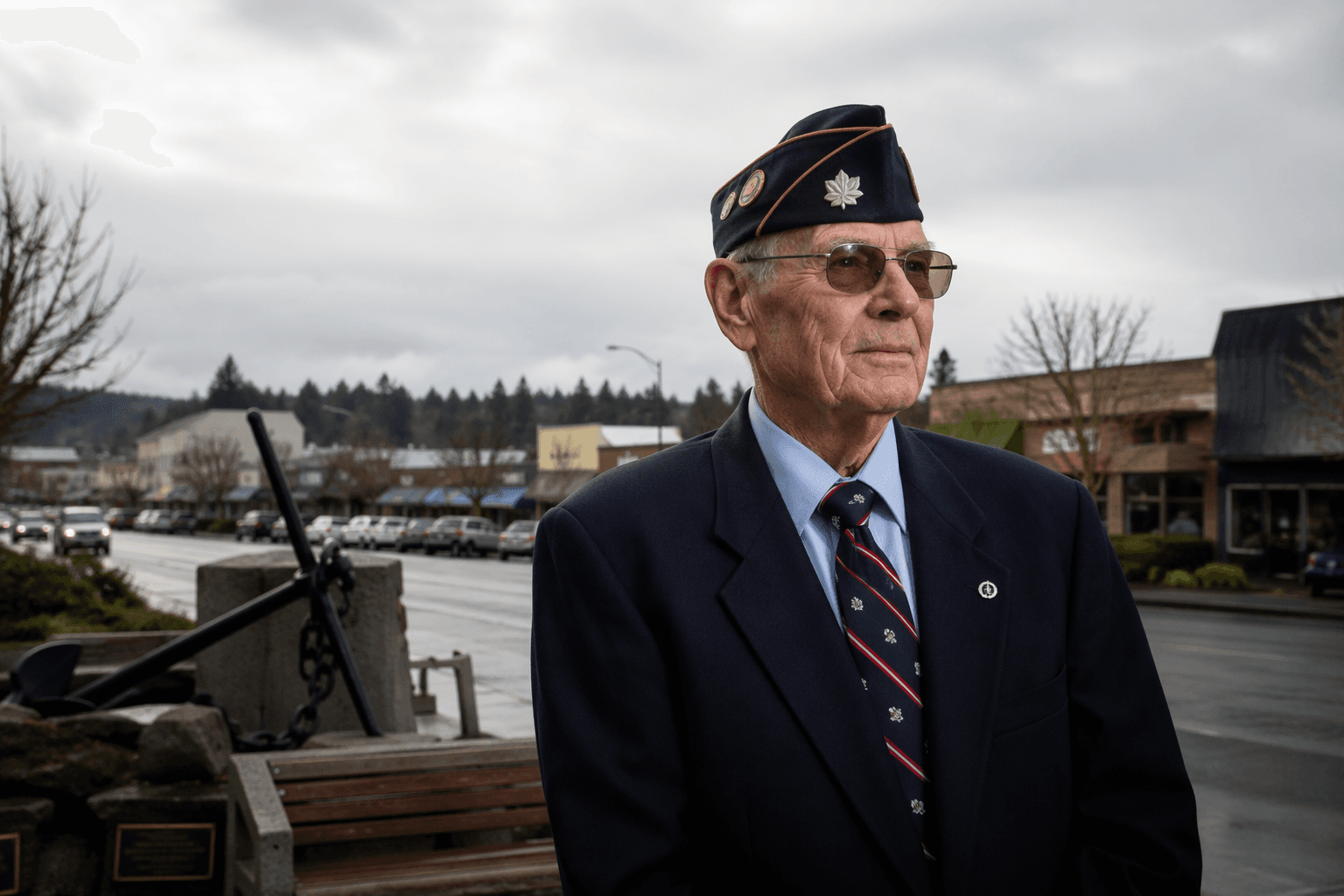
Bill McDaniel's life stretches from a farm near Muskogee, Oklahoma, to the medical and civic circles of Whidbey Island, and the path between those places runs through wrestling mats, Navy hospitals and Oak Harbor streets. Born Feb. 26, 1943, he became a rear admiral, an orthopedic surgeon and a flight surgeon, then settled into the quieter role of a neighbor whose name still carries weight in Island County. His story fits Whidbey because it is not just about achievement, but about how a person with a long résumé becomes part of the fabric of an island town.
From Oklahoma roots to medical training
McDaniel's early life started in rural Oklahoma, where the discipline that later marked his Navy career was already taking shape. He graduated from Blackwell High School as an Oklahoma state wrestling champion in 1960, then won Oklahoma AAU championships in 1961 and again in 1968. Those victories were more than athletic milestones; they marked a student who was already moving toward a life built on endurance, competition and preparation.
His next steps took him to Oklahoma State University, where he was a varsity wrestler and graduated in 1964 with a degree in physiology. He later earned his Doctor of Medicine from the University of Oklahoma in 1968. That combination of wrestling discipline and medical training became the foundation for a career that would move from Oklahoma classrooms to Navy service, and eventually to a life that still reaches into Whidbey institutions.
A Navy career built on medicine and competition
McDaniel served in the United States Navy Medical Corps as both an orthopedic surgeon and a flight surgeon, two roles that demand precision, calm under pressure and a willingness to work where the need is greatest. The Navy also remained a second arena for his athletic life. The National Wrestling Hall of Fame says he was a five-time Navy wrestling champion, a rare distinction that shows how fully he carried competition into adulthood.
His wrestling record went far beyond the service championship mat. He won gold or silver medals in freestyle and Greco-Roman at the United States Interservice Wrestling Championships from 1972 to 1976, competed in the United States Olympic Trials in 1968 and won a silver medal in freestyle at the 1974 CISM Military World Games. Those results place him in a small category of service members whose careers crossed medical service and elite sport at the same time.
That mix helps explain why McDaniel's name still has resonance on Whidbey. In a place where military life is visible in daily rhythms, a doctor who also wore a rear admiral's stars and stood out as an athlete carries a particular kind of credibility. He represents a generation of military professionals who did not confine service to one identity, but moved between surgery, command, training and competition with the same steady discipline.
How he became part of Whidbey's public life
McDaniel is identified by the WhidbeyHealth Foundation as board member emeritus, a title that signals not just past service but a continuing connection to local health work. That matters on Whidbey, where health care is a community issue as much as a professional one, especially for older residents and military families who rely on local institutions and regional networks. McDaniel's presence in that world suggests a life that did not stop at retirement.
He has also shown up in public island moments. Whidbey News-Times reported in 2012 that he led the Oak Harbor parade, placing him at the center of one of the city's most visible community events. In 2015, the paper reported that he was set to share stories about tsunami aid, a reminder that his life after the Navy included international experience and a willingness to talk about what service looks like outside the United States. Those appearances make him more than a decorated figure in local memory; they place him in the everyday civic life of North Whidbey.
That combination of formal achievement and local visibility is part of what gives McDaniel's story staying power. People in Island County know that communities are shaped not only by elected leaders and institutions, but by residents who show up for parades, foundation work and public conversations. McDaniel's career gave him national honors and military distinction, but his Whidbey years gave that life a local address.
Why a story like McDaniel's matters here
Whidbey Island attracts people who have lived enough to know the difference between status and service. McDaniel fits that pattern: Oklahoma farm boy, wrestler, Navy doctor, rear admiral, local foundation member and familiar face in Oak Harbor. His biography shows how the island often holds people who arrive with complicated pasts and then find a place in a community that values competence, steadiness and shared history.
That is why his long life matters beyond one profile. It links the military culture of North Whidbey to the quieter work of building community after a uniform comes off, and it shows how an island town can absorb someone with a remarkable résumé without making him feel remote from ordinary life. On Whidbey, McDaniel's story is not just about what he became. It is about what the island makes room for, and what kind of people choose to stay.
This article was produced by Prism’s automated news system from verified source data, official records, and press releases, then run through automated quality and moderation checks before publishing. The system is built and supervised by the people who set the standards it runs under. Read our full AI policy.
Did this article answer your question?