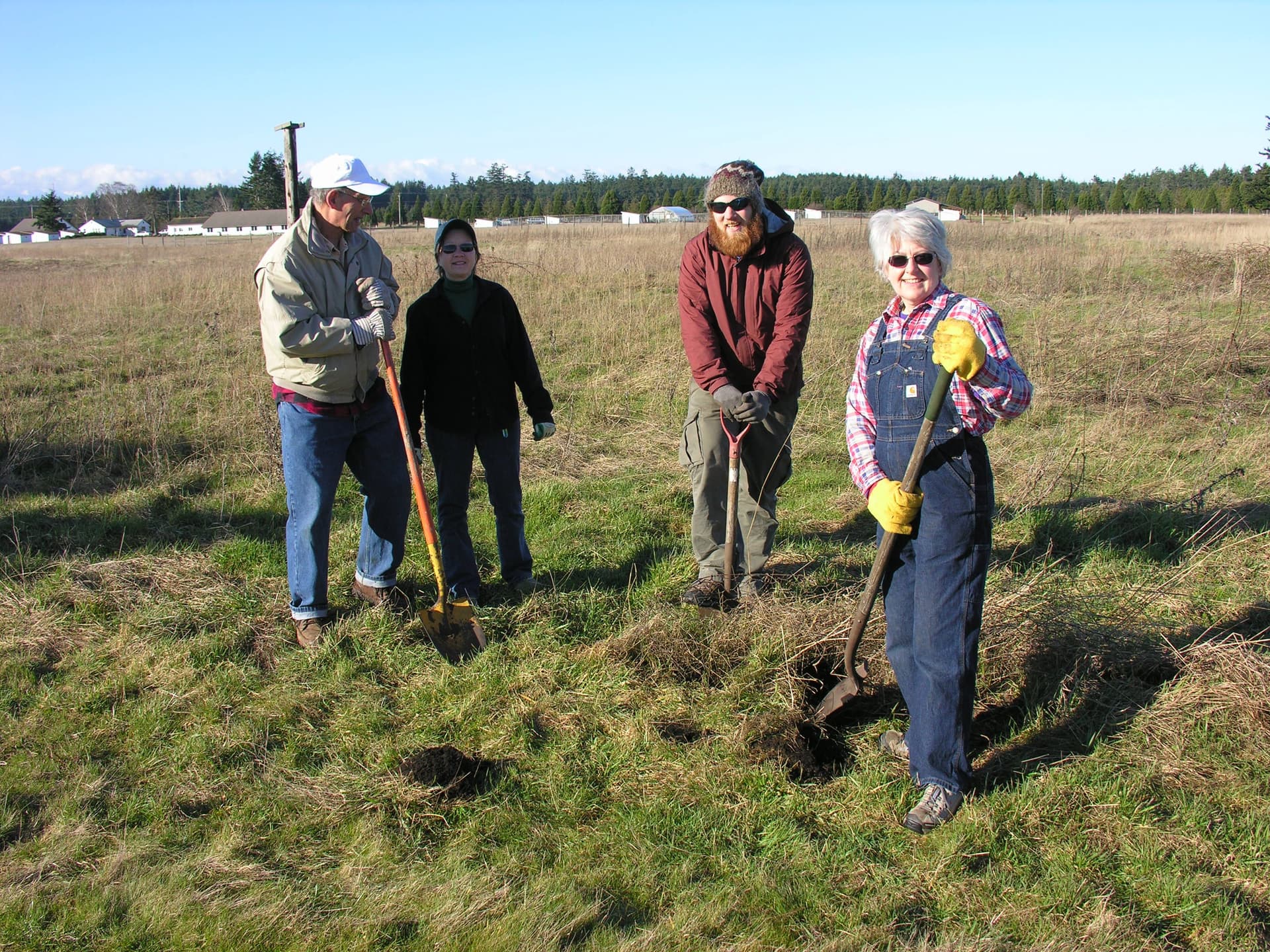
Whidbey Girl Scout’s Gold Award project supports inclusive tech access
Kira’s Gold Award work pairs web design and inclusive tech workshops with local outreach, turning one Whidbey teen’s project into a resource Oak Harbor can use.
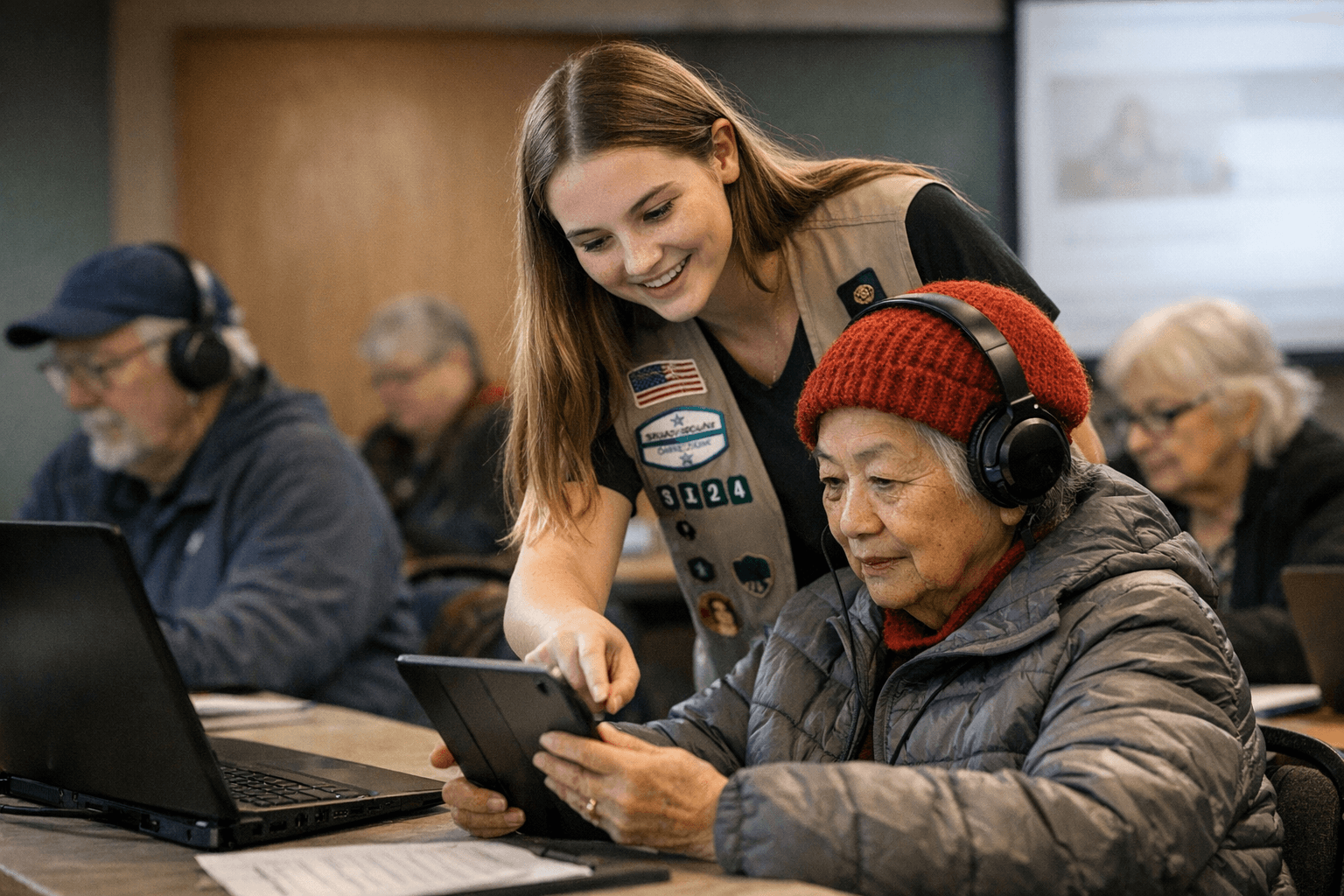
Kira’s project turns a scout requirement into a community resource
Kira is turning a Girl Scout Gold Award project into something Whidbey residents can actually use. At the Whidbey Island Fairgrounds in Oak Harbor, she presented a research project to 4-H members about the difference between service dogs and therapy dogs, while also building a larger effort with Inclusive Technology of Washington that centers inclusive tech access and practical learning.
That combination matters because the project is not just about completing a badge. It is about showing how a local teen can identify a real need, teach others, and leave behind something that can keep working after the award itself is finished. In a place where youth programs, nonprofits, and community events overlap closely, Kira’s work ties those pieces together in a visible way.
What the Gold Award asks a Girl Scout to do
The Gold Award is the highest level of Girl Scout recognition for students in grades 9 through 12, and it is built around sustained community change. Girl Scouts says participants must identify an issue, build a team of trusted adults, community leaders, and peers, and complete at least 80 hours of their own work toward a solution that lasts.
That structure is important because it separates the Gold Award from ordinary volunteering. The expectation is not simply to show up and help for a day. It is to plan, research, collaborate, teach, and build something measurable that others can continue to use later.
Kira’s project fits that model closely. She is learning web design as part of the technology badge path, which gives the work a practical skill component as well as a service component. In other words, she is not only helping an organization, she is also gaining the kind of digital fluency that can strengthen the project’s long-term usefulness.
Why Inclusive Technology of Washington is the right fit
Kira chose to volunteer with Inclusive Technology of Washington, a nonprofit that also designs custom Girl Scout workshops and badge opportunities. Girl Scouts of Western Washington lists the group as an approved program partner, and its workshop menu makes the connection to a technology-focused Gold Award especially strong.
The organization offers all-inclusive Journey and badge workshops in:
- computers
- animation
- special effects
- video production
- game development
- coding
- citizen science
- engineering
That range matters for Island County because it broadens what youth can learn without having to leave the region or fit into a one-size-fits-all activity. For Girl Scouts who learn differently, or who need a more flexible and welcoming approach to technology, the partnership creates a setting where the project can be both inclusive and hands-on.
It also gives the community something concrete. A local nonprofit gains support, Girl Scouts gain access to tech-focused programming, and a Whidbey teen gains a leadership experience that connects education with service.
The Oak Harbor 4-H presentation shows the teaching side of the award
Kira’s work is also showing up in public, not just behind the scenes. Her presentation to 4-H in Oak Harbor about service dogs and therapy dogs reflects another core part of the Gold Award: the ability to communicate clearly, teach others, and explain a subject well enough that a wider audience can use the information.
That local setting gives the lesson extra weight. Island County has 11 active 4-H clubs, and Washington State University Extension describes the county’s dog program as one of the largest and most active in Island County. WSU also notes that Oak Harbor is home to dog-focused clubs including Clover 360 and K-9 Korps, while the statewide 4-H dog curriculum includes a service dog project track.
Julie Gorveatt serves as the program superintendent for the dog program, adding to the sense that this is a serious and established youth network, not an isolated activity. Kira’s presentation connects directly to that network by helping younger students understand a distinction that matters in public life: service dogs are trained to assist people with disabilities, while therapy dogs are used for comfort and emotional support in specific settings.
Why that distinction matters on Whidbey
This is not an abstract lesson. Whidbey readers have already seen therapy dogs in local schools and community spaces. In February 2026, Dogs on Call therapy dogs visited Olympic View Elementary School in Oak Harbor. Earlier coverage in 2023 noted that Dogs on Call had been visiting Coupeville and Oak Harbor and could expand to South Whidbey on request.
That background makes Kira’s topic especially relevant. When schools, fairgrounds, and other public spaces host animals, the difference between service animals and therapy animals has real practical consequences. At the Whidbey Island Fairgrounds, the distinction is reinforced by the site’s own safety rules, which separate service animals from pets and keep animals out of barns.
For families, teachers, youth leaders, and event organizers, that clarity matters. It helps set expectations for access, safety, and how different animals are used in public settings. Kira’s research presentation brings that lesson into a local youth forum where it can be remembered and repeated.
How the project lasts beyond the badge
The Gold Award is designed to outlive the moment of recognition, and Kira’s project has the ingredients to do that. The skills she is building through web design can support future digital work. The nonprofit partnership can keep providing tech-focused programming. The public education component can be reused by other youth groups, since the service dog and therapy dog distinction is something Oak Harbor and Whidbey families encounter in schools, fairs, and community programs.
Just as important, the project shows how Island County’s youth infrastructure can work together. 4-H clubs, Girl Scout programming, nonprofit partners, and community venues are all part of the same system of learning and service. Kira’s work sits at the center of that system, linking technology access with civic education and showing how a teen-led project can leave behind something useful, credible, and built to last.
This article was produced by Prism’s automated news system from verified source data, official records, and press releases, then run through automated quality and moderation checks before publishing. The system is built and supervised by the people who set the standards it runs under. Read our full AI policy.
Did this article answer your question?